The total number of graves of members of the Ahmadiyya community attacked in 2022 has risen to 185.
by Massimo Introvigne

Not even the human piety towards the parents of a child who died at the tender age of seven months stopped the enemies of the Ahmadis who vandalize their cemeteries in Pakistan.
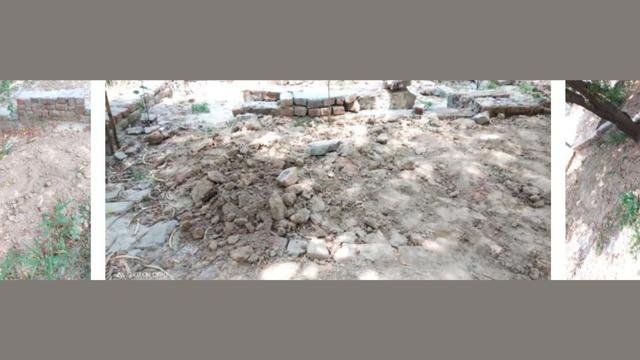
At the end of last month, a cemetery in Chak 203 R.B. Manawala, in the District of Faisalabad, in Punjab, was attacked, and 16 Ahmadi graves were desecrated. The local Ahmadi believers connect the attack with incendiary sermons against their religion by Sunni Muslim clerics.
They noted that Ahmadis have been living in Chak 203 R.B. Manawala since the establishment of Pakistan, without incidents, and that the Ahmadi section of the cemetery is walled and should not disturb anybody.
The total number of Ahmadi graves desecrated in Pakistan since the beginning of the year 2022 has now reached 185.
The Ahmadiyya Movement was founded within Islam by Mirza Ghulam Ahmad (1835–1908). Conservative Muslims accuse Ahmad of having proclaimed himself a “prophet,” thus denying the Islamic doctrine that there can be no prophet after Muhammad. In fact, the Ahmadis regard their founder as “both a prophet and a follower of the Prophet [Muhammad],” but this is not good enough for radical Muslims.
In Pakistan, the law prohibits the Ahmadis from declaring themselves Muslims and using Muslim symbols. Radicals believe that the Ahmadi graves carry inscriptions that refer to Islam, thus offending orthodox Muslims.
Last month, the U.S. Commission for International Religious Freedom (USCRIF) issued a strong report on religious liberty in Pakistan. It denounced inter alia the persecution of the Ahmadis, including the desecration of their graves. It continues, however, and not even children are spared.

Massimo Introvigne (born June 14, 1955 in Rome) is an Italian sociologist of religions. He is the founder and managing director of the Center for Studies on New Religions (CESNUR), an international network of scholars who study new religious movements. Introvigne is the author of some 70 books and more than 100 articles in the field of sociology of religion. He was the main author of the Enciclopedia delle religioni in Italia (Encyclopedia of Religions in Italy). He is a member of the editorial board for the Interdisciplinary Journal of Research on Religion and of the executive board of University of California Press’ Nova Religio. From January 5 to December 31, 2011, he has served as the “Representative on combating racism, xenophobia and discrimination, with a special focus on discrimination against Christians and members of other religions” of the Organization for Security and Co-operation in Europe (OSCE). From 2012 to 2015 he served as chairperson of the Observatory of Religious Liberty, instituted by the Italian Ministry of Foreign Affairs in order to monitor problems of religious liberty on a worldwide scale.