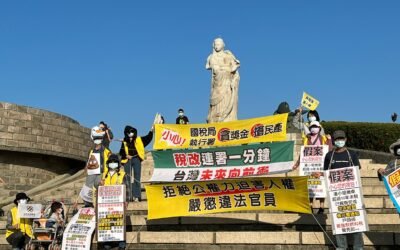
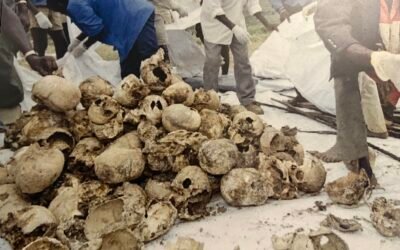
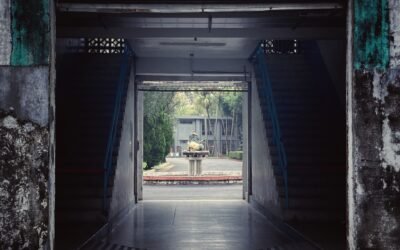
On March 5, international and Taiwanese scholars and activists gathered to commemorate 228 and discuss the implications of the Tai Ji Men case.
by Massimo Introvigne
On February 28, 1947, the 228 Incident in Taiwan, i.e., the bloody repression of protests against the Kuomintang government, inaugurated the tragic era of the White Terror. Taiwan started a long and uneasy transition to democracy in 1987, when the Martial Law was lifted. However, anti-democratic forms of repression of civil society continued even later, as demonstrated by the 1996 crackdown on religious movements accused of not having supported the Kuomintang candidate in the first democratic presidential elections that took place on that year. The repression also affected Tai Ji Men, a menpai (similar to a school) of martial arts, self-cultivation, and qigong, although it had not taken a political stance.
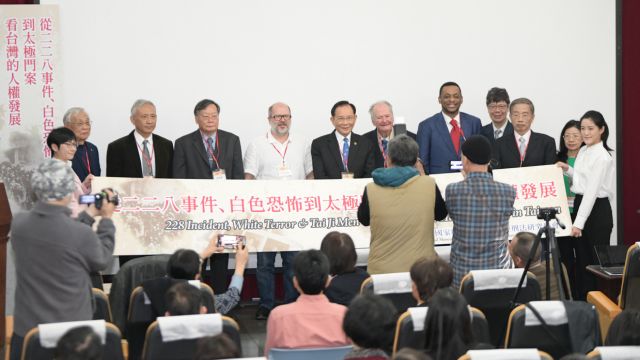
On March 5, 2024, these themes were discussed at the conference “Looking at the Development of Human Rights in Taiwan from the February 28 Incident and the White Terror to the Tai Ji Men Case,” hosted in Taipei by the National Memorial Hall of February 28 and the Taiwan Association for Financial Criminal Law Study.
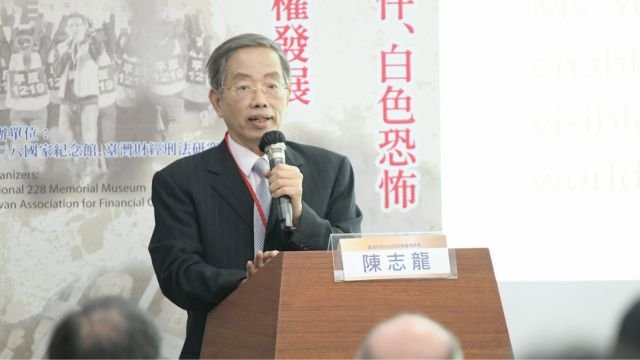
Professor Chen Tze-Lung, Chairperson of the Taiwan Association for Financial Criminal Law Study, reflected on the long history of injustice in Taiwan, fueled by monetary interests and the failure to declassify important documents about human rights violations, from the 228 Incident to the Tai Ji Men case. Telling the truth to the people, Chen said, is a necessary pre-condition to rectify injustices and build a truly democratic system. Chen also paid homage to Dr. Hong Tao-Tze, the Shifu (Grand Master) of Tai Ji Men, and to his deceased wife Madam Yu Mei-Jung for their significant efforts in promoting a much-needed tax and legal reform in Taiwan and advocating for conscience and peace globally.
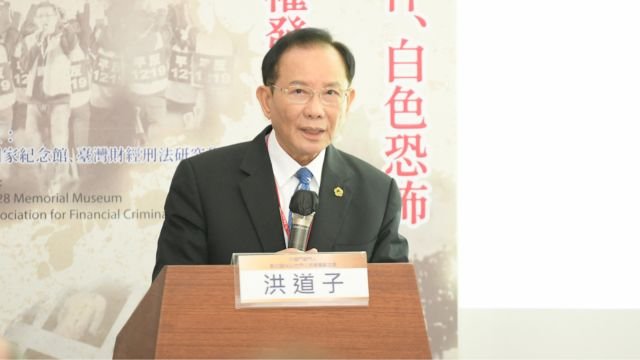
Dr. Hong Tao-Tze introduced the theme of transitional justice, i.e., the efforts after a transition from an authoritarian to a democratic regime to rectify past injustices. The problem in Taiwan is that the existing legislation allows transitional justice to operate only for human rights violations perpetrated before November 6, 1992, Dr. Hong said. But in fact, the abuses continued even after that date, as demonstrated by the religious repression of 1996 that also started the Tai ji Men case, which was “a legal and tax 228.” The definition of transitional justice in Taiwan should be amended to cover also post-1992 cases, Dr. Hong concluded.
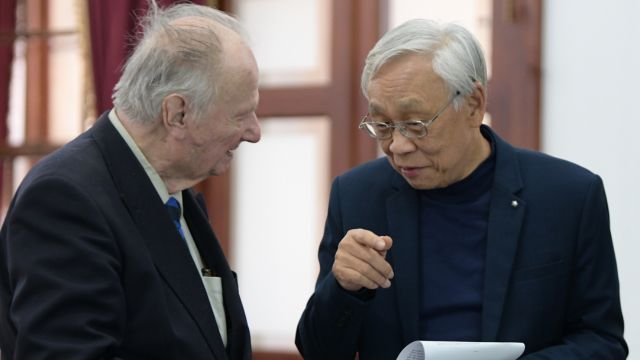
René Wadlow, the highly respected President of the United Nations ECOSOC-accredited NGO Association of World Citizens, who came to Taiwan from France for the event, discussed the incorporation by Taiwan into its domestic law of the UN Two Covenants on human rights in 2009, and the efforts made to assess their enforcement. Unfortunately, Wadlow said, while in other areas Taiwan did make progress, the Tai Ji Men case proves that in the fields of freedom of religion or belief and taxpayers’ rights the Two Covenants have not been fully implemented yet. Wadlow also praised the unique contribution of Tai Ji Men to spreading Taiwanese culture and promoting world peace internationally. He deplored that the movement had to devote for decades to protest the injustice vested on it in Taiwan resources it could have more profitably mobilized for its noble goals and activities.
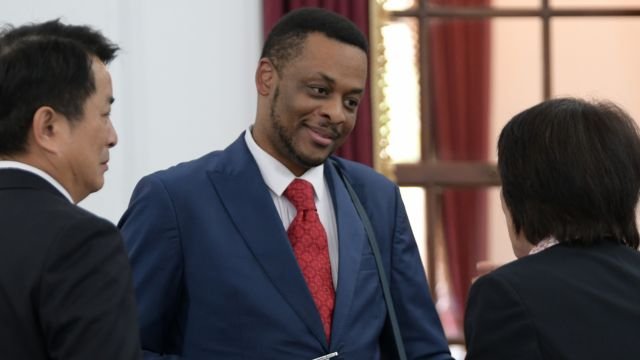
Reverend Agorom Dike is the founder and President of the Washington, D.C. based Caribbean and African Faith Based Leadership Conference (CAFBLC). In 2023, he presented Dr. Hong with the Presidential Lifetime Achievement Award on behalf of U.S. President Joe Biden. He came to Taiwan from the U.S. to add his voice to those praising Tai Ji Men and Dr. Hong for their volunteer service and unique contribution to spreading globally a culture of peace. He also offered a reflection on the notion of justice and its Christian roots, showing how a correct interpretation of justice in Taiwan would lead to a quick and fair solution of the Tai Ji Men case.
Justin Wadlow, a professor at the French Université de Picardie Jules Verne (UPJV) in Amiens and a well-known scholar of comics, explained how books combining texts and comics as a new form of art have been used to spread deep ideas and raise awareness of social issues. He suggested that the essence of Tai Ji Men culture may also be illustrated and presented to the world through these new media.

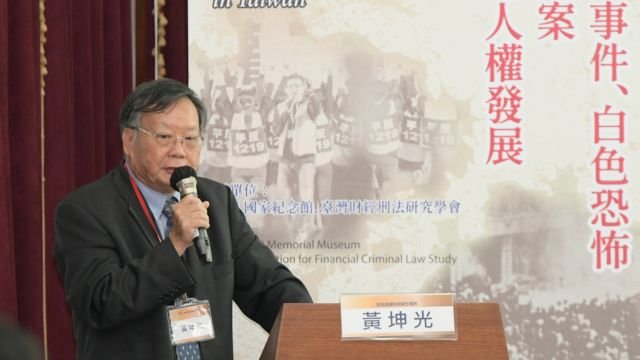
Huang Kun-Kuang, a retired officer of Taiwan’s National Taxation Bureau in Kaohsiung, stated that tax evasion is a real phenomenon but should be ascertained based on the normal rules of criminal evidence, as it happens in all democratic countries. Problems arise, on the other hand, when false or fabricated tax bills hit taxpayers who are not allowed to effectively defend themselves. The Tai Ji Men case is a blatant example of these problems in Taiwan, Huang said, but there are others too.
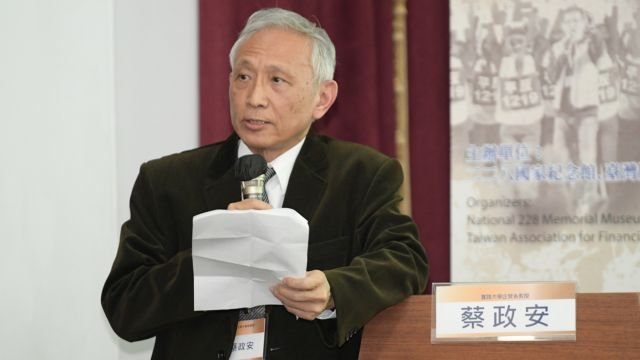
Professor Tsai Cheng-An, from the Department of Business Administration at Shih Chien University, returned to the question of transitional justice and of the double perverse effects of statutes of limitations in Taiwan. On the one hand, as mentioned by other speakers, they limit the application of transitional justice to cases that occurred before November 6, 1992. On the other hand, they also make it impossible to present new evidence and reopen cases that have been declared as “definitively” closed. In both cases, Tsai said, the statutes of limitation create substantial injustice.
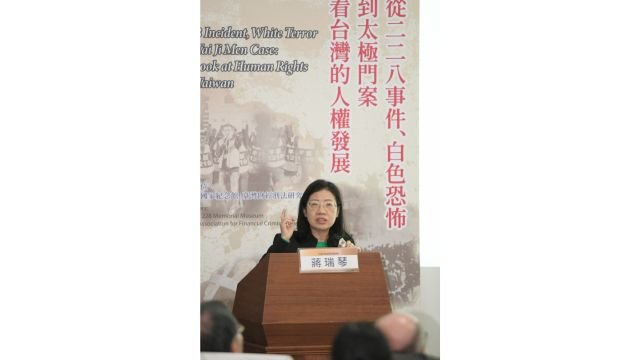
Rachel Chiang, a volunteer defense attorney in the Tai Ji Men case, insisted on the fabricated nature of the tax attack against Dr. Hong and his dizi (disciples). She focused on the lie that the monetary contributions given by dizi to their Shifu were “tuition fees” of a non-existing “cram school,” where they were in fact gifts from disciples to their Master, customary in martial art and qigong groups and always regarded as tax-exempt. Chiang showed why considering Tai Ji Men as a cram school is a legal impossibility and indeed does not even make sense.
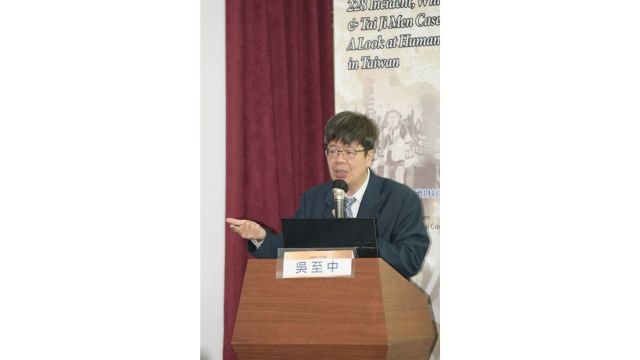
Human rights researcher Wu Chih-Chung identified the root cause of unjust tax cases in the system of bonuses paid to tax bureaucrats who hastily impose ill-founded tax bills. Wu said that this is a legacy of the White Terror, where alleged Communists were arrested, tortured, and often killed after being reported to the authorities by whistleblowers who then received as bonuses a part of their victims’ confiscated assets. This system caused the death of many innocents and continues in the shape of bonuses that lead to the fabrication of false tax bills, Wu concluded.
Chen Chin-Sheng, a former victim of the White Terror who serves as a guide at the National 228 Memorial Museum, explained that he regards it as his duty to preserve the memory of past injustice. He also expressed support to Tai Ji Men’s initiatives to affirm justice and peace.
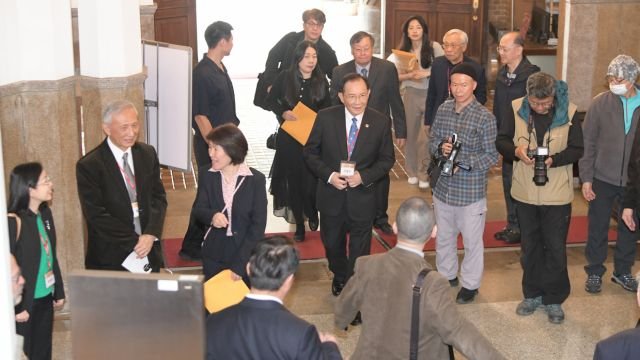
Participants in the conference also visited the National 228 Memorial Museum. As Spanish-American philosopher George Santayana famously wrote, “Those who cannot remember the past are condemned to repeat it.”

Massimo Introvigne (born June 14, 1955 in Rome) is an Italian sociologist of religions. He is the founder and managing director of the Center for Studies on New Religions (CESNUR), an international network of scholars who study new religious movements. Introvigne is the author of some 70 books and more than 100 articles in the field of sociology of religion. He was the main author of the Enciclopedia delle religioni in Italia (Encyclopedia of Religions in Italy). He is a member of the editorial board for the Interdisciplinary Journal of Research on Religion and of the executive board of University of California Press’ Nova Religio. From January 5 to December 31, 2011, he has served as the “Representative on combating racism, xenophobia and discrimination, with a special focus on discrimination against Christians and members of other religions” of the Organization for Security and Co-operation in Europe (OSCE). From 2012 to 2015 he served as chairperson of the Observatory of Religious Liberty, instituted by the Italian Ministry of Foreign Affairs in order to monitor problems of religious liberty on a worldwide scale.