Modern scholars and novelists have included freedom of religion among the causes the masked avenger supposedly fought for.
by Massimo Introvigne
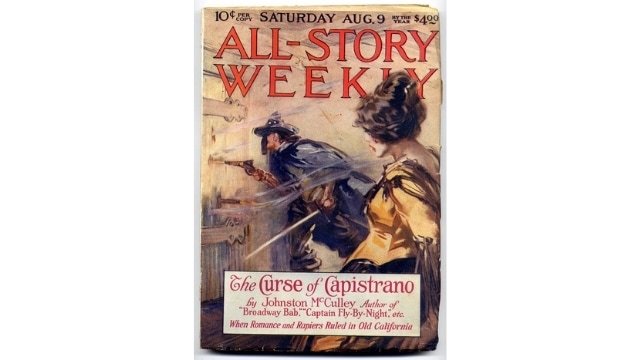
If Zorrology, understood as a discipline that seriously studies Zorro, exists—and it should exist, considering the hundreds of essays dedicated to the character created in 1919 by Johnston McCulley—it is a science that is based on two theorems.
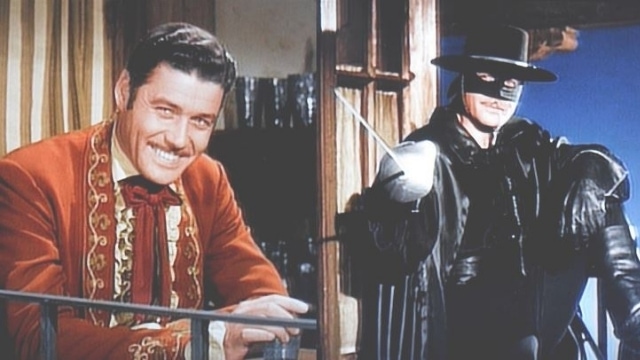
First, Johnston McCulley’s Zorro is not the same as the character in the very popular Walt Disney television series, played for years by the immortal Guy Williams, whose Latin charm, by the way, did not actually have Mexican or Californian origins, but Italian. Guy Williams was in fact the pseudonym of an Italian American actor, Armando Catalano. McCulley’s Zorro was a tough guy in a ruthless world, certainly not designed for children, where violence (including violence against women) and dead bodies were the order of the day. Disney’s Zorro had to reckon with the rules of censorship of afternoon television shows intended for younger viewers. Violence was limited, and was largely metaphorical, and any mention of sex was forbidden.
There is, however, also a second theorem. Johnston McCulley collaborated with Disney and repeatedly expressed his appreciation for the character embodied by Guy Williams. This is a split personality not uncommon in popular culture. There is a Batman of the movies and comics for an adult audience, and there is the Batman of the cartoons intended for children. And yet between the two incarnations there is some continuity. The same is true of Zorro. Disney’s Zorro does not tell the whole story of the pulp character created by McCulley, but the part of the story it tells is consistent with the author’s idea.
In 1999, speaking from the point of view of a lifelong fan and collector of Zorro editions, I took the liberty of adding a third theorem, in an Italian newspaper article that I continue to find quoted to this day: Zorro is not really about politics. He has a moral, but it is a rather generic one. Good guys win, bad guys lose, injustices are punished, and wrongs are avenged.
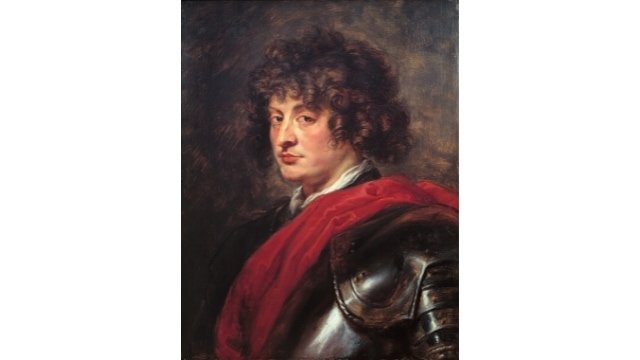
My 1999 article reviewed a monumental tour de force then just published by an Italian scholar, Fabio Troncarelli, La spada e la croce. Guillén Lombardo e l’Inquisizione in Messico (Rome: Salerno). With great ingenuity and a perfect mastery of the sources, Troncarelli reconstructed the story of William Lamport, an Irish adventurer who became known in 17th-century Mexico by the hispanized name of Guillén Lombardo. He dreamed of raising the indigenous masses against Spain, before ending up in prison in 1642, and dying tragically at the stake in 1659. Troncarelli not only argued that Lamport/Lombardo had served as a model for McCulley’s Zorro, but that as a Freemason, McCulley had used this model to create a hero who fought for religious liberty against the oppressive presence of a state religion, Catholicism, in consonance with Masonic ideals. He noted that Walt Disney was also a Freemason.
I suggested that Troncarelli’s thesis, although fascinating, ignored the difference between continental European and American Freemasonry. The latter, unlike the former, was never particularly focused on anticlericalism and the defense of religious liberty against the Catholic Church. Friends of McCulley in the United States, when local media mentioned Troncarelli’s book, insisted that he did not even know who William Lamport was. Worse, although Troncarelli knew the problem and tried to overcome it, McCulley admitted that he was inspired by the Scarlet Pimpernel created in 1905 by Baroness Emma Magdalena Orczy, whose politics were not revolutionary since he saved Catholic aristocrats from the Terror of the French Revolution.
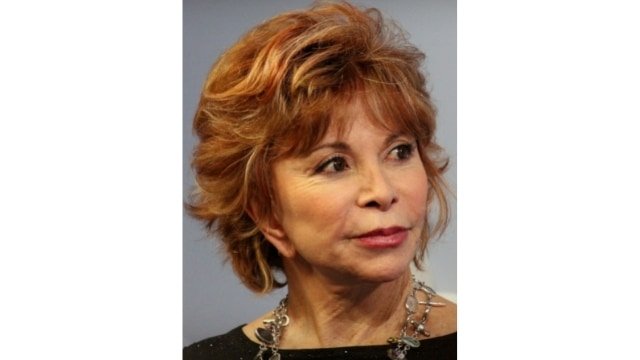
In 2005, the Chilean-American novelist Isabel Allende published Zorro, a novel authorized by McCulley’s heirs. With the help of Zorro Productions, the foundation created by the McCulley family to preserve and manage the copyright on the character, Allende tried to create a story that was new but not contradictory to the hero’s mythology. Clearly, she also took Disney’s version into account. Her book promised to reveal how Zorro became Zorro, how his faithful servant Bernardo became mute, how the commander of the Los Angeles garrison, Moncada, became a scoundrel, how Father Mendoza became an exemplary priest, and how Sergeant Garcia became the fat, slightly ridiculous but not malevolent soldier we all know from Disney’s series.
Allende’s answer is that it all started in school in California and continued in Spain. At Father Mendoza’s school in California, Garcia was already teased by his classmates and bullied because of his size, but he was protected by the young Diego de la Vega (the future Zorro), the scion of the great landowner Don Alejandro de la Vega, and by his milk brother Bernardo, a servants’ son who was Diego’s best friend. After an assault by pirates who raped and killed Bernardo’s mother in front of her son, who became mute from the shock, Diego and Bernardo went to study in Spain, in Barcelona, guests of an old friend of their father, the nobleman Tomás de Romeu.
De Romeu had two daughters, the beautiful Juliana and the not-so-beautiful (indeed, slightly cross-eyed) but intelligent and brave Isabel, who will be revealed as the narrator of the novel. Juliana is courted both by Bernardo and by the arrogant and shady Spanish nobleman Moncada, in the period going from the French occupation of Barcelona to the restoration of the Spanish monarchy.
After Bernardo has already returned to California, Diego and the two de Romeu girls also leave Barcelona for the Americas, pursued by Moncada who has been spurned by Juliana and meditates revenge. Juliana does not love Diego either. It is Isabel who is secretly in love with him. When their ship is captured by Jean Lafitte’s pirates, Juliana falls in love with the pirate chief and marries him, obtaining freedom for Diego and Isabel, who arrive in California.
Here, they discover that the perfidious Moncada is now the commander of the Los Angeles garrison—entrusted to the inept Garcia, who has become a soldier and a sergeant—where he has established a reign of terror, imprisoning old Don Alejandro to take away his property and persecuting the Native Americans, who have found a protector in Diego’s old teacher, Father Mendoza. Diego had already become Zorro in Spain to protect Juliana and avenge the wrongs inflicted on the weak and the honest by Moncada. In California, while pretending to be a clumsy dandy, he resumes the role of masked avenger, assisted by Bernardo and Isabel (as well as the extraordinary horse Tornado), and ends up freeing his father and forcing Moncada to leave California. Here Allende’s book closes, although with a hint that Diego may one day marry Isabel, and the story of Zorro as McCulley’s readers and Disney fans know it begins.
In Allende’s book, both Zorro and Bernardo have Native American blood. Defying conventions and his own prejudices, Don Alejandro has married a proud native warrior, Toypurnia, who is therefore Diego’s mother. And Zorro even has a Native American grandmother who cures all illnesses with herbs, initiates him into Native American spirituality, and creates a permanent telepathic contact between Diego and Bernardo. In Spain, Tomás de Romeu is a Jacobin intellectual and enthusiast of the French Revolution, persecuted by the Inquisition and finally executed by the monarchy restored after Napoleon.
We are also told that La Justicia, a vaguely Masonic-like fictional secret society in which the young Diego is initiated, has been fighting the Inquisition for centuries. Allende knows the derivation of McCulley’s Zorro from the Scarlet Pimpernel, and makes La Justicia also fight against the French revolutionaries occupying Spain. Allende’s knowledge of European feuilleton is encyclopedic, and La Justicia is not totally new either. It is very similar to the Beati Paoli, a Sicilian secret society that may have really existed and have been a precursor of the Mafia but was completely transformed in the popular novel I Beati Paoli (1909–1910) by Luigi Natoli.
Juliana and Diego also fight against slavery in New Orleans, and at the end of the novel another angle of the religious liberty theme emerges, as Father Mendoza asks himself whether perhaps the missionaries got it all wrong when they imposed a questionable religion based on the fear of sin and hell on the Native Americans, who already had a more natural and better one.
So, did Zorro fight for religious liberty, against the Inquisition and the oppression of Native Americans’ culture and spirituality? Perhaps not, in McCulley’s original characterization of the masked avenger. But, copyright questions apart, Zorro is such a universal character that his saga is not fixed in stone. It may mutate and grow. It is a sign of the times that, while other authors such as Allende add to the Zorro canon, or scholars suggest theories that may in turn influence novelists, religious liberty becomes one of the causes Zorro is fighting for. After all, Zorro is about justice, and recognizing religious freedom is a form of justice.

Massimo Introvigne (born June 14, 1955 in Rome) is an Italian sociologist of religions. He is the founder and managing director of the Center for Studies on New Religions (CESNUR), an international network of scholars who study new religious movements. Introvigne is the author of some 70 books and more than 100 articles in the field of sociology of religion. He was the main author of the Enciclopedia delle religioni in Italia (Encyclopedia of Religions in Italy). He is a member of the editorial board for the Interdisciplinary Journal of Research on Religion and of the executive board of University of California Press’ Nova Religio. From January 5 to December 31, 2011, he has served as the “Representative on combating racism, xenophobia and discrimination, with a special focus on discrimination against Christians and members of other religions” of the Organization for Security and Co-operation in Europe (OSCE). From 2012 to 2015 he served as chairperson of the Observatory of Religious Liberty, instituted by the Italian Ministry of Foreign Affairs in order to monitor problems of religious liberty on a worldwide scale.