In December 2022, Xi Jinping declared victory over the virus and ended the restrictive policy overnight, fearful of unprecedented protests. It caused a disaster.
by Hu Zimo
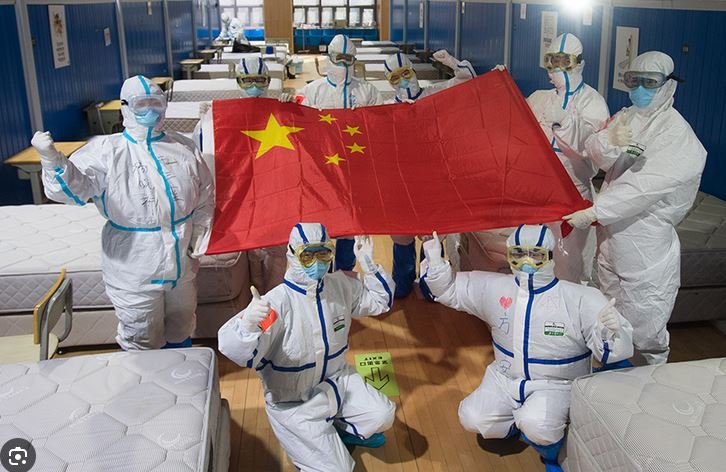
For three years, China functioned within a vast health crisis of its own creation. The Zero COVID policy involved mass testing, digital surveillance, quarantines that affected entire apartment blocks, and extensive lockdowns that made the rest of the world’s restrictions seem mild. This approach was presented as a success of discipline and the state’s strength. For a time, it worked. While other countries faced multiple waves of infection, China managed to keep the virus away through strict measures: a cough meant sealing off an entire neighborhood.
But by late 2022, the plan began to fail. Omicron, a variant that viewed lockdowns as a small hurdle, slipped through the system. After months of increasingly bizarre restrictions, the Chinese public erupted in protests unseen since 1989. People called for an end to the lockdowns, with some even daring to demand Xi Jinping step down. Within days, the government made one of the quickest policy changes in recent public health history. On December 7, 2022, Zero COVID ended. Xi claimed his personal victory over the virus.
What followed was not a victory. It was a surge of infections so vast that pharmacies ran out of fever reducers within hours, hospitals overflowed, and antiviral drugs became rare. The government, which had spent three years tracking every asymptomatic case with meticulous care, suddenly stopped counting deaths. By early May 2023, it reported just 121,000 COVID deaths—a figure so implausibly low that even its staunchest statisticians must have hesitated.
Into this gap came a team of researchers—He Guojun, Li Shuo, and Quan Yucheng—who published a study in the “Journal of Population Economics,” which was further commented on by Stanford University’s Center for China’s Economy and Institutions and is attracting considerable attention among Chinese netizens. Their approach was cleverly simple: if the state would not disclose how many ordinary citizens died, maybe it could not hide the deaths of its elites. China’s academics, senior Party officials, and members of its top political bodies do not pass away quietly. Their obituaries are public, ceremonial, and hard to keep under wraps.
The researchers created a dataset of 10,705 elites aged 65 and older, tracking their deaths from 2017 to March 2023. This group, typically shielded by the best available healthcare, became a grim indicator of what happened when Zero COVID ended abruptly. For two weeks after the policy shift, elite mortality remained normal—exactly the time needed for infections to spread, symptoms to show, and severe cases to worsen. Then the numbers skyrocketed. In the last week of 2022, deaths among elites were more than ten times the pre-pandemic baseline. Weekly mortality peaked at 1,030% above normal, then dropped to 680% the next week, and only returned to baseline by February. The entire disaster lasted less than five weeks, but its effect on annual mortality was clear: a 19% increase for 2022 and 24% for 2023.
Age, as always with COVID, was crucial. Men over 85 experienced a 61% increase in mortality, with a sixteen-fold spike at the peak. Even among the elite, status mattered. The highest-ranking figures—senior national leaders and top academics—had the highest mortality not because they lacked access to care, but because they were older and had lived long enough to develop chronic conditions that COVID exploits. Men had worse outcomes than women, consistent with global trends.
If the elite faced such severe consequences, what happened to everyone else? The authors extrapolated their age- and sex-specific mortality rates to the general population, reasonably assuming that ordinary citizens were at least as vulnerable as those with better access to healthcare. This resulted in a lower estimate of 1.44 million excess deaths among those over 65, with an upper estimate of 2.56 million. These numbers align with independent estimates from other researchers, all of which far exceed the official count.

China’s total pandemic death toll from 2020 to 2023 still compares favorably with countries of similar size and income. At immense human and social cost, Zero COVID did prevent mass casualties during the more lethal pre-Omicron waves. However, the sudden change—prompted not by health data but by political fear—cost lives that could have been saved. Antivirals were scarce, ICU beds were not enough, booster campaigns were incomplete, and households were caught off guard. The virus was always going to spread once restrictions lifted, but the clash between Omicron and an unprepared health system amplified the damage.
The tragedy is not that China reopened. It did so abruptly, as if flipping a switch, expecting a virus that had been held at bay for three years to wait while the system caught up. Xi Jinping declared victory, but the obituary pages told a different story—not in slogans, but in names, dates, and the quiet realities of loss.
In the end, the elites became the observers the researchers describe: a group too visible to ignore, too significant to be buried without ceremony, and too numerous to overlook. Their deaths revealed what the government tried to hide. When Zero COVID ended, the virus did not simply return. It surged in all at once, and it took its toll.

Uses a pseudonym for security reasons.