Harassment and political indoctrination try to transform Daoists into mouthpieces for the regime—which also wants to control Daoists abroad.
by Karine Martin*
*An adapted pre-publication excerpt from “Monastic Daoism Transformed: The Fate of the Thunder Drum Lineage” (2025), available from Three Pines Press.
Article 4 of 4. Read article 1, article 2, and article 3.
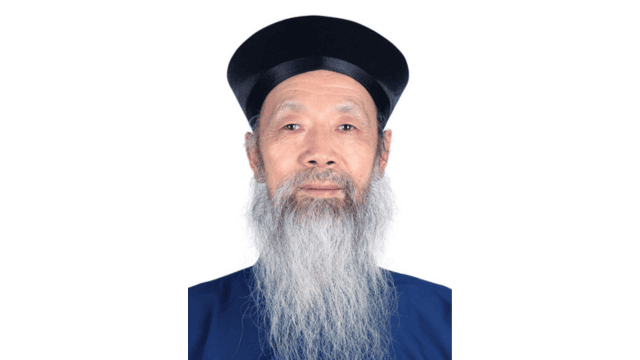
In yet another and more practical dimension, Daoist living has been seriously impacted by the new regulations. For example, since all clergy were forced to rejoin secular society during the Cultural Revolution, many got married and had children yet later returned to their monasteries. The marriages often continued, if at long distance, allowing priests to fulfill their spiritual calling while yet having families. Now this is no longer possible, and monks either have to leave the monastery or document that they have obtained a divorce and are properly celibate.
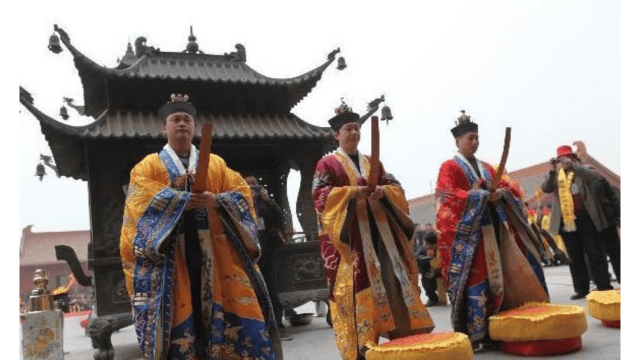
In a similar manner, Daoists used to have some leeway regarding their hair. While long hair tied up in a topknot has been the official standard since the Tang dynasty, if someone was not comfortable growing his hair out or the parents found it hard to see their child in religious accoutrements, they could keep their hair short and wear a Daoist hat. The community fully accepted this as an act of filial piety. Now all Daoists have to have long hair and tie it up in a topknot, marking them clearly as Daoist clergy.
By the same token, while Daoists must wear their garb in the temple, many are now reluctant to enter the world visibly dressed as religious practitioners, the official and popular climate increasingly turning against them. Rather than just being able to stay in seclusion, however, Daoists are forced to leave their temples to attend local meetings and resident training courses in Xi Jinping Thought.
Every week there is at least one meeting and every month there is at least one course. During the latter, attendants stay for three to fourteen days in government-run hotels rented by the CDA that may even be in other cities or far-away provinces. Notice given is always very short: just ordering a certain monk or nun to show up at a certain place at a certain time within a day or two. Topics are not revealed until the event starts, which also involves exams and reports on the subject covered.
Matching this tendency, the CDA’s official organ, “Zhongguo daojiao”中国國道教 (Chinese Daoism), in its June 2024 issue spent forty-eight of a total of eighty pages to explicate and admonish members about the ongoing process of Sinicization, echoing and repeating much of the official regulations found on their website.
The intensity of the meeting schedule combined with political indoctrination and the prevention of in-depth cultivation causes many monks and nuns to leave the order, especially if they are well educated and thus able to train or work in a secular profession. Temples that had thirty to forty residents are now down to four or five, if that, causing more closures.
Another bureaucratic restriction is the addition of the epithet “religious personnel” (zongjiao yuan 宗教員) to the passport, which makes it impossible for Daoists to travel abroad, even on vacation, without obtaining various permits. All this makes life so difficult that some Daoists, including ones I met personally last year, fall into deep states of depression and, in some cases, seriously contemplate suicide.
Daoists in the West, too, are experiencing major changes. For one, many of their inspiring masters are no longer available, being restricted in communication and interaction. For another, Daoists are not allowed to interact with foreigners unless they file a large number of permit forms.
During my entire stay in China, while I had many meetings with Daoists, they were always semi-secret and there were absolutely no pictures taken—in sharp contrast to the photo mania of previous years. Some even warned me to never tell the CDA that they had seen me, emphasizing the political and restrictive nature of this organization, which essentially is the executive arm of the United Front Department.
In the meantime, the CDA, at the Fifth Forum on Mount Mao in September 2023, officially inaugurated the World Daoist Federation (Shijie daojiao lianhe hui 世界道教联合會). This serves to integrate various Daoist associations in other parts of the world that are typically founded and run by Western followers who have received initiation but, with very few exceptions, do not speak Chinese and have spent very little time in China. Taken to showcase temples such as the Baiyun guan in Beijing, they are presented with an official image and remain largely unaware of the intensity and depth of the current decline.
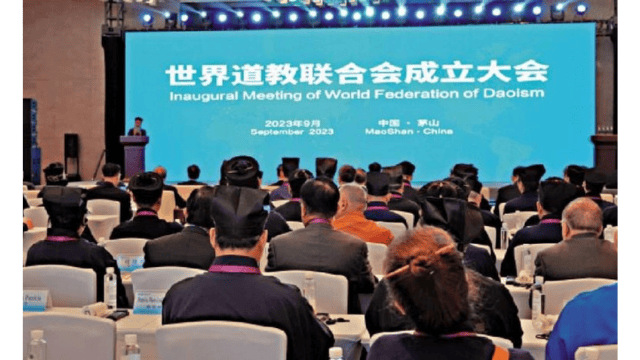
As regards the activities of Federation affiliates in their home countries, the CDA neither requires them to pay dues nor provides any funds or guidelines, leaving them largely part to their own devices and decisions. At the same time, it asks them to sign a formal charter, which places them under the direct control of the Chinese authorities and demands a similar commitment to the communist state and the proliferation of Xi Jinping Thought as the in-country regulations.
Several Chinese Daoists told me that, in light of the repression they were suffering from the CDA and its enforced rules, they did not believe that the newly created Federation’s true aim was to help spread or support Daoism. Rather, they saw it as a cover-up that would create an international smokescreen and hide what was really happening in China. How, they asked, can a government agency repress a religious organization in its own country, on the one hand, and endeavor to spread it abroad, on the other? For this reason, even in the light of this international effort, they felt quite hopeless concerning the survival of the religion.
Just as Daoists in China are split into those eager to support the new doctrine and those retreating in an effort to hold on to the old ways, so Western Daoists are now divided into those transforming their teachings to adhere to the Party line and those supporting more traditional ways. Adepts who move away from politics and continue to follow established ideas and practices, including myself, may no longer be welcome in the motherland but are the greatest hope for the survival and eventual resurgence of Daoism once this new “cultural revolution” has passed.
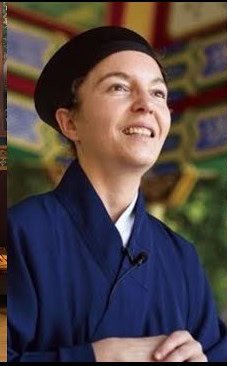
Karine Martin holds doctorates in both Pharmaceutical Sciences (1997) and Religious Studies (2015). While working in neuroscience research in London, she came in contact with Daoism of the Thunder Drum lineage and entered its training. From 2001 to 2016, she lived in Daoist temples of various regions. She is the founder and director of the French Daoist Association, which organizes lectures, workshops, and training courses. A major representative of Daoism in the West, she presents at international conferences, has a strong internet presence, and is interviewed frequently.