What we predicted, happened: American lawyers are suing China. And in China, lawyers sue the U.S. claiming America is responsible for the virus.
by Massimo Introvigne

The U.S. District Court for the Southern District of Florida: China has been sued there for having spread the virus internationally
In a recent article in Bitter Winter, I discussed comments by American legal scholar James Kraska on possible lawsuits against China, asking it to pay the enormous damages caused by the spread of COVID-19, which was caused or at least made worse by Chinese negligence and cover-ups. I agreed with Professor Kraska that China is legally responsible, but disagreed with him when he identified the International Court of Justice as the proper or likely venue to hear claims for damages. I expressed better hopes in the U.S. civil courts and the creativity of American lawyers.
It has already happened. The Chinese national government and the Hubei provincial authorities have been sued before the U.S. District Court for the Southern District of Florida for damages by American citizens who did not test positive for COVID-19 but claim to have suffered economic losses because of it. The Florida lawsuit named as defendants the People’s Republic of China (PRC), the National Health Commission of the PRC, the Ministry of Emergency Management of PRC, the Ministry of Civil Affairs of PRC, the Government of the Hubei Province and the Government of the City of Wuhan.
Chinese scholars Zheng Sophia Tang (currently at Newcastle University) and Zhengxin Huo came to the defense. They argued that American courts should not assert jurisdiction against a foreign sovereign state such as China—although American law allows them to do so in some circumstances. In fact, the Foreign Sovereign Immunities Act (FSIA) of 1976 states that foreign states can be sued “for personal injury or death, or damage to or loss of property, occurring in the United States and caused by the tortious act or omission of that foreign state or of any official or employee of that foreign state while acting within the scope of his office or employment.”
Under U.S. law, China can be liable for damages, but the burden of proof is severe for the plaintiffs. It seems another lawsuit against China had also been started. My impression is that these are just preliminary moves. We have not seen yet top, millionaire law firms entering the fray. And, for what is worth, I suggested that suing the CCP as a party may be easier than suing China as a sovereign state.
One curious Chinese reaction has been to start lawsuits against the American government, based on the theory officially promoted by the Chinese government that the virus originated in the United States and came to China through U.S. soldiers who participated in the Wuhan Military Games in October 2019. In theory, local courts in China should seek the guidance of the People’s Supreme Court, which should stop the cases since (unlike American law), Chinese laws maintains that foreign sovereign states enjoy absolute immunity from legal prosecution.
But it is obvious that these cases are merely retaliation and political propaganda. Nobody can seriously believe that the U.S. exported the virus to China, and the CCP propaganda machine seems to have already switched to the equally absurd theory that the virus originated in Italy.
The American civil suits are, on the other hand, serious. I personally keep the most aggressive among the American lawyers in my daily prayers, hoping they will be inspired to unleash their heaviest legal artillery against the CCP.
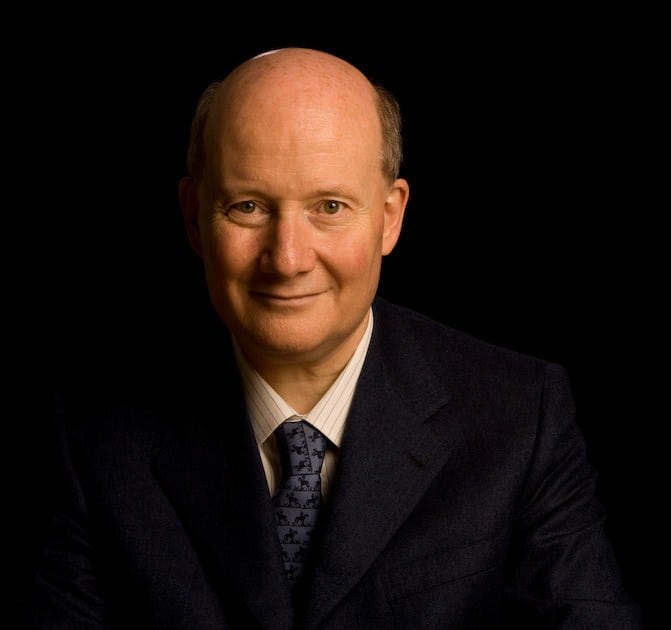
Massimo Introvigne (born June 14, 1955 in Rome) is an Italian sociologist of religions. He is the founder and managing director of the Center for Studies on New Religions (CESNUR), an international network of scholars who study new religious movements. Introvigne is the author of some 70 books and more than 100 articles in the field of sociology of religion. He was the main author of the Enciclopedia delle religioni in Italia (Encyclopedia of Religions in Italy). He is a member of the editorial board for the Interdisciplinary Journal of Research on Religion and of the executive board of University of California Press’ Nova Religio. From January 5 to December 31, 2011, he has served as the “Representative on combating racism, xenophobia and discrimination, with a special focus on discrimination against Christians and members of other religions” of the Organization for Security and Co-operation in Europe (OSCE). From 2012 to 2015 he served as chairperson of the Observatory of Religious Liberty, instituted by the Italian Ministry of Foreign Affairs in order to monitor problems of religious liberty on a worldwide scale.