Although the Nepalese government resisted pressures to deport back to China the refugees who are already in Nepal, it will deport those of them who will enter Nepal in the future.
by Massimo Introvigne

Nepal’s Foreign Minister Pradeep Gyawali with Xi Jinping – Credits
In October, Bitter Winter reported how President Xi Jinping’s visit to Nepal had failed to persuade the authorities of the Himalayan kingdom, under pressure from their own public opinion, to deport back to China under a proposed extradition treaty a good number of the some 20,000 Tibetan refugees living within Nepalese borders. It was an unexpected defeat for the Chinese leader, who reacted very angrily. The CCP, however, never stops its policy to pressure other countries against refugees escaping religious persecution, as Bitter Winter documented in its movie The Long Arm of the Dragon.
This week, international media learned that Xi Jinping, for all his protests, did achieve one significant, if secret, result in Nepal. Rumors started circulating that a secret agreement about Tibetan asylum seekers has been signed during Xi’s visit. The Nepalese Constitution stipulates that any confidential treaty signed by the government with a foreign country should be disclosed to the Parliament if it asks to learn about it. The Parliament did ask the government to report about the rumors. As a result, Nepalese Minister of Foreign Affairs, Pradeep Gyawali, issued a written statement confirming that a confidential agreement has indeed been signed during Xi’s visit.
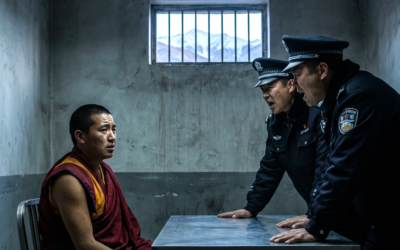
According to the statement, the secret treaty stipulates that Chinese citizens (including Tibetans) illegally crossing the border into Nepal will be detained and deported back to China within a week. The provision violates a longstanding Gentlemen’s Agreement between Nepal, India, and the office of the United Nations High Commissioner for Refugees (UNHCR), under which Nepal agreed to grant safe passage to Tibetan asylum seekers who escaped China with the purpose of settling in India.
Under the new agreement with China, the Tibetan refugees who were already in Nepal at the time the new treaty was signed will not be extradited or deported (for the time being, as the CCP is not giving up on this request either), but the new Tibetan refugees crossing the Chinese border into Nepal will be sent back.
The CCP’s war against peaceful refugees escaping religious persecution continues.

Massimo Introvigne (born June 14, 1955 in Rome) is an Italian sociologist of religions. He is the founder and managing director of the Center for Studies on New Religions (CESNUR), an international network of scholars who study new religious movements. Introvigne is the author of some 70 books and more than 100 articles in the field of sociology of religion. He was the main author of the Enciclopedia delle religioni in Italia (Encyclopedia of Religions in Italy). He is a member of the editorial board for the Interdisciplinary Journal of Research on Religion and of the executive board of University of California Press’ Nova Religio. From January 5 to December 31, 2011, he has served as the “Representative on combating racism, xenophobia and discrimination, with a special focus on discrimination against Christians and members of other religions” of the Organization for Security and Co-operation in Europe (OSCE). From 2012 to 2015 he served as chairperson of the Observatory of Religious Liberty, instituted by the Italian Ministry of Foreign Affairs in order to monitor problems of religious liberty on a worldwide scale.