“What’s happening in Ladakh is the repetition of what happened to Tibet 60 years ago,” says the president of the Central Tibetan Administration.
by Massimo Introvigne

The Pangong Tso lake, one of the areas disputed between India and China (credits).
China faces serious international criticism about its responsibility for the spread of COVID-19 and the repression in Hong Kong. Why, exactly, did the CCP decide to create another global controversy by attacking Indian troops in the areas of the Pangong Tso Lake, the Muguthang Valley in Sikkim, and the Galwan River Valley in Eastern Ladakh? From the Indian point of view, Chinese troops have illegally entered Indian territory. For Beijing, who has several border disputes in India, the territory is actually Chinese. But why did all this happen right now?
In a way, the present conflict with India is part of Xi Jinping’s general muscular, assertive strategy. India is increasingly seen as a regional rival, considering its growing ties with the United States and President Trump’s claims that it would be a good idea for American companies to relocate their production units from China to India. More deeply, however, the attacks relate to three old geopolitical questions concerning Sikkim, Tibet, and Nepal.
Sikkim was an independent state until 1975, when it was annexed by India. The reasons for the 1975 events are complicated, but one of them was India’s concern that an independent Sikkim might gradually become a satellite of China. Reportedly, the Chinese troops who entered Sikkim in May 2020 shouted at the Indian soldiers, “This (Sikkim) is not your land, this is not Indian territory… so just go back.”
CCP propaganda supporting the Chinese Army’s actions at the Indian border claimed that India “annexed Sikkim, controls Bhutan, and is now trampling on the Nepali sovereignty. However, China will come to the rescue and ensure that Nepal does not become the next Sikkim.” The reference is to India’s more active attitude in its perennial border disputes with Nepal, and the CCP’s campaign aimed at turning Nepal into a satellite state of China. The move is connected with the question of Tibetan refugees in Nepal, but goes much further. The CCP is increasingly reminding Nepalese that Nepal was historically a vassal state of China, until British colonialism rescinded its ties with Beijing. Nepal’s conflict with India is an opportunity for the CCP to increase its pressure on the Himalayan country.
Even more important for the CCP is protecting the borders of Tibet, which are both military and political—and religious. What upsets the CCP is that India is building a road from Dharchula to Lipulekh, the gateway to Kailash-Mansarovar, a site for Hindu pilgrimages in Tibet. The pilgrimages concern the Hindus rather than the Buddhists, but the CCP is against any increase in religious relations between Tibet and India, the country where the Dalai Lama resides.
There have been border skirmishes between India and China before, but within the current international context these are particularly dangerous. According to Dr Lobsang Sangay, the president of Central Tibetan Administration in India, “what’s happening in Ladakh is the repetition of what happened to Tibet 60 years ago.” “Failing to learn from the tragedy of Tibet will have China repeating the same violent occupation in Nepal, India, and the rest of the world,” Dr. Sangay said.
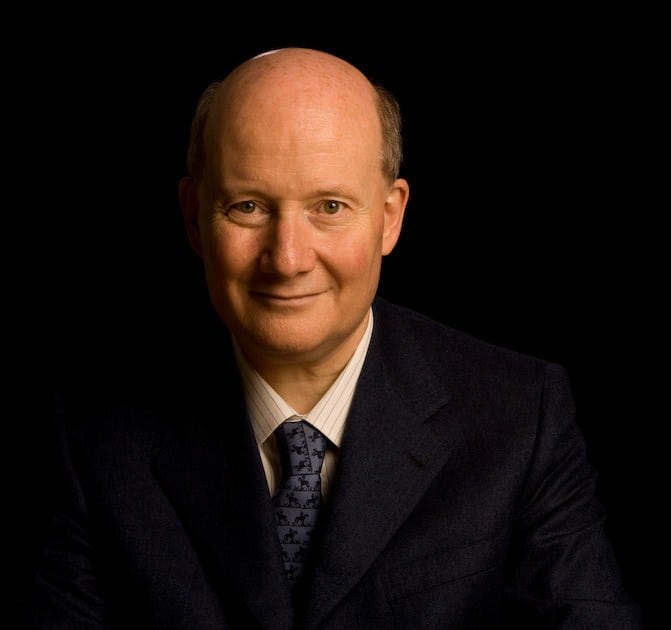
Massimo Introvigne (born June 14, 1955 in Rome) is an Italian sociologist of religions. He is the founder and managing director of the Center for Studies on New Religions (CESNUR), an international network of scholars who study new religious movements. Introvigne is the author of some 70 books and more than 100 articles in the field of sociology of religion. He was the main author of the Enciclopedia delle religioni in Italia (Encyclopedia of Religions in Italy). He is a member of the editorial board for the Interdisciplinary Journal of Research on Religion and of the executive board of University of California Press’ Nova Religio. From January 5 to December 31, 2011, he has served as the “Representative on combating racism, xenophobia and discrimination, with a special focus on discrimination against Christians and members of other religions” of the Organization for Security and Co-operation in Europe (OSCE). From 2012 to 2015 he served as chairperson of the Observatory of Religious Liberty, instituted by the Italian Ministry of Foreign Affairs in order to monitor problems of religious liberty on a worldwide scale.