CCP-controlled Chinese banks continue to make money through massive illegal operations in Italy.
by Massimo Introvigne
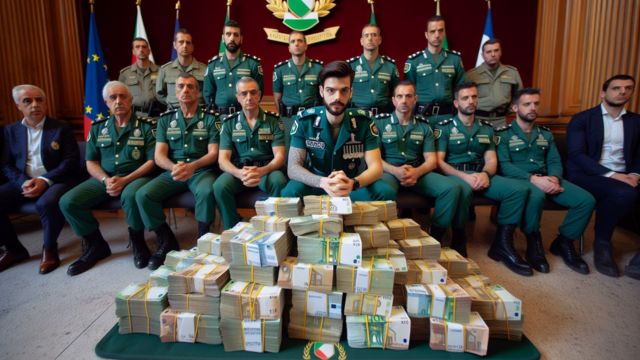
More of the same. In March 2023, “Bitter Winter” published the only detailed English-language account of the “Operation Belt and Road,” a large-scale investigation of the Italian Tax Police that uncovered how mainline Chinese banks cooperated with the Italian Mafia, Colombia’s drug cartels, and Russian oligarchs close to Putin to launder at least $17 billion. As we noted, these were not simply “Chinese criminals,” as China quickly claimed, as CCP-controlled ostensibly respectable banks were at the head of the project.
The Italian Tax Police is famously persistent, and on January 25 it announced it had followed up with “Operation Fast and Clean,” uncovering another system centered on a “mainline Chinese bank” through which some 2 billion dollars were laundered in two Italian regions, Lombardy and Marche. The system was simpler than the one unmasked in Operation Belt and Road. A number of companies were incorporated in Lombardy but in fact they existed on paper only. There was nothing at the addresses indicated, except an occasional abandoned warehouse or demolished house, or the addresses did not even exist.
These false companies billed almost 2 billion dollars to Italian companies in the last two and a half years for non-existing goods and services. Once they had received the payments, they asked Chinese companies to bill them the corresponding amount for the sale of equally non-existing goods and paid to their accounts at the “mainline Chinese bank.” The latter kept a share for itself and sent back in cash the rest of the money to the Italian companies who had paid the first invoices through Chinese “messengers.” The Italian dishonest businesspeople received their money in sealed bags in Chinese restaurants, shops, or garment workshops.

As usual, Chinese authorities will thank Italian law enforcement for having uncovered the wrongdoings of “rogue bureaucrats” in their bank system, claiming they have been severely punished, as it happened for “Operation Belt and Road.” This is, however, not persuasive. CCP-controlled Chinese banks are closely watched and that illegal operations for billions of dollars may go on for years without the Party knowing of them is simply unbelievable.
A more probable narrative is that CCP-controlled banks continue to offer international money-laundering services to make easy money in difficult times, with the extra advantage of damaging the economy of Western countries.

Massimo Introvigne (born June 14, 1955 in Rome) is an Italian sociologist of religions. He is the founder and managing director of the Center for Studies on New Religions (CESNUR), an international network of scholars who study new religious movements. Introvigne is the author of some 70 books and more than 100 articles in the field of sociology of religion. He was the main author of the Enciclopedia delle religioni in Italia (Encyclopedia of Religions in Italy). He is a member of the editorial board for the Interdisciplinary Journal of Research on Religion and of the executive board of University of California Press’ Nova Religio. From January 5 to December 31, 2011, he has served as the “Representative on combating racism, xenophobia and discrimination, with a special focus on discrimination against Christians and members of other religions” of the Organization for Security and Co-operation in Europe (OSCE). From 2012 to 2015 he served as chairperson of the Observatory of Religious Liberty, instituted by the Italian Ministry of Foreign Affairs in order to monitor problems of religious liberty on a worldwide scale.