Some things return every year, such as the swallows, the primroses, and proposals by anti-cultists to re-introduce anti-brainwashing statutes in Italy.


Some things return every year, such as the swallows, the primroses, and proposals by anti-cultists to re-introduce anti-brainwashing statutes in Italy.

In 1981, the Constitutional Court ruled in the case of a Catholic priest accused of manipulating his followers, and concluded “plagio” was an imaginary crime.

When judges in 1968 found a Communist gay philosopher guilty of “brainwashing” its pupils into homosexuality, a national controversy erupted.

In 1930, Mussolini’s Justice Minister Rocco introduced in Italian law a provision against mind control that would last until 1981.

The Constitutional Court eliminated in 1981 a provision that incriminated mind control. It had a long history, from Roman to Italian law.

L. Ron Hubbard was an original Gnostic thinker. His exploration of Gnosticism is often misunderstood.

To offend Pakistan Hindus even more deeply, the attack against the temple in Khipro was carried out in the day celebrating the birth of Lord Krishna.

Anders Breivik did have some esoteric ideas. His secret order may have only existed on paper.

The terrorist was not a conservative Christian. His real religion was Islamophobia.
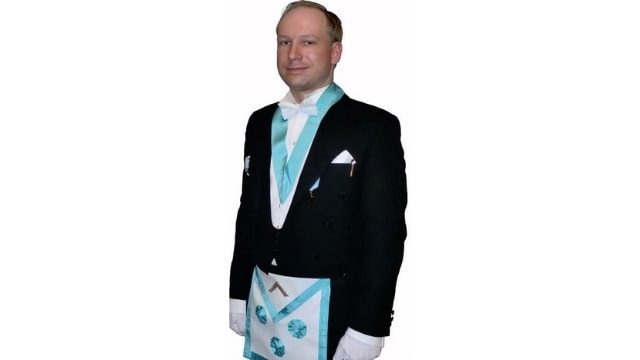
After ten years from the Utøya Massacre, Anders Behring Breivik, the perpetrator, is still called by some a “Christian fundamentalist.” The label is misleading.