Massive evidence confirmed that the anti-cultists referred parents of members of new religious movements to deprogrammers.
by Anson D. Shupe (†) and Susan E. Darnell
Article 5 of 10. Read article 1, article 2, article 3, and article 4.

The remainder of this series examines several areas of CAN practice and policies, based on testimonies of its own operatives as well as other sources, to support the contention that CAN regularly and knowingly participated in criminal activities.
Much has been made in depositions and court appearances by CAN officials that the organization in no way promoted coercive deprogramming. Pious denials and rather apparent dodging of the issue seem to have been the standard strategy when confronted under oath by attorneys suspecting otherwise. Consider, for example, the circumlocution provided by Cynthia Kisser, last executive director of CAN, in a 1994 deposition while being questioned:
“Q. Have you, in the context of your work for CAN, haven’t you met with and worked with persons that were convicted of crimes?
A. Not that I recall, no.
Q. Rick Ross? [Ross is a convicted jewel thief and violent deprogrammer].
A. I never met him in my capacity as any kind of a CAN person.
Q. You’ve never talked to Rick Ross in your capacity as Executive Director of CAN?
A. I have talked to him as opposed to meet with him in my function as a CAN official. There is a major difference here in the shading of the words which—
Q. Well—?
A. —which I detect in your question, counselor.
Q. No, there isn’t a major difference. The major difference is a semantic attempt to evade answering the question.
Mr. Beal [Kisser’s attorney]: Mr. Moxon, if you will ask straightforward and simple questions—Mr. Moxon: What I want is for her to give a straightforward and simple answer. What’s happening here is gross evasion.
Mr. Beal: That’s absolutely untrue.
Mr. Moxon: What we’re going to do is seek our costs and fees from this waste of time and destruction of the court’s time. The witness has been doing it throughout this deposition.
[The deposition continued after attorneys’ discussion.]
Mr. Beal: Be our guest.
Q. Have you ever communicated with Rick Ross in the context of your position as the Executive Director of CAN?
A. Yes, I have communicated with Mr. Rick Ross in my capacity as a CAN employee, yes.
Q. What other persons who have been convicted of crimes have you communicated with in the context of your position at CAN?
[Kisser then continued to meander around such questions but finally and grudgingly admitted she had communicated with ex-con Rick Ross and Galen Kelly (a private investigator-turned coercive deprogrammer) and that they had been frequent attenders at annual CAN conventions.]
Q. Are you saying you never associated with persons who have been convicted of crimes?
A. Taken “association” in the broadest term, no that is not what I am saying. The broadest possible construction of it, yes. I’m quite sure that I have.
Q. You have done so in your role as Executive Director of CAN, right?”
[The attorney then went on to read to Kisser a Who’s Who list of coercive deprogrammers, and she responded affirmatively to having dealt with each of them] (Deposition of Cynthia Kisser in “Cynthia Kisser vs. The Chicago Crusade of Illinois et al.” September 30,1994. County of Cook, State of Illinois. Case No. 92 L 08593).
Kisser’s reticence in acknowledging that CAN served as an active referral agency for professional deprogrammers is perhaps not surprising but certainly disingenuous. For example, in deprogrammer Rick Ross’s own early self-promoting resume mailed out to various prospective client sources, Ross offered a blurb of praise from her as follows: “He is very knowledgeable about cults. His name is among the half dozen best deprogrammers in the country.”

Consider another example of defining away the coercion of deprogramming and denial under oath by Priscilla Coates, former executive director of the Citizens Freedom Foundation and former head of the Cult Awareness Network, Los Angeles affiliate:
“Q. What is involuntary deprogramming as you understand it?
A. To the best of my understanding, when the family decides that there is no other way to talk to the person but by keeping them at a location until they have heard the correct information about the group.
Q. Through the use of force?
A. No.
Q. How do you keep someone against their will without force?
A. You lock the door” (Deposition of Priscilla D. Coates in “Wilson/Sterling vs. CAN, Kisser, Coates et al.” February 19, 1993. Hollywood, CA, Case BC 043028).
Below are other representative data on a CAN-deprogramming connection:
Rick Ross, writing to Priscilla Coates in 1988, referred to deprogramming referrals from CAN helping to underwrite the costs of writing a book. He estimated that it was necessary for him to complete about two more exit counseling cases that year to support his project. He said a couple of cases right then would be helpful. He asked if she knew of anything. He remarked that Cynthia Kisser in Chicago had given him a couple of referrals, but they did not come through. They were just ambivalent families who really couldn’t make up their minds, he said in disgust.

A private investigator who interviewed deprogrammer Robert Brandyberry by telephone reported: “Brandyberry stated that during this time, he also provided CAN with educational materials, gave lectures at CAN meetings, and volunteered his time for CAN related projects. Brandyberry stated that he deprogrammed approximately five hundred persons between 1980 and 1989. Of these deprogrammings he conducted approximately one hundred fifty illegally. Specifically, Brandyberry stated that it was necessary for him to kidnap and falsely imprison these deprogramming victims during their “involuntary deprogrammings.”
“Brandyberry also stated that of these approximately one hundred fifty kidnappings and false imprisonments, CAN officials had directly referred him to about seventy-five to eight-five percent of the persons who had paid him money to conduct these illegal deprogrammings.” “Brandyberry stated that CAN’s referral policy for illegal deprogramming was very common knowledge by the employees in the national offices of the Cult Awareness Network during the entire time he was a deprogrammer.”
Dr. Lowell D. Streiker, an author and counselor with a PhD. in religion from Princeton University, is the founder and former director of the Freedom Counseling Center in Burlingame, California. The FCC is a non-profit organization that counsels families with members in non-traditional religions. Dr. Streiker is no knee-jerk “cult apologist” nor is he an “anti-cult apologist.” He is, however, familiar with the CAN-deprogramming connection: “In my years as a counselor, I have become well acquainted with the so-called ‘anti-cult’ network, which is a loose-knit confederation of parents’ groups, deprogrammers, dissatisfied former group members, cult-concerned mental health professionals, attorneys, and evangelical religious propagandists. A major element in the anti-cult network is the ‘Cult Awareness Network’ (CAN)… The official policy of the national CAN on deprogramming states that CAN is opposed to kidnapping. Yet CAN executive directors and presidents have regularly referred numbers of the public to individuals known as ‘deprogrammers.’ …As a counselor of families disturbed by so-called cults and an opponent of forcible deprogrammings, I could estimate that eighty percent of all deprogrammings that have been reported to me were set up by CAN national headquarters, or its chapters. Approximately two-thirds of those actively involved in CAN are vehemently in favor of coercive deprogramming and most of them have used the services of such big-name deprogrammers as Ted Patrick, Joe Alexander, Jr., Galen Kelly, Cliff Daniels, Mark Blocksom, and Joe Szimhart.”
In a sworn statement, Streiker provides a number of examples of CAN-arranged deprogrammings of which he is personally aware. His conclusion: “I’ve become very disgusted with CAN, having personally had to clean up the wreckage that was left by their deprogrammers which went sour over the years. Seven highly distraught and depressed deprogramming victims have [even] been referred to me by various CAN members.”

In another sworn statement, retired deprogrammer Mark Blocksom affirmed: “I became very active in my deprogramming activities during the early 1980s. The standard method by which referrals for involuntary deprogramming was via phone calls to the ‘good old boy’ network (CFF, and later, CAN members or affiliates), who would then refer the called to a non-CFF/non-CAN person (usually a family member of a prior successful case), who would then call me and arrange the deprogramming. This ‘cut out’ system was created to insulate CFF/CAN from legal liabilities. It was an ‘unwritten’ guideline that the deprogrammers did not ever directly affiliate themselves with CFF or CAN for reason of legal repercussions if a deprogramming failed/or received some bad press coverage . …On at least two occasions, I used the farmhouse of Priscilla Coates in upstate New York as a safe house to complete the deprogramming. At this time, Coates was the Executive Director of CFF/CAN . … Cynthia Kisser, who is now the national director of CAN, assisted me on at least 2 kidnapping type deprogrammings involving members of The Way International. Both Kisser and Coates were involved in giving me referrals for involuntary deprogrammings prior to the actual formation of CAN, while the organization was still more ‘loose-knit,’ operating as CFF. They were both in my opinion fully aware that the parents they sent to me as referrals were planning to have their children/family member kidnapped or unlawfully detained.”
“Many of us in the deprogramming field,” Blocksom continued, “would frequently attend the CFF/CAN conferences and conventions, both regional and national. At these conventions we would speak to parents and other attendees, for the purpose of soliciting deprogramming business, or at least making our availability known in anti-cult circles. Many of us involved in deprogramming were actually guest speakers, or served on discussion panels where deprogramming was discussed. I was a speaker on ‘exit counseling’ at the 1985 CAN convention. This was a play on words, as it was well known that most of my deprogrammings were involuntary. Kisser never took any actions to dissuade me from continuing kidnapping type deprogrammings. She was aware that I specialized in that type of deprogramming, and it was tacitly understood that if she referred a case to me, that a kidnapping could, and probably would occur. I believe that CAN maintained a referral list of deprogrammers, and I was on the list.”
Even Joe Szimhart, a prolific coercive deprogrammer in the 1990s, who once described himself at a national sociological meeting as merely a part time counselor and artist, publicly admitted that most of the several dozen deprogrammings he had performed were the result of CAN referrals (see “CAN Deprogrammers Hit with Arrests,” “The Bakersfield News Observer,” February 12, 1992).

Finally, as one more piece of evidence illustrating the CAN deprogramming referral connection, Marty Butz, a staff member at CAN during the early 1990s, under oath estimated he had personally made approximately 400–500 deprogramming referrals for persons who called CAN. And he referred one NRM member who called CAN pretending to be ignorant of a given NRM but inquiring about it to a woman who said she could provide a list of deprogrammers (including the “classic rescuers”: Joe Szimhart, Dave Clark, Randall Burkey, Steve Hassan, Rick Ross, and Carol Giambalvo) and their expected fees ($2,000–$10,000).
In short, based on a triangulation of sources there is little room for conjecture that deprogramming referrals were part of regular CAN policy, and, since many of these abductions were patently illegal and potentially harmful, CAN was therefore a hub of street crime involvement.
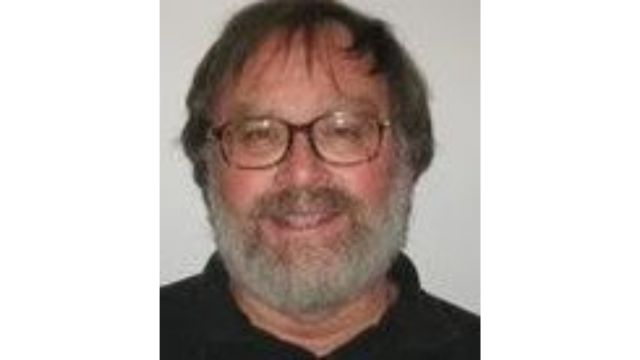
Anson D. Shupe (1948–2015) was an eminent American sociologist of religions. A professor of Sociology at Indiana-Purdue University in Fort Wayne, Indiana, Shupe published seminal studies of new religious movements, the anti-cult movement, deprogramming, and clergy misconduct and sexual abuse. He also studied domestic violence. Apart from his academic activities, he was also a martial arts expert possessing second degree black belts in Judo and Karate.