After a long persecution, Pastor Vyacheslav Goncharenko’s Pentecostal community has been “liquidated” by the country’s Supreme Court.
by Massimo Introvigne

In August 2023, “Bitter Winter” reported that, after Minsk’s New Life Church was razed to the ground in June, members were told they were not allowed to gather outdoors either, and not even online.
New Life Church, founded in 1992, was one of the most successful Pentecostal churches in Belarus, with some 1,500 members. In 2002, New Life purchased part of a farm in Minsk and converted it into a church.
The church never had an easy life, but the situation took a turn for the worst when in 2020 its pastor Vyacheslav Goncharenko posted a video criticizing the fraudulent 2020 Presidential elections. His participation with other Evangelical leaders in March 2022 in prayer events for Ukraine and to ask that Belarus did not participate in the war also did not contribute to endear Goncharenko to the regime.
Goncharenko was repeatedly arrested and, as “Bitter Winter” reported in September 2023, through subsequent decisions in August courts banned as “extremist” Internet postings the church had long since removed and the whole website of New Life.

We predicted then that these were steps preparing New Life’s Russian-style “liquidation.” Unfortunately, we were right. On October 17, the Minsk City Court pronounced the liquidation of New Life as “extremist.” The decision was confirmed by the Supreme Court on December 18. Last-minute appeals to save the church did not succeed.
This means that New Life no longer exists. Based on precedents, any gathering, even in private homes, of New Life believers may be raided by the police and the devotees arrested for engaging in “extremist” activities.
Other churches are of course at risk, as the Lukašėnka regime is following in the footsteps of Russia and is under the influence of Russian anti-cultists such as Alexander Novopashin who have declared Pentecostal churches “non-Christian” and “anti-Russian” “cults,” accusing them of spying for the Ukrainian and American governments.
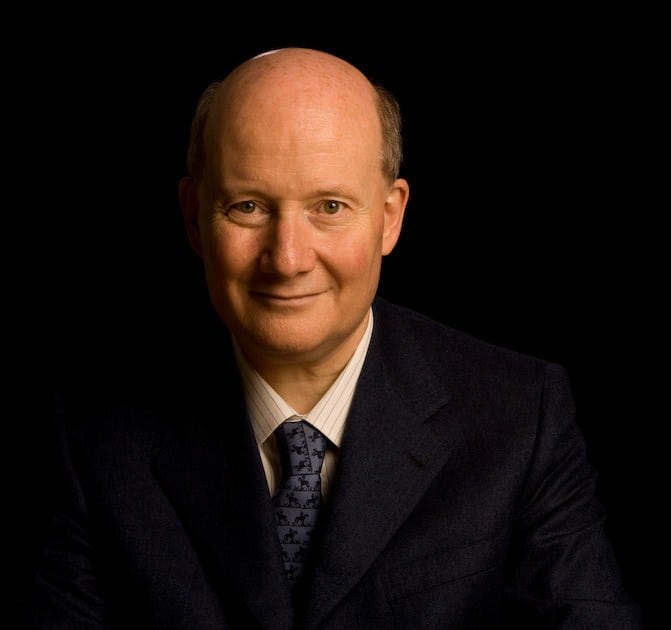
Massimo Introvigne (born June 14, 1955 in Rome) is an Italian sociologist of religions. He is the founder and managing director of the Center for Studies on New Religions (CESNUR), an international network of scholars who study new religious movements. Introvigne is the author of some 70 books and more than 100 articles in the field of sociology of religion. He was the main author of the Enciclopedia delle religioni in Italia (Encyclopedia of Religions in Italy). He is a member of the editorial board for the Interdisciplinary Journal of Research on Religion and of the executive board of University of California Press’ Nova Religio. From January 5 to December 31, 2011, he has served as the “Representative on combating racism, xenophobia and discrimination, with a special focus on discrimination against Christians and members of other religions” of the Organization for Security and Co-operation in Europe (OSCE). From 2012 to 2015 he served as chairperson of the Observatory of Religious Liberty, instituted by the Italian Ministry of Foreign Affairs in order to monitor problems of religious liberty on a worldwide scale.