The Genoa exhibition of the great Italian Baroque painter is an opportunity to reflect on how protecting children from “sexy” Biblical images is not an intelligent idea.
by Massimo Introvigne
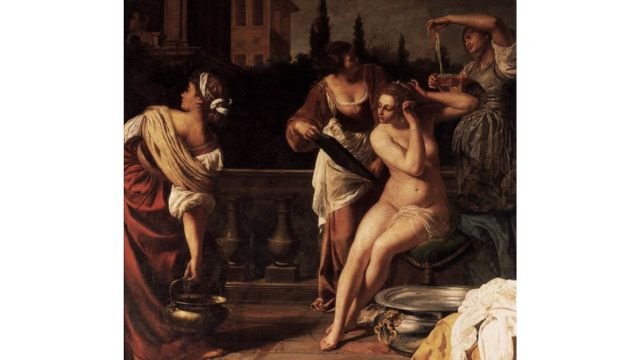
Before it closes on April 1, my wife and I went to Genoa to see one of the most visited Italian art exhibitions in recent years, featuring a large collection of paintings by Artemisia Gentileschi, perhaps the greatest female artist in Italy’s history.
Artemisia, born in 1596 in Rome and the daughter of a painter from Pisa, Orazio Gentileschi, overcame prejudices about female artists to become one of the most celebrated Baroque illustrators of both the Bible and classical mythology. As the Genoa exhibition reminds its visitors, Artemisa was raped at age 15 in Rome by another painter and an associate of her father, Agostino Tassi. He promised to marry her, but never did. While societal reactions to rape in the 17th century were not the same as today, there is no doubt that what happened to her influenced how Artemisa as a painter looked at stories of women who went through tragic experiences.
The Bible offered a large repertoire of such women, and Biblical scenes were in high demand. Artemisia repeatedly depicted Mary Magdalene, the virtuous Susanna spied while she takes a bath by dirty old men (a story included in a part of the Book of Daniel accepted by Catholics and Eastern Orthodox but rejected as apocryphal by most Protestants), Bathsheba watched, also while she baths, by King David who plans to commit adultery with her, and the Jew Judith pretending to be ready to surrender to the lust of the Assyrian general Holofernes only to enter his tent and behead him (an incident also described in a portion of the Bible not accepted as genuine by Protestants). And so on.
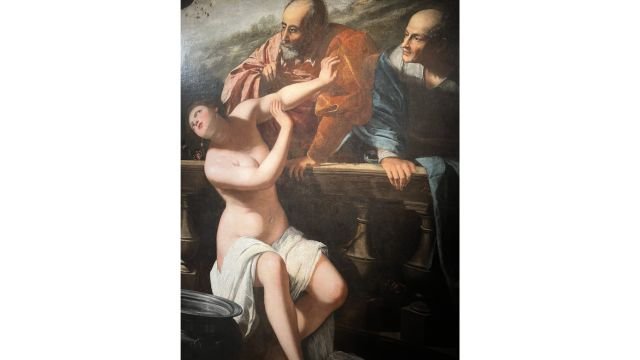
These scenes depict nudity, lust, and occasionally violence. Yet, many great painters portrayed them, and nobody believed them pornographic or capable of corrupting minors, who might easily encounter them in palaces and churches and later in museums. In fact, we met in Genoa happy schoolchildren, including from primary schools, visiting the exhibition with their teachers, and being told about Artemisia and the stories she illustrated.

The exhibition made me think about recent developments in Japan, where pamphlets about child abuse are distributed by the Elementary and Secondary Education Bureau, Policy Bureau, and other organizations of the Ministry of Education, Culture, Sports, Science and Technology (MEXT) in elementary, middle, and high schools, although in different forms in different parts of the country. Children are told in the pamphlets that they should be alert and report those who “show them materials that contain sexual expression that are not appropriate to your age,” even if this happens in a religious context. A look at the controversies in the Japanese media on the Jehovah’s Witnesses and conservative Christian groups after the moral panic about “cults” generated by the assassination of former Prime Minister Shinzo Abe helps understanding that the reference is really to Biblical stories about adultery and other sexual sins and the corresponding illustrations in Christian publications.
The pamphlets are inspired by “Q&A on Handling Child Abuse and Similar Cases Related to Religious and Similar Beliefs,” a document published at the end of 2022 by the Ministry of Health, Labour, and Welfare. This text answers in the affirmative to the question “Does it constitute child abuse if somebody shows or verbally describes to children material that includes sexual expressions that are inappropriate for their age, claiming that they are part of an education to learn religious or similar doctrines?” Parenthetically, it is paradoxical that these comments are made in Japan, a country that has been repeatedly at the receiving end of criticism by the United Nations agency for the protection of children UNICEF for the large circulation and availability to minors in the country of manga and anime with inappropriate sexual content. It remains that the Bible and the corresponding illustrations are singled out, targeting a variety of Christian groups.
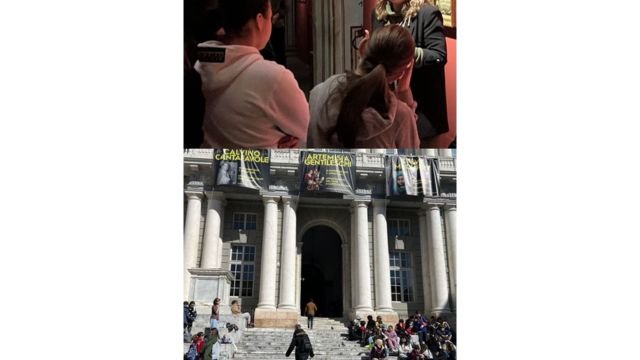
These paradoxical Japanese texts came to my mind as I saw Italian children looking at the naked Batsheba or Susanna and being told what the stories masterfully illustrated by Artemisia were all about and why she painted them. Minors are exposed today to much more scandalous stories and images when they access the media or the Internet. However, that minors look at art illustrating “sexual expressions” of the Bible is not new. Generations of Christian children encountered this art, well before Internet was invented. There is no evidence they were scandalized or corrupted.
Perhaps the Italian Catholic culture (and remember, Artemisia painted during the Baroque era of the Counter-Reformation) always had a more relaxed approach to the female body and sexuality; if anything, some censorship came in the prudish and bourgeois 19th century, to disappear in the 20th. But speaking of today, who is really abused? The Italian school pupils who visit the Artemisia exhibition or the Japanese children taught to denounce the “sexual abuse” if they are shown similar illustrations—and their parents, who are prevented from freely transmitting their religion to the next generations?

Massimo Introvigne (born June 14, 1955 in Rome) is an Italian sociologist of religions. He is the founder and managing director of the Center for Studies on New Religions (CESNUR), an international network of scholars who study new religious movements. Introvigne is the author of some 70 books and more than 100 articles in the field of sociology of religion. He was the main author of the Enciclopedia delle religioni in Italia (Encyclopedia of Religions in Italy). He is a member of the editorial board for the Interdisciplinary Journal of Research on Religion and of the executive board of University of California Press’ Nova Religio. From January 5 to December 31, 2011, he has served as the “Representative on combating racism, xenophobia and discrimination, with a special focus on discrimination against Christians and members of other religions” of the Organization for Security and Co-operation in Europe (OSCE). From 2012 to 2015 he served as chairperson of the Observatory of Religious Liberty, instituted by the Italian Ministry of Foreign Affairs in order to monitor problems of religious liberty on a worldwide scale.