They claim that Svetlana Peunova’s Academy of Development and Way to the Sun organized the opposition to mobilization on behalf of Ukraine.
by Massimo Introvigne
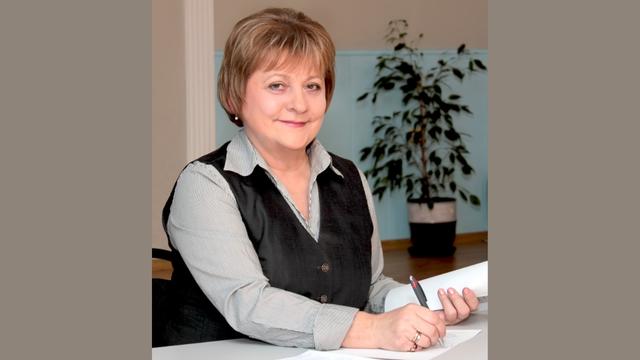
These days in Russia “cults” are discovered on a daily basis as being behind the Ukrainian resistance, the international support for Ukraine, and the growing opposition in Russia to the “special military operation.”
It is now the turn of the Academy of Development, the Way to the Sun Center, and the political party Volya, all creations of the flamboyant psychologist from Samara (although born in 1958 in present-day Azerbaijan) Svetlana Peunova, who now goes by the name Svetlana Lada-Rus.
According to the websites of the leading Russian anti-cultists Alexander Dvorkin and Alexander Novopashin the opposition to mobilization for the war in Ukraine was largely organized by Peunova. They claim that Peunova’s “cult” is “financed by Poland and Ukraine,” and what they call its opposition “to go and fight the neo-Nazis of Ukraine” derives from the work of “foreign agents working on the orders of Western handlers.”
The kernel of truth in this story is that Peunova and her organizations are against the mobilization, and have established committees protesting it. But dozens of other groups from all religious and non-religious backgrounds did the same. In addition, Peunova is fanatically anti-American and anti-NATO and once she accused Putin of high treason for not fighting against NATO with sufficient vigor.
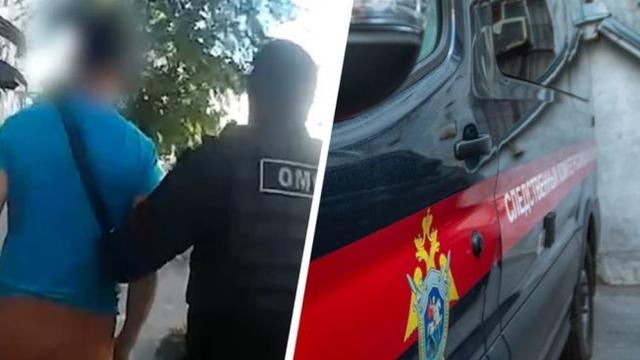
Peunova has been for years a bête noire of Dvorkin, but making her a pro-West activist or a Ukrainian agent is ridiculous. She preaches a mixture of Theosophy, based on the works of Madame Helena Blavatsky and Helena Roerich, Hinduism, miscellaneous New Age theories, and Russian nationalism. Contrary to what Dvorkin’s website claims, she did not invent the Reptilians, malevolent aliens who came to earth and took the shape of prominent world leaders—the Reptilian mythology was already around in the West before Peunova was born—, but she believes in their existence, and has adopted other UFO-connected esoteric ideas. She did not invent a Planet Nibiru threatening the Earth either, although she mentions it: the theory comes from fringe historian Zecharia Sitchin.
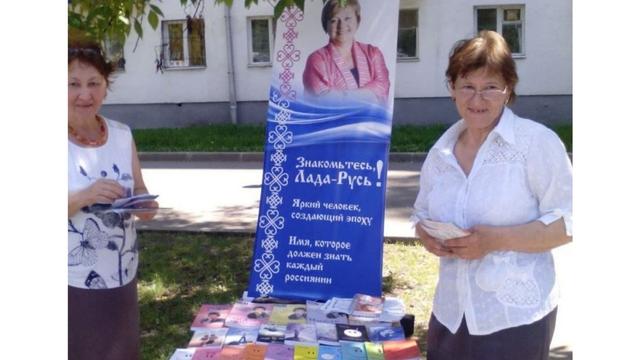
Bizarre as she may appear, Peunova has a real academic degree in psychology and her political party, before being banned as “extremist” in 2016, had real followers. Certainly it was never a serious threat for Putin, but in 2003, 2004, and 2007, when she ran for Duma member, mayor of Tolyatti, and member of the Samara Provincial Duma, she received respectively 11%, 10% and almost 17% of the votes, not enough to win but serious percentages, nonetheless. After these achievements the authorities deemed it fit to exclude her as a candidate, unleashed Dvorkin who branded her as the leader of a totalitarian “cult,” liquidated her party, arrested her followers, and even arrested her in absentia after she had escaped abroad.
With her beliefs in Reptilians and other aliens, Peunova is the stereotypical “cultist” and a perfect scapegoat. That she is a Ukrainian or American agent is a ridiculous theory, and her followers represent but a small percentage of those who do not like the mobilization or the war. However, accusing her keeps alive the propaganda that if things are not going well for Putin in Ukraine it is the fault of the “cults.”

Massimo Introvigne (born June 14, 1955 in Rome) is an Italian sociologist of religions. He is the founder and managing director of the Center for Studies on New Religions (CESNUR), an international network of scholars who study new religious movements. Introvigne is the author of some 70 books and more than 100 articles in the field of sociology of religion. He was the main author of the Enciclopedia delle religioni in Italia (Encyclopedia of Religions in Italy). He is a member of the editorial board for the Interdisciplinary Journal of Research on Religion and of the executive board of University of California Press’ Nova Religio. From January 5 to December 31, 2011, he has served as the “Representative on combating racism, xenophobia and discrimination, with a special focus on discrimination against Christians and members of other religions” of the Organization for Security and Co-operation in Europe (OSCE). From 2012 to 2015 he served as chairperson of the Observatory of Religious Liberty, instituted by the Italian Ministry of Foreign Affairs in order to monitor problems of religious liberty on a worldwide scale.