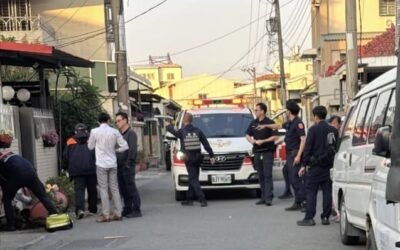
Roman Silantyev helped creating a “Muftiate of Little Russia,” headquartered in Henichesk and supporting the Russian occupation.
by Massimo Introvigne
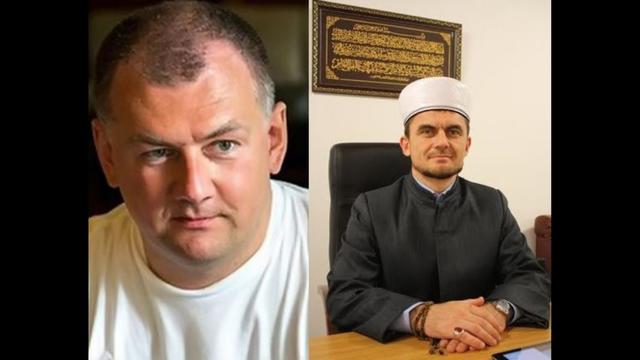
Roman Silantyev is one of Russia’s leading anti-cultists. When he is not busy participating in events in the West organized by the FECRIS, the federation of European anti-cult organizations, he lectures against Satanists, Neo-Pagans, and other “cultists” inspiring the resistance in Ukraine and infiltrating Russia (where they kill with the same enthusiasm Russian children, cats, and pigeons) on behalf of American and Ukrainian intelligence services.
This activism might lead us to forget that Silantyev also styles himself a specialist of Islam, and has been a consultant in the creation of Muslim institutions in Crimea loyal to the Kremlin.
As Silantyev admits, this was not an easy task. Human Rights Watch has defined the Russian attitude to Muslim Tatars in Crimea as a “persecution” similar to the one China perpetrates against the Uyghurs in Xinjiang. “Russian authorities in Crimea have relentlessly persecuted Crimean Tatars for their vocal opposition to Russia’s occupation since it began in 2014,” said in 2017 the Europe and Central Asia director at Human Rights Watch, Hugh Williamson. “They have portrayed politically active Crimean Tatars as extremists and terrorists, forced many into exile, and ensured that those who choose to stay never feel safe to speak their mind.” Human Rights Watch reported “disappearances,” beatings, and detentions under false pretexts of Muslim Tatars as routine in Russian-occupied Crimea.
Nonetheless, as it always happens, the Russians managed to persuade some Muslim clerics to turn into collaborators. The leader of the Spiritual Directorate of Crimean Muslims (SDCM), Mufti Emirali Ablayev, once an opponent of Russian occupation, made a spectacular U-turn and started supporting Russian authorities.

To put pressure on Ablayev, the Russians favored the creation of a smaller alternative Tauric Muftiate headed by Mufti Ruslan Saitvaliyev, who had also crossed swords with the authorities on several administrative issues but finally decided to cooperate. It is widely rumored that the Tauric Muftiate is a creation of Russian intelligence, not to replace the SDMC but to tell Ablayev that, if he does not behave, a replacement is at hand.
Silantyev publicly thanked the leaders of the Tauric Muftiate because they “actively supported Russia in 2014 by helping to hold a referendum on the annexation of Crimea.”
It is now Saitvaliyev who has helped Silantyev and the Russians to create a “centralized Muslim organization friendly to Russians” in the “liberated” territories of the Kherson and Zaporozhye regions with headquarters in Henichesk, in the Kherson oblast. The new organization would try to recruit Muslim collaborators supporting the Russian occupation. The collaborator organization has been called “Muftiate of the Little Russia,” a name chosen “subtly and with a hint,” Silantyev said.
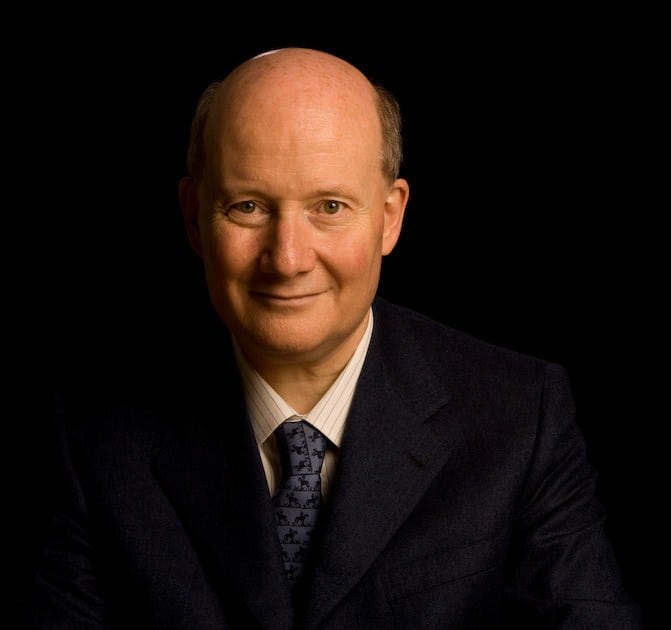
Massimo Introvigne (born June 14, 1955 in Rome) is an Italian sociologist of religions. He is the founder and managing director of the Center for Studies on New Religions (CESNUR), an international network of scholars who study new religious movements. Introvigne is the author of some 70 books and more than 100 articles in the field of sociology of religion. He was the main author of the Enciclopedia delle religioni in Italia (Encyclopedia of Religions in Italy). He is a member of the editorial board for the Interdisciplinary Journal of Research on Religion and of the executive board of University of California Press’ Nova Religio. From January 5 to December 31, 2011, he has served as the “Representative on combating racism, xenophobia and discrimination, with a special focus on discrimination against Christians and members of other religions” of the Organization for Security and Co-operation in Europe (OSCE). From 2012 to 2015 he served as chairperson of the Observatory of Religious Liberty, instituted by the Italian Ministry of Foreign Affairs in order to monitor problems of religious liberty on a worldwide scale.