The work of the Louisiana outsider painter owes much to his schizophrenia but is also uniquely related to popular millennialism and UFO lore.
by Massimo Introvigne
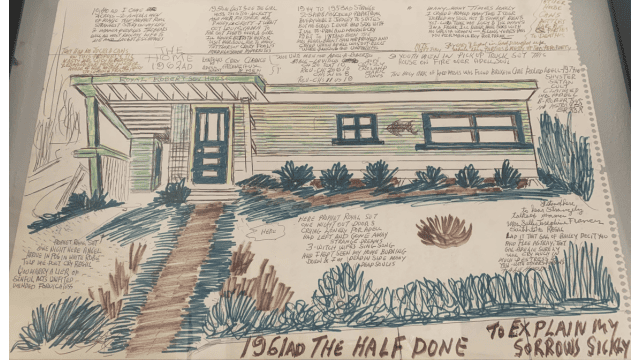
Part of what is sometimes called “outsider art” or “art brut,” the drawings of Prophet Royal Robertson (1936–1997) are increasingly found on sale at leading art galleries and auction houses. They are, admittedly, strange.
Royal Robertson was born in either St. Helena or St. Mary Parish, in Louisiana (he himself gave conflicting indication on his birthplace), on October 21, 1936. He later relocated to Baldwin, Louisiana, where he spent most of his life. He was self-educated, as he only completed the eighth grade before leaving school.
He soon became a painter—of sort, as he painted signs for a living. As a teenager, he apprenticed as a sign painter and later traveled to the West Coast. He did not make enough money as a sign painter and also had to work as a field hand. In the 1950s, he returned to Louisiana to care for his mother and continued his work as a sign painter.
He married Adell Brent in 1955, and they had eleven children. Their marriage ended after 19 years when Adell left him and moved to Texas with her children and another man. The separation from Adell was the defining event of Robertson’ life, although he claimed he already had a vision of a spaceship driven by God at age fourteen.
After Adell left, he became a recluse and was diagnosed with paranoid schizophrenia. Visions of God, aliens, and spaceships multiplied and became the subject matter of Robertson’s visionary drawings and the bizarre architecture of his house, also decorated with signs against trespassers and his ex-wife. He started calling himself “Prophet Royal Robertson” and claimed to have received the divine mission to create a new Zion.
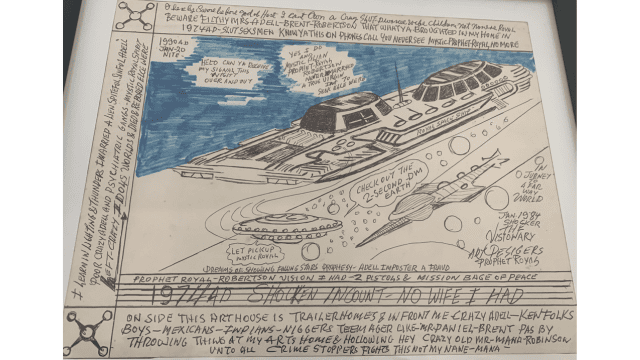
He reported that aliens told him that the end of the world was coming, but he also connected humanity’s impending doom with his ex-wife’s infidelity, which he perceived as an event of cosmic significance predicted in the Book of Revelation. He developed misogynistic themes and included in his drawings invectives against “harlots” and adulterous women. He associated his ex-wife with Jezebel, the woman who in the Book of Revelation leads her followers into idolatry and fornication, but also with female superheroes from the comics and serpent-like creatures.
Certainly, Robertson had a good knowledge of Biblical prophecies, numerology, and UFO lore. He identified himself as “Libra Patriarch Prophet Lord Archbishop Apostle Visionary Mystic Psychic Saint Royal Robertson.” His works emanate a strange fascination, which explains why they have become collector’s items. They are as much part of art brut and the works of psychiatric patients as they belong to a broader repository of popular American Biblical images and UFO lore. They can serve as a tool to consider how pervasive these themes are, or were, in American popular culture.
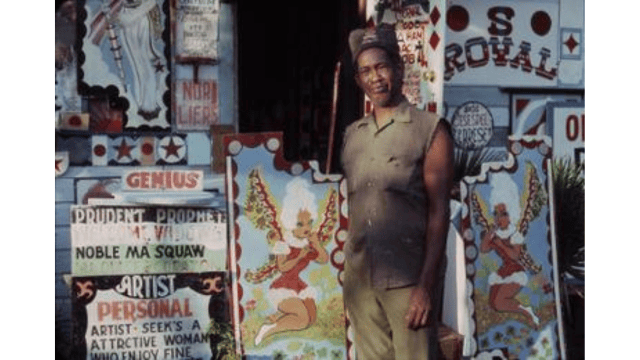
Royal’s home, in itself a work of art, was destroyed by Hurricane Andrew in 1992. Eventually, friends and the FEMA (Federal Emergency Management Agency) helped him rebuild. In 1997, his eldest son decided to move in with him. This was a joy for Royal but also caused emotional turmoil. The night before his son’s move, the artist had a heart attack and was found dead in his backyard, on July 5, 1997.
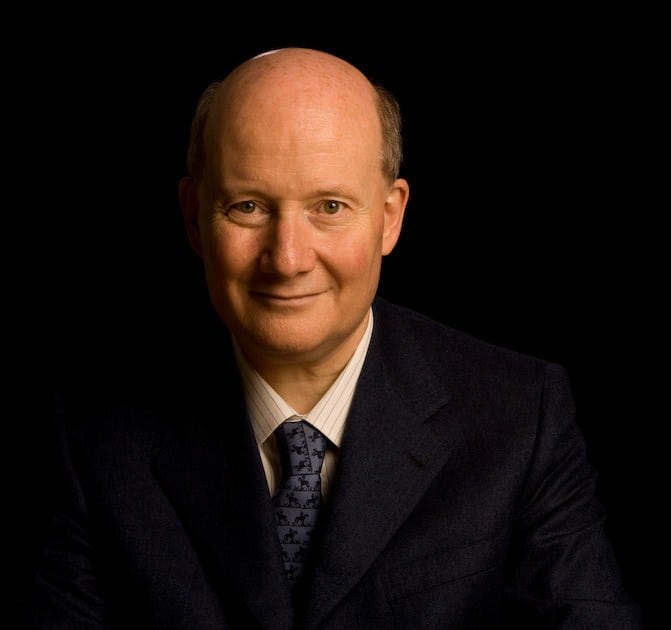
Massimo Introvigne (born June 14, 1955 in Rome) is an Italian sociologist of religions. He is the founder and managing director of the Center for Studies on New Religions (CESNUR), an international network of scholars who study new religious movements. Introvigne is the author of some 70 books and more than 100 articles in the field of sociology of religion. He was the main author of the Enciclopedia delle religioni in Italia (Encyclopedia of Religions in Italy). He is a member of the editorial board for the Interdisciplinary Journal of Research on Religion and of the executive board of University of California Press’ Nova Religio. From January 5 to December 31, 2011, he has served as the “Representative on combating racism, xenophobia and discrimination, with a special focus on discrimination against Christians and members of other religions” of the Organization for Security and Co-operation in Europe (OSCE). From 2012 to 2015 he served as chairperson of the Observatory of Religious Liberty, instituted by the Italian Ministry of Foreign Affairs in order to monitor problems of religious liberty on a worldwide scale.