Dead or alive, members of the religious minority continue to be persecuted.
by Massimo Introvigne
In the night of November 22, graves where members of the Ahmadiyya community are buried were desecrated in Premkot, Hafizabad, Punjab, Pakistan. Unknown thugs wrote “Qadianis” (a derogatory term used to designate the Ahmadis) and “dogs” on the graves, and removed names and symbols.
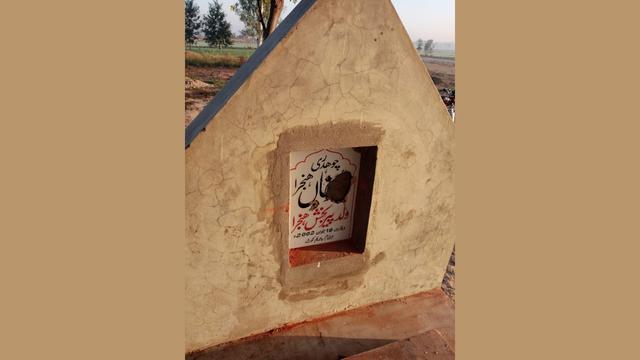
As the local Ahmadis noted, this private vandalism follows, quite logically, an official one. In February, it was the police that desecrated forty-five graves in the same cemetery, removing symbols it regarded as “Islamic.”

The Ahmadis believe that their founder, Mirza Ghulam Ahmad, who died in 1908 in Lahore, was “both a follower of the Holy Prophet” (Muhammad) and “a prophet” himself. Islam teaches the “finality of the prophethood,” i.e., that no genuine prophet can appear in human history after Muhammad. Conservative Muslims interpret the Ahmadi doctrine as so serious a heresy that it makes the Ahmadis non-Muslims.
In Pakistan there are laws prohibiting the Ahmadis from declaring themselves Muslims and using Muslim symbols in their places of worship and even in private homes.


Where the influence of radical Sunni fundamentalists is stronger, the surveillance extends to cemeteries, and Ahmadi graves are desecrated if they are believed to include Muslim symbols or references.
As it happened in the Premkot cemetery, the police are often actively involved in such desecrations. Private radicals go one step further, and also paint insults on the graves.

Massimo Introvigne (born June 14, 1955 in Rome) is an Italian sociologist of religions. He is the founder and managing director of the Center for Studies on New Religions (CESNUR), an international network of scholars who study new religious movements. Introvigne is the author of some 70 books and more than 100 articles in the field of sociology of religion. He was the main author of the Enciclopedia delle religioni in Italia (Encyclopedia of Religions in Italy). He is a member of the editorial board for the Interdisciplinary Journal of Research on Religion and of the executive board of University of California Press’ Nova Religio. From January 5 to December 31, 2011, he has served as the “Representative on combating racism, xenophobia and discrimination, with a special focus on discrimination against Christians and members of other religions” of the Organization for Security and Co-operation in Europe (OSCE). From 2012 to 2015 he served as chairperson of the Observatory of Religious Liberty, instituted by the Italian Ministry of Foreign Affairs in order to monitor problems of religious liberty on a worldwide scale.