From Canon Law to cannon fire: the Moscow Patriarchate’s proselytization campaign in Africa has now taken a sinister turn.
by Massimo Introvigne
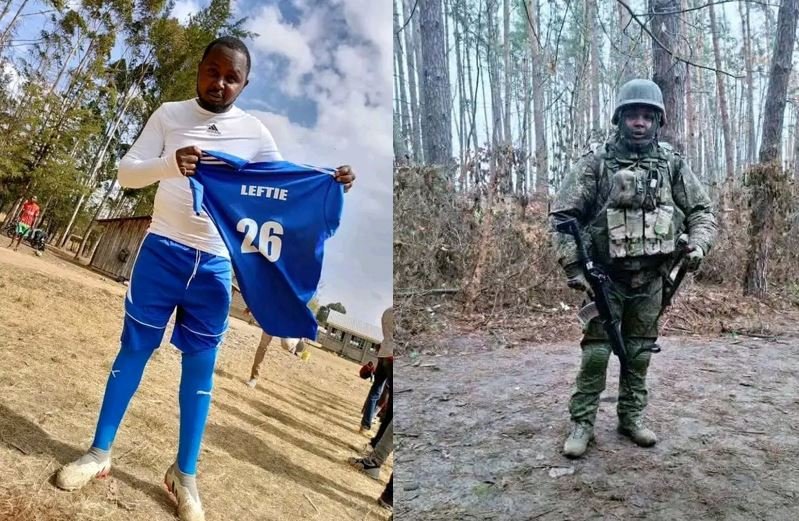
Earlier this month, I happened to be in Kenya on a day when every local radio station and every evening bulletin seemed to circle back to one name: Charles Waithaka Wangari. His funeral—held without a body in Kinuri village, Rugi Ward, Mukurweini—had shaken the country. The cameras lingered on his mother’s face, on the empty chair where his photograph sat, on the candles placed where a coffin should have been. The grief was raw, but what struck me most was the confusion: how had a promising young athlete, a man who once dreamed of a professional career in Europe, ended up dying on Christmas Day 2025 in a war thousands of kilometers away?
As the story unfolded, the emotion surrounding Waithaka’s death began to harden into something else: a quiet but determined inquiry into the activities of the Kenyan branch of the Russian Orthodox Church. Reporters, activists, and clergy were all asking the same question—one that hung in the air with growing urgency. What happened, exactly?
For more than a century, the map of global Orthodoxy was a fairly stable affair. Africa—vast, diverse, and spiritually complex—was recognized by all major Orthodox churches as the canonical territory of the Greek Orthodox Patriarchate of Alexandria. Moscow agreed to this arrangement for decades, even during the Cold War, when the temptation to use religion as a geopolitical tool must have been considerable. Then came Ukraine.
When the Ecumenical Patriarchate recognized the autocephalous Orthodox Church of Ukraine in 2019, Moscow reacted as if Constantinople had personally unplugged the Kremlin’s samovar. The rupture within global Orthodoxy over Ukraine did not remain confined to synods, communiqués, and canonical footnotes. Moscow responded not only with theological indignation but with a new missionary zeal directed toward a continent it had previously acknowledged as belonging entirely to the Patriarchate of Alexandria. Suddenly, Africa—long shepherded by Greek clergy and historically outside Russia’s canonical claims—became the stage for an ecclesiastical landgrab. With the Kremlin’s enthusiastic blessing, the Moscow Patriarchate launched the Patriarchal Exarchate of Africa, a structure designed to siphon clergy, parishes, and influence away from Alexandria and, by extension, from Constantinople.
The expansion was astonishingly rapid. In a few years, the Moscow-controlled network claimed hundreds of parishes, more than 200 clergy, and a presence in over 30 African countries. One of its own ideologues, Yuri Maksimov, celebrated the project as perhaps the most significant territorial growth in the Russian Church’s history. The strategy was simple: offer African priests better salaries, promise new churches, and guarantee promotions that would take decades in the Greek tradition. The Kremlin, unable to compete with China in Africa through infrastructure or investment, discovered that it could compete through religion.
But the ecclesiastical rivalry has now acquired a far more troubling dimension. In Kenya, where the Exarchate has been particularly active, testimonies are emerging that the Church’s expansion is intertwined with a recruitment pipeline feeding young Africans into Russia’s war in Ukraine. What began as a canonical dispute has evolved into something that looks uncomfortably like a spiritual-political conveyor belt: join the Moscow-aligned Church, accept an offer to “study” or “work” in Russia under the Patriarchate’s sponsorship, and discover, too late, that the destination is not a seminary or a Church charity but the front line.
The case of Charles Waithaka Wangari, a 31-year-old Kenyan who died in December 2025 after being conscripted shortly upon arrival in Russia, has become emblematic. A promising footballer, his journey began when he came into contact with the Orthodox Church in Kenya, affiliated with the Moscow-sponsored Exarchate, and with promises of employment in Russia. According to Kenyan soccer sources, his church-related recruiters promised him that, after a passage in Russia, he might have joined a professional team in Sweden. The story ended with his family being informed on Christmas Day that an explosion had killed him and that his remains could not be recovered. Local human rights organizations say his path—from Kenya to Russia via contacts in Russian Orthodox Church circles—is not an isolated one.
Vocal Africa, a pan-African human rights group, reports that hundreds of Kenyan families have sought help after their sons traveled to Russia under church-linked arrangements. The pattern is disturbingly consistent: young men are approached by individuals connected to the Moscow-aligned Church, offered salaries far above local standards, and encouraged to travel on short-term visas. Once in Russia, their documents are confiscated, bank accounts are opened in their names but controlled by military commanders, and the promised wages vanish. The next step is conscription.
The Church, for its part, denies everything—though not very convincingly. A Russian Orthodox priest in Nairobi insists that the Church sends only seminary students, not fighters. Yet he acknowledges that these students are dispatched to Russian-occupied areas of Ukraine, a detail that would be difficult to explain even in peacetime. He also admits that students are warned about the “risk” of military recruitment. It is a curious kind of pastoral care that involves sending young Africans into a war zone while cautioning them that they might be forcibly enlisted.
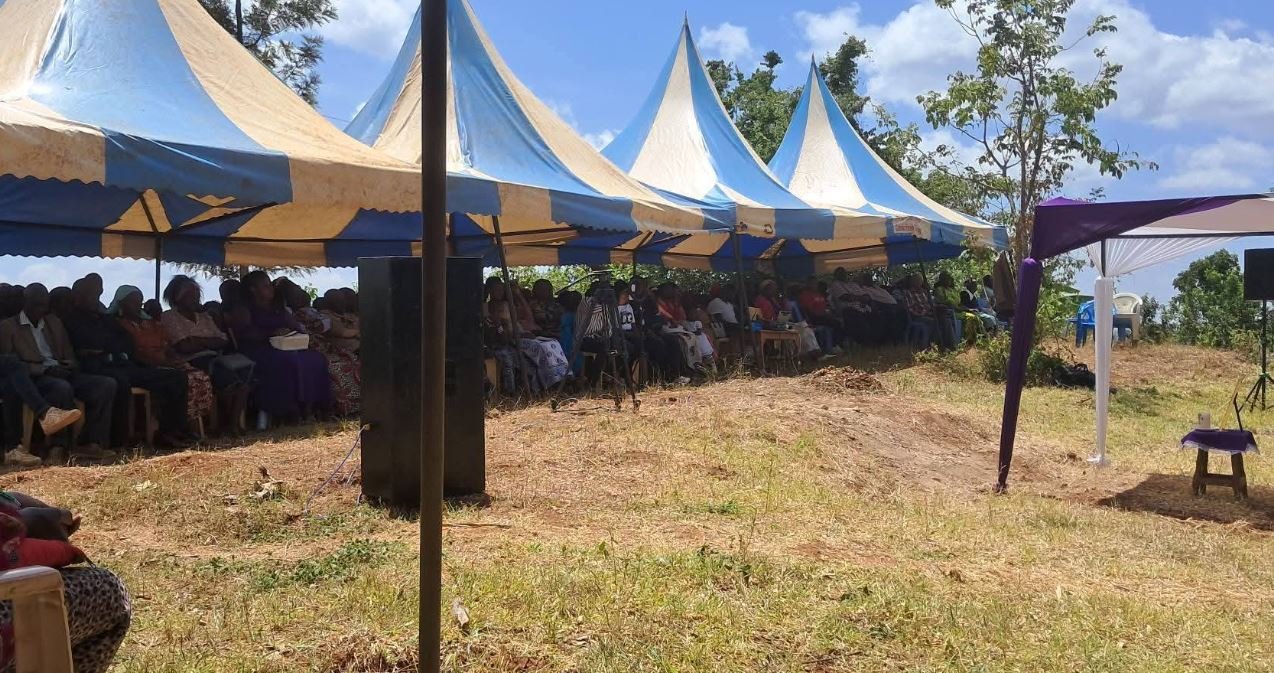
For families like Waithaka’s, the canonical disputes of distant patriarchates are irrelevant. What matters is that their sons were drawn into a religious structure that promised opportunity and delivered them to a battlefield instead. Some return injured or disabled; others do not return at all. Their parents are left to plead for repatriation, compensation, and answers.
The Moscow Patriarchate’s African adventure began as a retaliation against Constantinople. It has grown into a vast ecclesiastical apparatus backed by the Russian state. And now, if the testimonies from Kenya are accurate, it has taken on an even more sinister function: transforming spiritual allegiance into a pathway to war. In the competition for influence in Africa, Moscow may not match Beijing’s economic power. Still, it has found another currency—one that, tragically, some young Africans are paying with their lives.
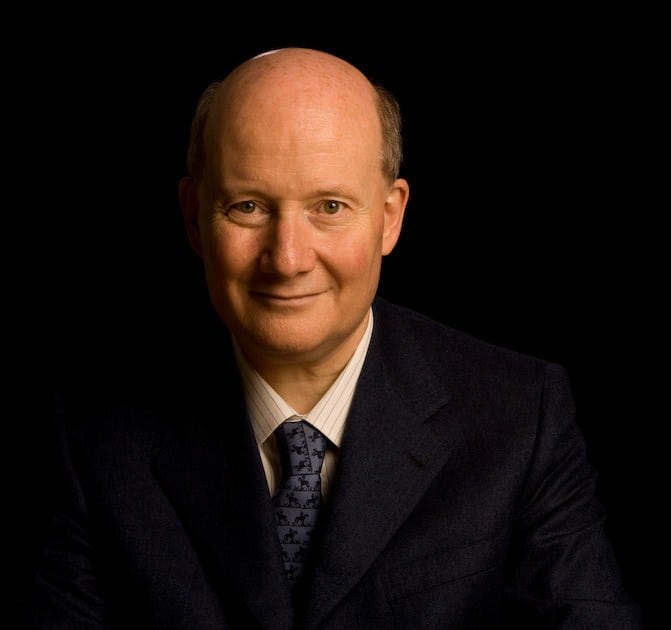
Massimo Introvigne (born June 14, 1955 in Rome) is an Italian sociologist of religions. He is the founder and managing director of the Center for Studies on New Religions (CESNUR), an international network of scholars who study new religious movements. Introvigne is the author of some 70 books and more than 100 articles in the field of sociology of religion. He was the main author of the Enciclopedia delle religioni in Italia (Encyclopedia of Religions in Italy). He is a member of the editorial board for the Interdisciplinary Journal of Research on Religion and of the executive board of University of California Press’ Nova Religio. From January 5 to December 31, 2011, he has served as the “Representative on combating racism, xenophobia and discrimination, with a special focus on discrimination against Christians and members of other religions” of the Organization for Security and Co-operation in Europe (OSCE). From 2012 to 2015 he served as chairperson of the Observatory of Religious Liberty, instituted by the Italian Ministry of Foreign Affairs in order to monitor problems of religious liberty on a worldwide scale.