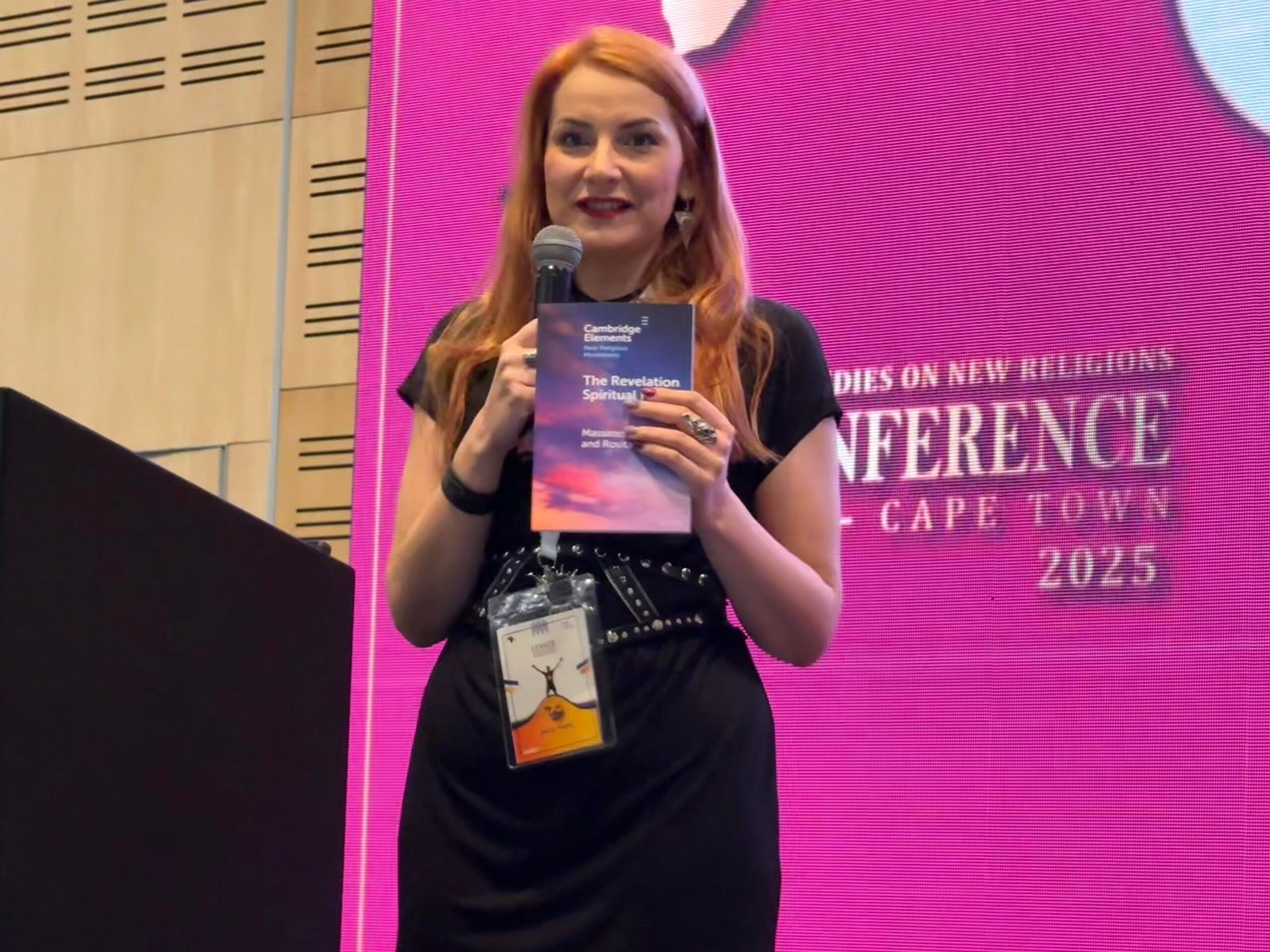
The new Cambridge University Press book “The Revelation Spiritual Home” was launched in Cape Town.
by Massimo Introvigne*
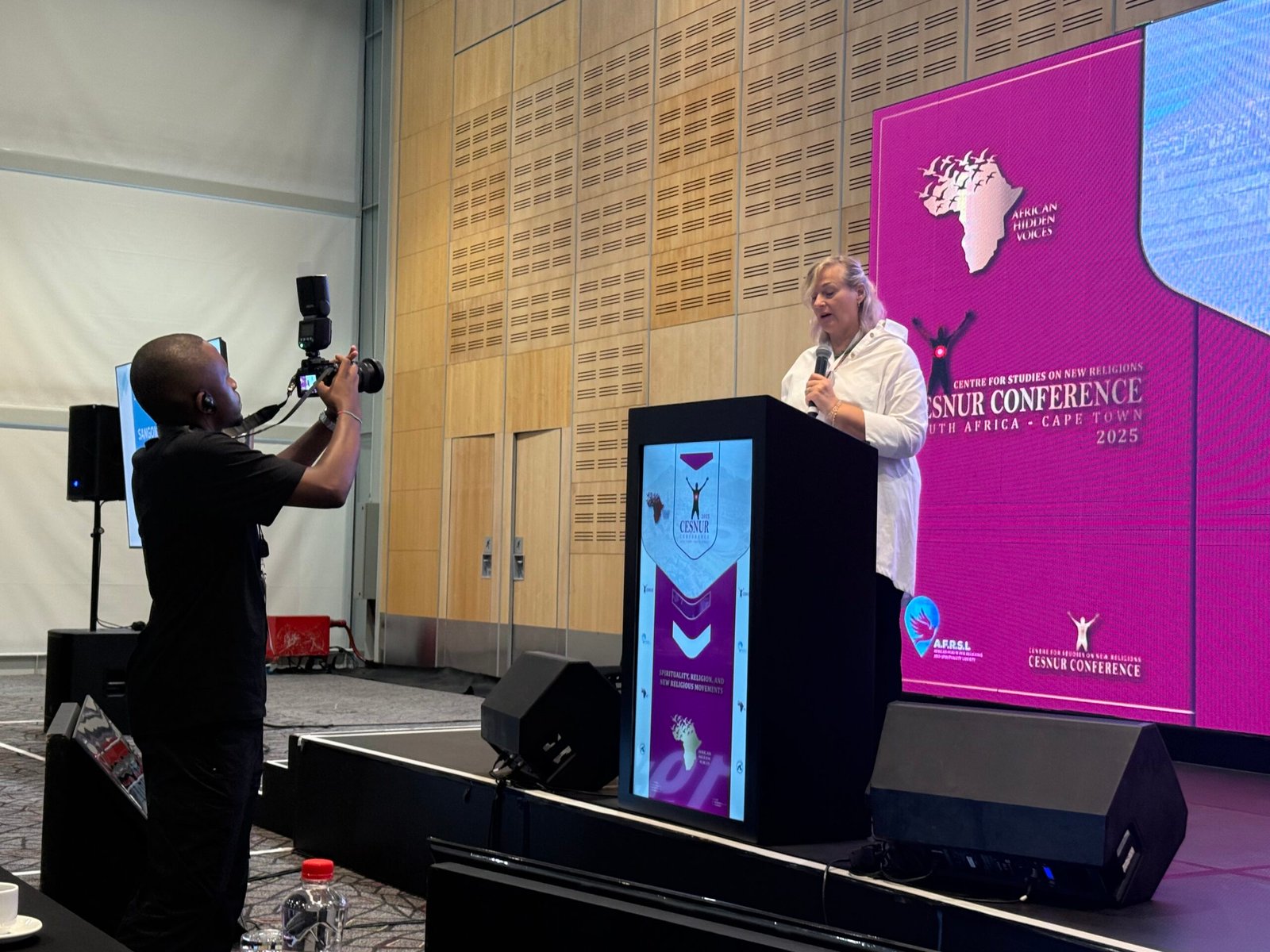
*Version of this paper were presented in the sessions launching the book “The Revelation Spiritual Home” by Massimo Introvigne and Rosita Šorytė in Cape Town, South Africa, at the CESNUR 2025 conference, November 19, 2025, and at the 10th Mzuvukile Slabbert Steve Radebe Memorial Lecture, November 21, 2025.
I published my first book in 1983. My mentor told me that publishing a book is a dangerous act. If you publish a bad book, it is a sin you will keep committing even after your death. Every time someone reads your book and takes in false information, you sin again, and this adds to your record. But maybe the opposite is also true. If you write a good book, you will continue earning merit when people read it, even after you are gone.
“The Revelation Spiritual Home: The Revival of African Indigenous Spirituality,” published by Cambridge University Press in 2025 and co-authored by Rosita Šorytė and me, is a book about a complex and misunderstood subject: African Indigenous Spirituality. It is a subject of interest to many: Cambridge University Press told us that in less than one month the online edition had more than 87,000 views or downloads, a record number for a scholarly book.
African Indigenous Spirituality—AIS—is everywhere and nowhere. It is ancient and contemporary, visible and elusive, revered and dismissed. It is practiced in caves and forests, whispered in dreams, and debated in journals. And yet, ask ten scholars about AIS, and you’ll get eleven answers—plus a footnote.
This talk is about that footnote.
I. Typologies and Tensions
We begin in 1967, a year of upheaval and awakening. In the world of African religious studies, it was a landmark moment: the launch of the Journal of Religion in Africa by Brill, and with it, Harold W. Turner’s seminal article, “A Typology for African Religious Movements.” A Presbyterian pastor and prolific scholar, Turner was both cautious and bold. He warned that typologies could be “dangerous,” imposing Western frameworks on African realities. Yet he also insisted they were necessary.
Turner’s typology included not only Christian movements but what he called “neo-pagan religious movements”—a term that today would be met with raised eyebrows and perhaps a gentle rebuke. He wasn’t talking about traditional religions per se, but about new forms that emerged in response to the seismic shifts of colonialism, Christianity, and modernity. They were movements like the Déïma churches in the Ivory Coast, born from the prophetic mission of Marie Lalou, and the Bwiti spiritual system of Gabon, which incorporated Christian elements while remaining rooted in indigenous cosmologies.
James W. Fernandez, the American anthropologist who studied Bwiti in the 1960s, later critiqued Turner’s typology. He argued that theological debates—so central to Western religion—were rarely preoccupying in African contexts. Typologies, he said, often served Eurocentric dialogues more than African realities. They were like trying to map a river with a ruler.
Fernandez’s insight remains relevant. AIS is not a system that fits neatly into theological boxes. It is fluid, experiential, and often resistant to categorization. It is not a religion in the conventional sense, nor is it merely a tradition. It is a living, breathing spiritual ecosystem.
II. The Mountain of the Gods
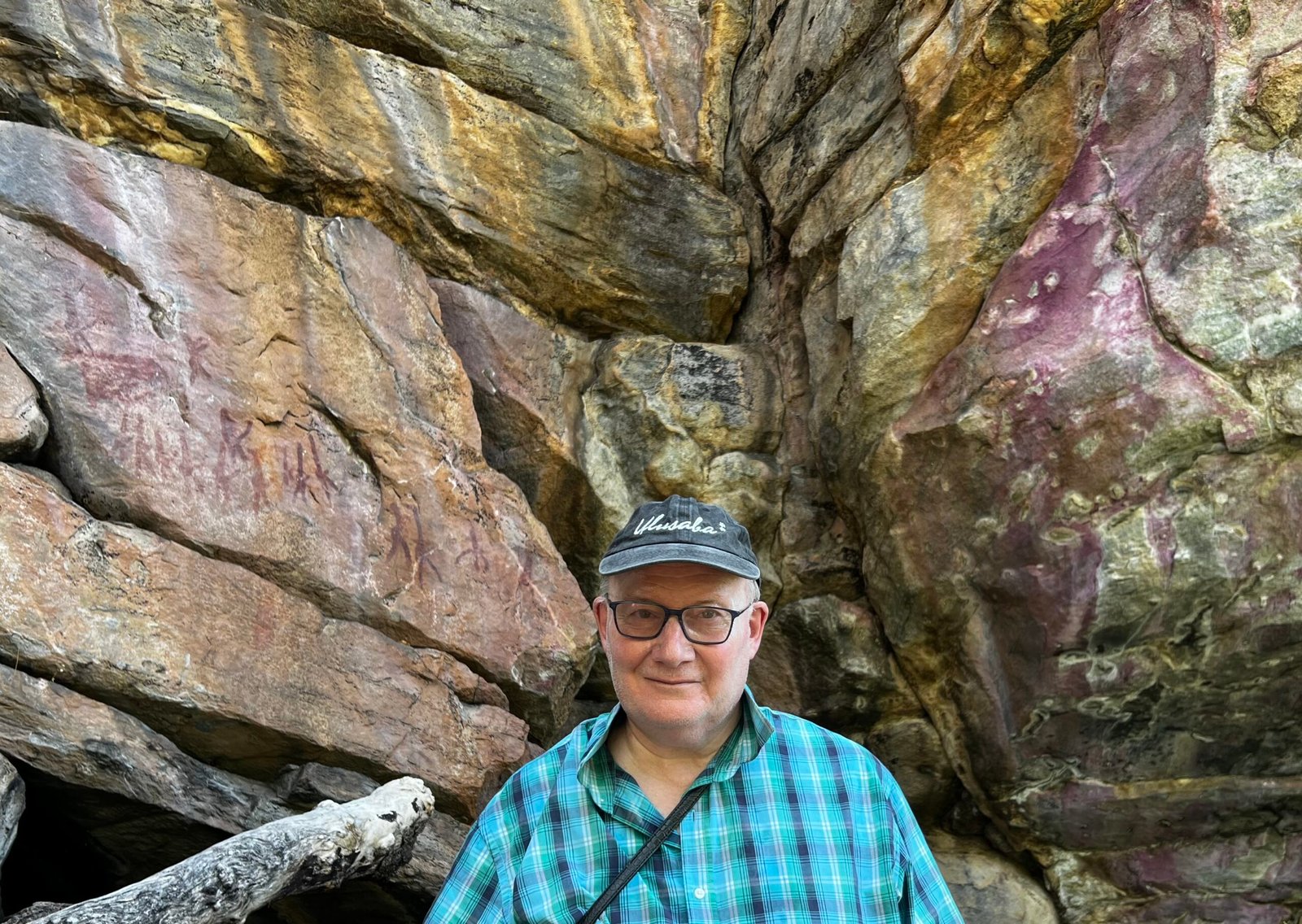
Let us now leave the journals and enter the landscape. In December 2024, we found ourselves hiking through the sacred Tsodilo Hills in northwestern Botswana, known as “the Mountain of the Gods.” It was 42 degrees Celsius. The sun was merciless. The rocks, however, were timeless. Over 4,500 rock paintings adorn these hills, some depicting animals, others rituals. The stones themselves date back two million years.
As for the paintings, archaeologists debate their age. American scholar Sheila Coulson suggested some may be 70,000 years old—possibly the oldest evidence of spiritual ritual on Earth. Others, including researchers from Michigan State University and the National Museum of Botswana, dated them to around 600 CE. Carbon dating is inconclusive. The rocks don’t care. They’ve seen it all.
Local scholars speculate that shamans made some paintings in a trance. One cycle depicts initiation rites so vivid that the site earned the nickname “Valley of the Dancing Penises.” And then there’s the rock made famous by Laurens van der Post, the South African travel writer and friend of Carl Jung. Van der Post claimed he offended the spirits by shooting wildlife. His camera broke. Bees attacked. He had to write an apology letter and bury it in the rocks. Whether true or not, the story captures something essential: the belief that the sacred is alive, responsive, and not to be trifled with.
AIS is not found in books or churches. It lives in rocks, rivers, and rituals. It is mythos rather than logos, experience rather than doctrine. It is not about believing—it is about knowing.
III. Definitions and Distinctions
Most definitions of AIS come from Christian theologians and missiologists. Some are suspicious of “paganism.” Others are sympathetic.
Dominique Zahan, the Romanian-French ethnologist, emphasized three elements: a creator god coexisting with other deities; a relationship with ancestors; and mediation through healers and guides. He also noted two key differences from Christianity: no original sin, and a cyclical view of time.
AIS practitioners, however, often define their spirituality by what it is not. It is not religion. It is not tradition. John Mbiti’s category of “African Traditional Religion” is also rejected. Tradition, TRSH says, is transmission. Spirituality is the breath that animates it. Without living spirituality, tradition is just ritual without soul.
In the terminology we adopted for our book, AIS refers to institutions that claim ancient roots but operate with modern tools—such as websites, social media, and strategic proselytization.
IV. The Revelation Spiritual Home
TRSH also distances itself from African-initiated churches (AICs). While scholars see AICs as expressions of African agency, TRSH sees them as colonial constructs. Leaders like Kimpa Vita, Shembe, and Kimbangu are reinterpreted as AIS visionaries who used Christian language as camouflage. TRSH dismisses attempts to “Africanize” Jesus, Mary, and Joseph. It prefers theories that these figures were mythical or stolen concepts based on AIS archetypes.
According to TRSH, religion is not neutral. It is political. It is external. Spirituality, by contrast, is internal. Africans, they say, are “a people who know, not a people who believe.” Their knowing is experiential. They have “heard the unheard.”
TRSH’s historiosophy identifies three waves of spiritual suppression: Christianity, Islam, and colonialism. Each sought to erase AIS and replace it with imported religions. Schools and hospitals, they argue, were tools of indoctrination. Even AICs, they claim, were designed to deepen religious bondage under the guise of spiritual independence.
This is a radical view. It challenges mainstream historiography. It critiques scholars who, TRSH claims, were often Christian missiologists. It reclaims figures like Shembe and Kimpa Vita as AIS prophets, misunderstood by their followers.
TRSH maintains cordial relations with Christian leaders, but insists that Africans return to AIS. Christianity, even in its Africanized forms, is seen as a colonial imposition. Religion in itself is not what TRSH offers. Religion, it argues, replaced spirituality in Africa—and that was a mistake.
V. The Role of IMboni iNkosi YamaKhosi oMoya Dr. Radebe
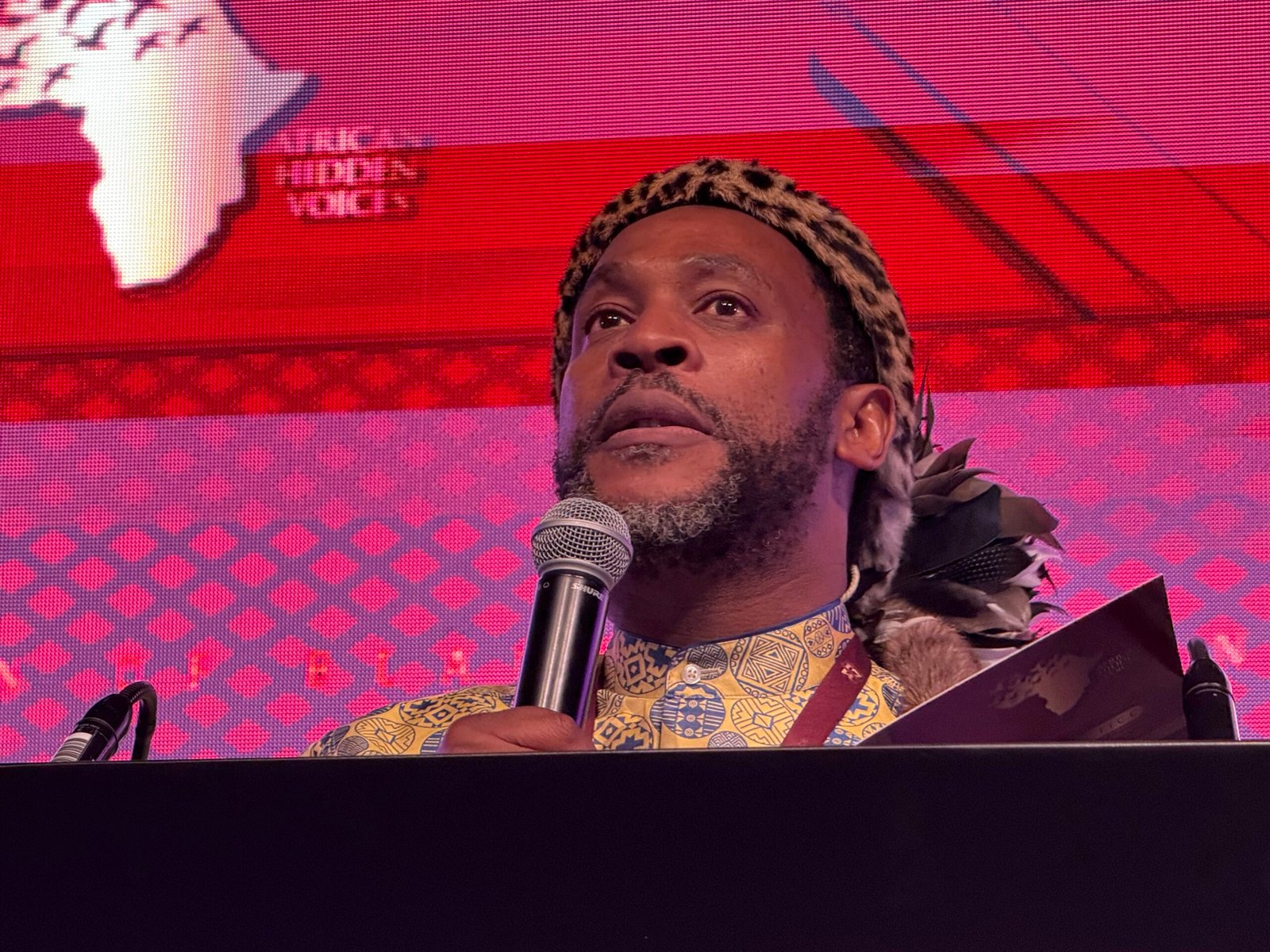
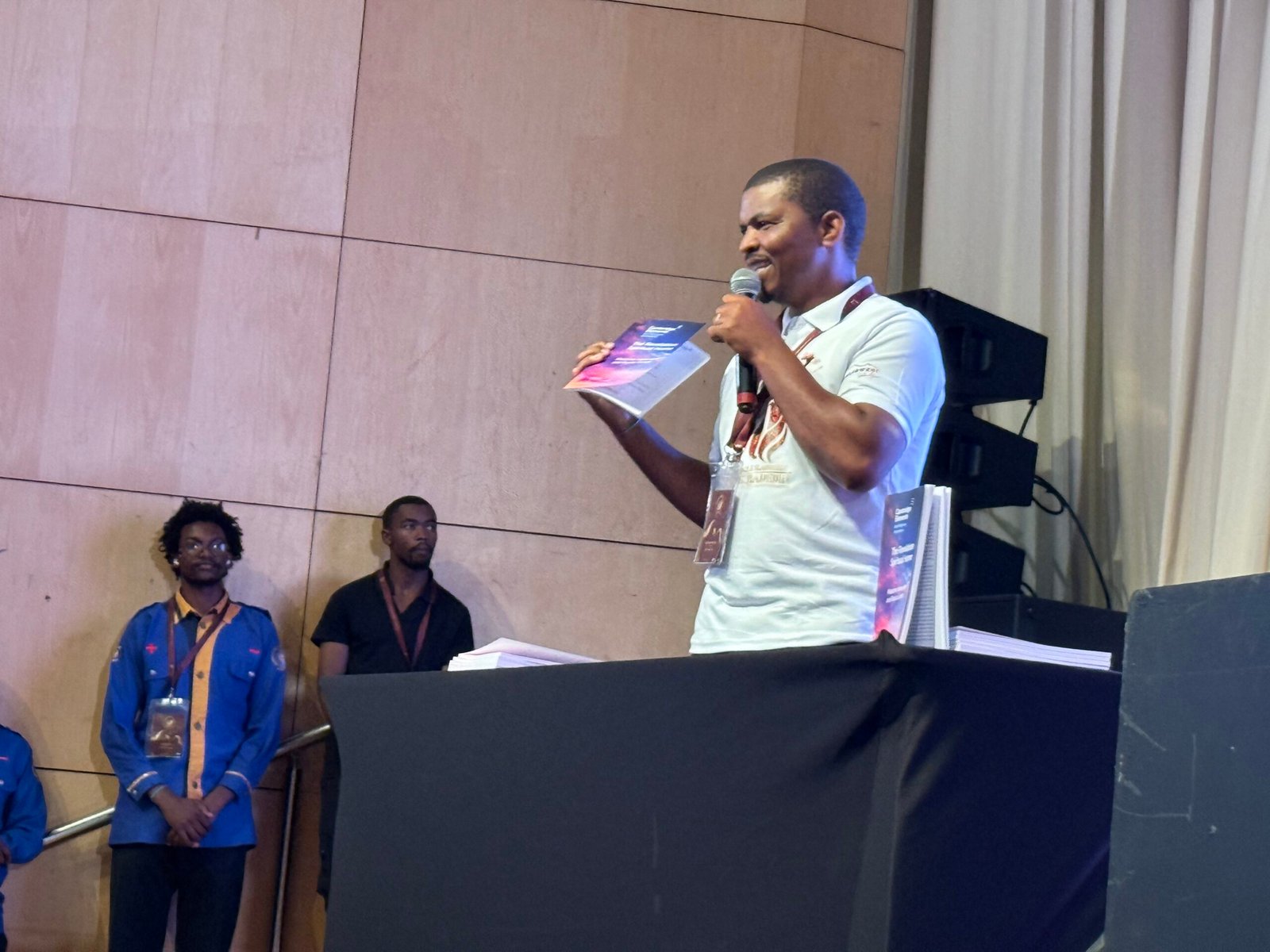
Here, I must emphasize the role of IMboni iNkosi YamaKhosi oMoya Dr. Radebe, the founder of TRSH. In just a few years, under his leadership, the movement has grown astonishingly, drawing millions into its orbit.
Today, to speak of AIS without speaking of IMboni iNkosi YamaKhosi oMoya Dr. Radebe is impossible. His title, “IMboni,” has different meanings in African languages. It means, among other things, “seer,” and it is not a metaphor. He is one who sees beyond the visible, who hears the unheard, who channels ancestral wisdom into contemporary revival.
When you stand in his presence, you feel something that scholars struggle to describe. It is charisma in the Weberian sense—authority that flows not from office or lineage only but from the sheer force of personality. But it is more than charisma. It is awe. It is the sense that you are in the presence of someone who embodies collective memory, speaks with the voice of ancestors, and makes the invisible visible.
This is the secret of TRSH and why it has grown so rapidly. It is not only organization, discipline, or strategy. It is the strength of a leader who embodies the revival of AIS.
VI. The Self, the Spirit, and the Collective
Let us now turn to the self. African Indigenous Spirituality is deeply tied to the relational–collective self. It is not about individual salvation, but about communal well-being. Spirituality is not a private affair—it is a public truth.
AIS fosters autonomy, competence, and relatedness—three pillars of self-determination theory. In other words, AIS is not just about metaphysics. It is about motivation. It is about how people live, love, and heal.
Nigerian scholar Jacob Olupona reminds us that indigenous traditions are not remnants. They are foundations. They define African personhood, communal identity, and values. They are not fading—they are evolving.
AIS is not just a revival—it is a renaissance. Across the continent, young Africans are rediscovering ancestral wisdom and blending it with modern tools. There are Instagram posts about ancestral altars, TikTok videos explaining rituals, and WhatsApp groups for spiritual dreams. The sacred is going digital.
But this renaissance is not without risk. Commercialization, misrepresentation, and dilution threaten its integrity. That is why institutions like TRSH insist on structure, discipline, and spiritual rigor. They are not nostalgic—they are strategic.
AIS is also political. It challenges colonial epistemologies, reclaims African agency, and asserts that Africa is not a continent of borrowed beliefs but original wisdom. It is not a spiritual tabula rasa waiting to be written upon by missionaries but a continent whose people have long known how to speak with the unseen, heal with plants, read the stars, and live in harmony with the ancestors.
This is why AIS is not merely a subject of academic curiosity. It is a site of cultural resistance, a form of epistemic sovereignty. It is a way of saying: we were never spiritually homeless, waiting to be saved, without gods, stories, or sacred places.
And yet, the struggle for recognition continues. In many African countries, AIS is still marginalized. It is not taught in schools and is not protected by law. Its practitioners are sometimes dismissed as superstitious or even dangerous “cultists.” In some cases, they are persecuted. The irony is painful: in lands where AIS was born, it is often treated as an intruder.
But the tide is turning. Across the continent and in the diaspora, there is a growing hunger for spiritual authenticity. Young Africans are asking questions their grandparents were told not to ask. They are visiting sacred sites, learning ancestral languages, and reviving rituals. They are not rejecting modernity—they are reimagining it. They are saying: We can be digital and spiritual, global and grounded, modern and ancestral.
AIS is not a return to the past. It is a return to the source.
VII. Scholars and African Indigenous Spirituality
As scholars, we must ask ourselves: what is our role in this story?
First, we must listen to texts, testimonies, archives, and altars. We must take practitioners’ emic perspectives seriously, even when they challenge our categories.
Second, we must interrogate our tools. Are our typologies serving understanding, or are they relics of colonial thinking? Are we analyzing AIS to illuminate it—or to domesticate it?
Third, we must be humble. AIS is not waiting for our validation. It does not need to be “discovered” or “rescued.” It is already alive, already evolving, already speaking. The question is whether we are ready to hear it.
Finally, we must be courageous. To take AIS seriously means questioning the foundations of much of Western religious studies. It is to admit that the sacred does not always wear a collar or carry a book. Sometimes, it wears beads. Sometimes, it speaks in dreams. Sometimes, it dances.
Conclusion
So let us return, one last time, to the Tsodilo Hills.
Imagine standing in the heat surrounded by rocks that have seen more than we ever will. You place your hand on the stone. You feel the pulse of something ancient. You hear a story—not in words but in the wind. You are not alone. The ancestors are listening.
This is African Indigenous Spirituality.
It is not a system. It is not a cult. It is not a footnote.
It is a way of being. A way of knowing. A way of remembering.
It is the whisper in the wind. The rhythm in the drum. The silence in the cave. The fire in the healer’s eyes. The dream that won’t let you go.
Let me return to the emotion of presence. When you stand before Imboni iNkosi YamaKhosi oMoya Dr. Radebe, you feel not only charisma but continuity. You feel that the spirits are speaking through him. You feel Africa, remembering itself—and talking to the world.
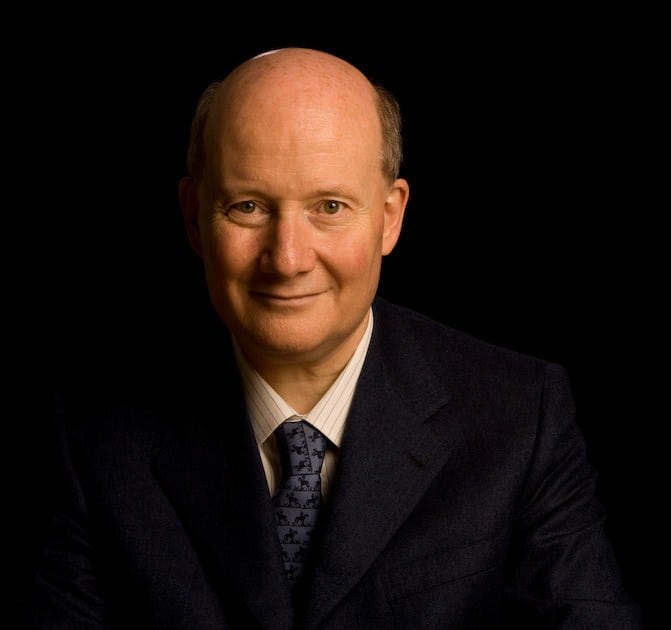
Massimo Introvigne (born June 14, 1955 in Rome) is an Italian sociologist of religions. He is the founder and managing director of the Center for Studies on New Religions (CESNUR), an international network of scholars who study new religious movements. Introvigne is the author of some 70 books and more than 100 articles in the field of sociology of religion. He was the main author of the Enciclopedia delle religioni in Italia (Encyclopedia of Religions in Italy). He is a member of the editorial board for the Interdisciplinary Journal of Research on Religion and of the executive board of University of California Press’ Nova Religio. From January 5 to December 31, 2011, he has served as the “Representative on combating racism, xenophobia and discrimination, with a special focus on discrimination against Christians and members of other religions” of the Organization for Security and Co-operation in Europe (OSCE). From 2012 to 2015 he served as chairperson of the Observatory of Religious Liberty, instituted by the Italian Ministry of Foreign Affairs in order to monitor problems of religious liberty on a worldwide scale.