Trading in rhino horns is illegal and threatens the survival of the magnificent animals. Yet, China’s myth of the medicinal effectiveness of horn powder fuels a network of corruption.
by Massimo Introvigne
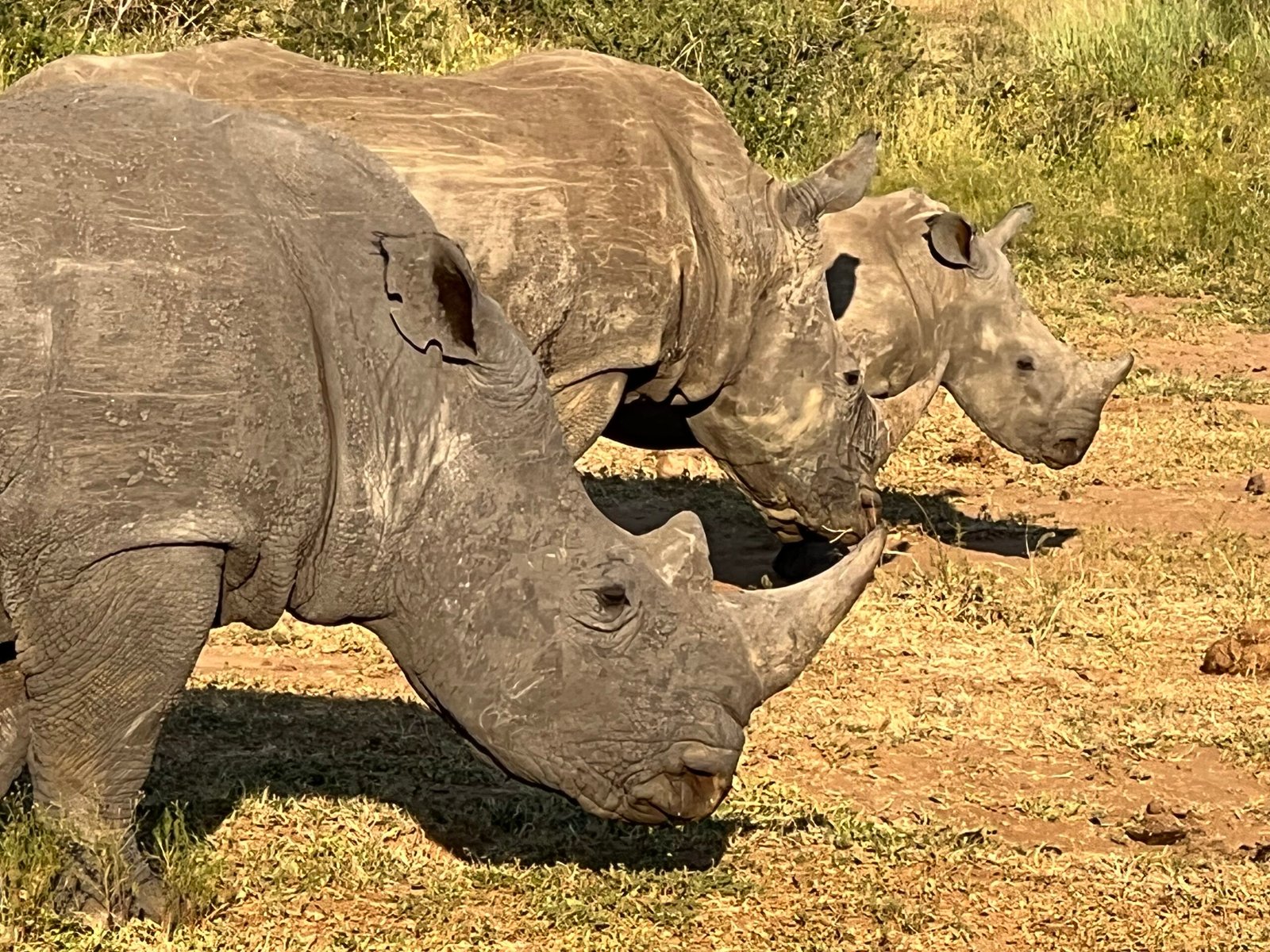
My wife Rosita and I returned in December from our eighth safari in Southern Africa. We are not professionals, but neither are we tourists at their first lion. We have seen the continent’s great beasts in their glory and in their decline. In our early journeys, rhinos still carried their horns—though we were sternly warned not to post their whereabouts online, lest we unwittingly assist poachers. Now, we see only dehorned rhinos.
Dehorning is a desperate compromise: it may save lives, but not always. Poachers will still kill for the stub left behind, and dehorned females cannot defend their calves against hyenas. It is useful, but it is also sad—a mutilation that reminds us of human greed.
Keith Sommerville’s new book, “Africa’s Threatened Rhinos: A History of Exploitation and Conservation” (London: Pelagic Publishing, 2025), is a sweeping chronicle of centuries of slaughter. He reminds us that rhinos have been killed for every conceivable reason or unreason. Early indigenous hunters obtained meat and leather. Taken to the circuses by the Romans, they were killed by gladiators. Sport, with American President Theodore Roosevelt alone killing hundreds. Yemeni dagger culture, where only a rhino-horn handle confers respect. And most devastatingly, Chinese medicine has transformed horn powder into a panacea for everything from fever to cancer.
The numbers are stark. Africa’s rhino population has collapsed from hundreds of thousands to fewer than 23,000 black and white rhinos today. The western black rhino is extinct. Only two northern white rhinos survive, both females, effectively ending that lineage.
Popular lore reduces rhino horn to “natural Viagra.” Sommerville shows the reality is more insidious: in traditional Chinese medicine, horn powder is believed to cure cancer, fever, and a host of ailments. This belief, combined with corruption, has created a market that no ban can extinguish.
CITES (the Convention on International Trade in Endangered Species of Wild Fauna and Flora) prohibits international trade in rhino horn. China itself has laws banning sales. Yet Operation Red Cloud, a landmark private investigation, revealed how Chinese Communist Party officials colluded with African intermediaries to smuggle horns on a massive scale. Vietnam serves as a transit hub, but China is the leading consumer. Sadly, while heroic park rangers lost their lives in fighting the poachers, others colluded with them, as did local politicians.
Sommerville details the absurdities of enforcement. Trophy-hunting permits issued under CITES can cost up to $400,000. They are meant to allow the killing of old or sick males, whose removal may benefit younger breeders. In Namibia, this system has funded effective anti-poaching patrols.
But once trophies leave Africa, horns are unregulated. One ring even recruited Asian prostitutes with fake hunting licenses to funnel horns to traffickers. They never fired a shot; others did the killing, and the women carried “trophies” home for the black market.
Meanwhile, hundreds of horns lie in vaults in South Africa, unsellable under the current law. Private reserve owners argue for legal trade to undercut the black market. Conservationists are divided: some see regulated hunting and trade as pragmatic, while others see them as capitulation.

Vietnam has launched campaigns to persuade consumers that rhino horn has no therapeutic effect. In China, however, such efforts are dismissed as Western cultural impositions. High Party leaders in China and North Korea, including names few dare even to whisper, are reportedly seeking rhino horn in the hope of staying young and vigorous. Until corruption is tackled, demand will persist, and rhinos will remain imperiled. The rhino story is just another chapter of Chinese corruption spread to Africa.
As animal lovers, Rosita and I dream of a time when rhinos will no longer need to be dehorned to survive. Sommerville’s book reminds us that conservation is not only about protecting animals—it is about confronting corruption, dismantling myths, and exposing the cynical bureaucrats who profit from extinction.
The rhino’s horn is not medicine. It is not a dagger handle. It is not a trophy. It is a symbol of survival. And until China’s and Africa’s corruption is confronted, the horn will remain both a weapon and a wound.

Massimo Introvigne (born June 14, 1955 in Rome) is an Italian sociologist of religions. He is the founder and managing director of the Center for Studies on New Religions (CESNUR), an international network of scholars who study new religious movements. Introvigne is the author of some 70 books and more than 100 articles in the field of sociology of religion. He was the main author of the Enciclopedia delle religioni in Italia (Encyclopedia of Religions in Italy). He is a member of the editorial board for the Interdisciplinary Journal of Research on Religion and of the executive board of University of California Press’ Nova Religio. From January 5 to December 31, 2011, he has served as the “Representative on combating racism, xenophobia and discrimination, with a special focus on discrimination against Christians and members of other religions” of the Organization for Security and Co-operation in Europe (OSCE). From 2012 to 2015 he served as chairperson of the Observatory of Religious Liberty, instituted by the Italian Ministry of Foreign Affairs in order to monitor problems of religious liberty on a worldwide scale.