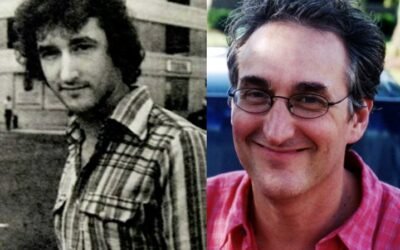
Baba Mondi has a message about the beauty, persecution, and resilience of what is emerging as a global world religion.
by Massimo Introvigne

The man is the very image of kindness and benevolence. He blesses candies and rakia, a tasty Albanian fruit brandy liquor, and takes pleasure in sharing them with visitors. One follower who must undertake a surgery enters and receives a warm blessing. Our host leads his disciples in prayers for the welfare of all humanity and warns against any violent or abusive behavior associated with religion. We are in Albania, where after the fall of a Communist regime that tried to create the first fully atheistic state in the world, his religion enjoys full religious liberty. Yet, it comes from a long story of persecution and is still discriminated in several countries.
Baba Mondi, born Edmond Brahimaj in 1959, is the eight Dedebaba, or world leader, of the Bektashis, a global world religion credited by scholars with some twenty million followers (they claim statistics are in themselves political in several countries and they are actually much more). In Albania, where they have their world headquarters, they may well be the largest religious group in the country.

Who the Bektashis exactly are is a matter of discussion among scholars. They have been classified as a Muslim Sufi order, a part of the “hyper-Shiite” group of religions that emphasize certain Shia beliefs and also include the Syrian Alawites, a third variation of Islam neither Sunni nor Shia while including elements of both, and an independent religion.
In Tirana, they have a beautiful museum documenting their history, yet not really solving the problem of classification. Baba Mondi does not seem to be too preoccupied with the question. He emphasizes that his religion honors and respects Prophet Muhammad, Imam Ali, the twelve imams of the Shiites, and sages from both the Sunni and Shia traditions, in addition to the Bektashis’ own mystics and poets, including the revered 13th-century founder Haji Bektash Veli. In addition, Baba Mondi teaches the respect of all religions, and maintain a broad dialogue, ranging from the Roman Catholic Church (he met Pope Francis in Rome) to the Church of Scientology. In fact, we were introduced to him by Eric Roux, a Scientologist active in interfaith dialogue and religious liberty advocacy (we were all in Tirana for a scholarly conference).

Members of a peaceful religion, the Bektashis have often been persecuted throughout their history by Muslims regarding them as heretics, Christians accusing them of “sheep stealing,” and political regimes suspicious of their fiercely independent thinking. In Türkiye, their religion is technically illegal, although Turkish political leaders including President Erdoğan have visited Baba Mondi in Albania and a cautious dialogue is progressing. Bektashis can visit their historical former headquarters in Türkiye, now a museum, as tourists but not worship there.
One point Baba Mondi emphasized in our meeting is that they are different from the Alevis. The latter are or were a “hyper-Shiite” group with a different theology but in Türkiye they had a love story with Marxism and now their old worship places are mostly cultural centers with vague reminiscences of religion. As French scholar Thierry Zarcone noted, in Türkiye as both movements were repressed they were lumped together through the use of the incorrect expression “Alevi-Bektashi tradition,” and the Alevis took over some of the Bektashi places of worship, called tekke. In Zarcone’s words, “quite serious confusions” followed.

Türkiye is not the only country where the Bektashis experience religious liberty problems. Baba Mondi before being elected as the world leader of the religion led the main tekke of North Macedonia in Tetovo, which was repeatedly assaulted by Sunni radicals trying to transform it into a mosque. We visited the Tetovo tekke in 2019. All seemed quiet, but the Bektashis have not succeeded in securing a legal status for their religion in North Macedonia, which is also true in most countries with either a Christian Orthodox or a Sunni or Shia Muslim majority.

Albania is an island of religious liberty for the Bektashis, and their communities in the United States and other Western countries also generally enjoy freedom of religion. However, the story of Bektashis in Albania is one of bloody persecution. Coincidentally, we visited Baba Mondi on April 25, which in Italy is a national holiday celebrating the end of the Fascist regime. We paid homage to the graves of one of Baba Mondi’s predecessors, Salih Nijazi, and his most close co-worker. They were assassinated during the Italian occupation, and although the courts at that time blamed unknown “bandits,” most historians agree that they were killed by Fascist militias. Nijazi was in fact the first Dedebaba, as it was in 1930 that the office of the world leader of the Bektashis was created.
While obviously inexcusable, the Fascist repression pales in comparison with the bloody persecution by the Communist regime of Enver Hoxha, who even accused the Soviet Union of allowing an excessive religious liberty and proclaimed Albania the first Marxist “religion-free” state in the world. On the walls of the museum, pictures of those who were killed or “disappeared” in the Hoxha years offer a sober testimony of a long-lasting tragedy.

The story of the persecution, however, is also a story of resilience. Although the Bektashis did not have a Dedebaba between 1958 and 1991, their faith survived in Albania, passed from parents to children within the families. When Communism was replaced by democracy, Albanians discovered that the Bektashi faith had continued to live underground and was ready to resurface and take its position as a religion with close to one million devotees in a country whose total population is less than three million.
Baba Mondi and the Bektashis carry a message of mysticism, tolerance, and peace. The restrictions still affecting their religion in various countries are a serious violation of religious liberty. They should be lifted without delay.

Massimo Introvigne (born June 14, 1955 in Rome) is an Italian sociologist of religions. He is the founder and managing director of the Center for Studies on New Religions (CESNUR), an international network of scholars who study new religious movements. Introvigne is the author of some 70 books and more than 100 articles in the field of sociology of religion. He was the main author of the Enciclopedia delle religioni in Italia (Encyclopedia of Religions in Italy). He is a member of the editorial board for the Interdisciplinary Journal of Research on Religion and of the executive board of University of California Press’ Nova Religio. From January 5 to December 31, 2011, he has served as the “Representative on combating racism, xenophobia and discrimination, with a special focus on discrimination against Christians and members of other religions” of the Organization for Security and Co-operation in Europe (OSCE). From 2012 to 2015 he served as chairperson of the Observatory of Religious Liberty, instituted by the Italian Ministry of Foreign Affairs in order to monitor problems of religious liberty on a worldwide scale.