The American federal commission mentioned recent Japanese incidents. Other democratic countries could have been included, too.
by Massimo Introvigne
Article 2 of 2. Read article 1.
As we saw in the first article of this series, in Central Asia the USCIRF denounces serious violations of the Jehovah’s Witnesses’ human rights in Tajikistan, Turkmenistan, and Uzbekistan.
According to the USCIRF, the situation is better in Kazakhstan where Jehovah’s Witnesses are legally registered. However, they still face ongoing legal issues regarding missionary activities. In 2023, over twenty members were charged under Administrative Code articles for unregistered missionary work and harassment. Some were acquitted, but others faced fines or warnings. In March 2024, two members were detained in Almaty for sharing their beliefs, following a complaint. Security services have also occasionally disrupted religious services due to neighbor complaints. In April 2024, police in Karaoi Village interrupted a private religious meeting to inspect documents and license plates, responding to a local complaint.
The Kazakh government has previously granted Jehovah’s Witnesses exemptions from military service, but issues persist. In November 2023, a military court ordered the release of Jehovah’s Witness Daniil Smal after nearly six months in custody after his illegal conscription. In 2024, authorities detained thirteen Jehovah’s Witnesses in enlistment offices despite their conscientious objection.
In Kyrgyzstan too, the USCIRF reports, Jehovah’s Witnesses have had national registration since 1998. However, local communities in Jalal-Abad, Naryn, Batken, and Osh have faced registration denials and disruptions of religious meetings by officials since 2010, despite UN Human Rights Committee objections. In August 2024, authorities conducted a raid on a Jehovah’s Witness meeting in Kyzyl-Kyia, where they seized religious literature and a laptop, and detained eighteen individuals. Additionally, police in Naryn detained ten Jehovah’s Witnesses and brought them to the police station for interrogation, during which officials requested information about other believers under threat of imprisonment. Officials also continue to restrict the importation of certain religious materials for Jehovah’s Witnesses.
Since authorities registered the Jehovah’s Witness community of Baku in 2018, the situation for Jehovah’s Witnesses in Azerbaijan has improved, the USCIRF notes. Increased engagement with the official State Committee for Work with Religious Associations (SCWRA) has helped resolve issues with the police. However, Jehovah’s Witnesses have been unable to register their activities outside of the capital due to the registration requirements of Azerbaijan’s 2009 religion law, putting them at risk of prosecution if caught engaging in religious activities. Azerbaijan has not created an alternative to mandatory military service, despite a provision in the constitution allowing for civilian service. While criminal prosecutions have largely ceased, some conscription offices continue to call up Jehovah’s Witnesses for military service. Additionally, some Jehovah’s Witnesses have received travel bans preventing them from leaving the country.
In Egypt, the USCIRF reports, Jehovah’s Witnesses are classified as “Christian” on ID cards, but a 1960 decree bans their religious activities, including public gatherings, printing texts, and using online materials. Many worship privately to avoid state targeting, and some have faced home surveillance and extended questioning at airports without cause.
The USCIRF also reports that Singapore still bans Jehovah’s Witnesses and has imprisoned eight members for refusing mandatory military service as of October 2024. Authorities deny them access to chaplains due to lack of official registration and ban their written materials, citing concerns over public welfare and order.
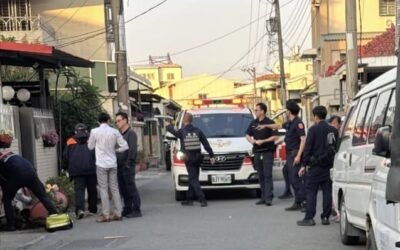
Of special interest is the mention in the USCIRF report of Japan, a democratic country that normally supports campaigns for international religious liberty. However, as readers of “Bitter Winter” know, after the assassination of former Prime Minister Shinzo Abe by a man who wanted to punish him for his cooperation with the Unification Church, several laws, regulations, and policies have been enacted to limit the activities of religious groups labeled as “anti-social.” Some, the USCIRF states, “have negatively impacted Jehovah’s Witnesses and risk criminalizing their peaceful religious activities and jeopardizing their safety.”
The USCIRF report especially singles out the Questions and Answers Guidelines released in December 22 by the Ministry of Health, Labor and Welfare on the so-called “religious child abuse.” “While the Q&A guidelines seek to help identify child abuse within a religious context,” the report comments, “the guidelines frequently use vague language, fail to define key terms, and lower the threshold for child abuse in a religious context as opposed to nonreligious ones. For example, one guideline states that ‘forcing a child to participate in religious activities, etc., during hours that may interfere with the child’s schooling or daily life constitutes neglect.’ However, the same guideline does not define the term ‘forcing’ nor does it explain how religious activities differ from nonreligious extracurricular activities, like music lessons or sports practice, that may also interfere with schooling.”
USCIRF adds that, “Although the guidelines do not specifically mention Jehovah’s Witnesses, the community has faced increased violence, threats of violence, and other forms of societal discrimination. Jehovah’s Witnesses have reported a 638 percent increase in hate incidents in 2023, including multiple threats of mass murder, since the Q&A guidelines’ release. Jehovah’s Witnesses have also reported discrimination at work, loss of employment, harassment at school, and violent attacks.”
The USCIRF also reminds that, “In April 2024, the UN Special Rapporteur on freedom of religion or belief and three other special rapporteurs sent a joint letter to the government of Japan to raise their concerns about the Q&A guidelines and a subsequent increase in hate crimes and hate speech against Jehovah’s Witnesses and other religious minorities. They called on the government to review and reconsider certain key aspects of the guidelines to ensure their compliance with Japan’s international human rights law obligations.”
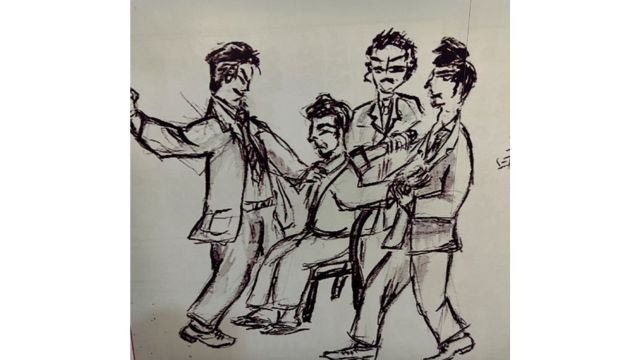
The report finally mentions South Korea, where Jehovah’s Witnesses face challenges due to their refusal of compulsory military service. Though a 2019 law introduced alternative civilian service, critics argue it is punitive. Conscientious objectors must work and live in prisons for thirty-six months, double the military service duration. Over a thousand have joined the system, but some refuse due to its severity. As of September 2024, nine Jehovah’s Witnesses faced prosecution or investigation for refusing both military and alternative service, with one serving an eighteen-month sentence. Additionally, those with past prison time struggle with employment and services due to unexpunged criminal records linked to their conscientious objection.
The list of countries in the USCIRF report is typological rather than comprehensive. Among democratic countries, in addition to Japan, at least Norway and France should have been included. In a pending case, Norway is trying to deny to the Jehovah’s Witnesses their registration as a religious organization. France, as courts have recognized, has continued to slander them through inaccurate information spread by the official anti-cult mission MIVILUDES.
As the report concludes, Jehovah’s Witnesses continue to face widespread persecution and discriminatory treatment on the basis of their religion across the world, including in some democratic countries such as Japan. On the other hand, their peaceful and vigorous defense in courts of law and international institutions powerfully contributes to establish legal precedents in crucial areas of religious liberty and human rights law, including conscientious objection.

Massimo Introvigne (born June 14, 1955 in Rome) is an Italian sociologist of religions. He is the founder and managing director of the Center for Studies on New Religions (CESNUR), an international network of scholars who study new religious movements. Introvigne is the author of some 70 books and more than 100 articles in the field of sociology of religion. He was the main author of the Enciclopedia delle religioni in Italia (Encyclopedia of Religions in Italy). He is a member of the editorial board for the Interdisciplinary Journal of Research on Religion and of the executive board of University of California Press’ Nova Religio. From January 5 to December 31, 2011, he has served as the “Representative on combating racism, xenophobia and discrimination, with a special focus on discrimination against Christians and members of other religions” of the Organization for Security and Co-operation in Europe (OSCE). From 2012 to 2015 he served as chairperson of the Observatory of Religious Liberty, instituted by the Italian Ministry of Foreign Affairs in order to monitor problems of religious liberty on a worldwide scale.