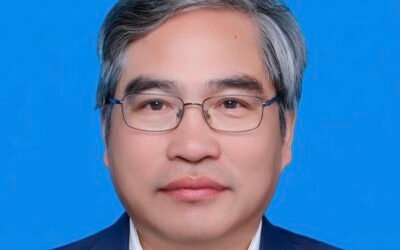
Bishop Joseph Han Zhihai (Source: AsiaNews)
While many expected that the agreement between the Vatican and China would cause a conservative schism in Chinese Catholicism, in fact, the first signs of a possible schism are appearing among the pro-government Patriotic Association.
Massimo Introvigne
The agreement between China and the Vatican on September 22, 2018, was widely criticized by conservative Catholics, who saw in it a victory of the Chinese Communist Party (CCP) and a sell-out of the Vatican. Some observers believed that, dissatisfied with the agreement, the most conservative anti-CCP Chinese Catholics may not accept to be part of a unified Catholic Church in China, resulting from a merger between the pro-government Patriotic Association and the pro-Vatican Underground Church, which had been bitter rivals for decades, and promote a schism.
There are now indeed signs of a possible schism in Chinese Catholicism. But they do not come from the conservatives. As AsiaNews reported, an association of members of the Patriotic Association hostile to the merger with the Underground Church is taking shape. In Lanzhou, in Gansu Province, the local bishop, Mgr Joseph Han Zhihai, became president of the local Patriotic Association and vowed to convert it into an instrument of resistance to any agreement implying the recognition of Vatican leadership over the Chinese Catholic Church. Han Zhihai was originally a bishop in the Underground Church, who later moved to the Patriotic Association.
AsiaNews reported that “the meeting of representatives of the Patriotic Association was held in Lanzhou on September 29 and 30, in the presence of Xian Daming, of the United Front Department. After the congratulations on the election of Msgr. Han Zhihai, the latter made a speech in which he once again stressed that the Church of Lanzhou ‘must adhere to the principles of independence and autonomy,’ ‘love the homeland and (in the second place) love the Church,’ ‘knowingly accepting the guide of the Chinese Communist Party,’ ‘carrying out religious activities according to the law.’”
The Patriotic Association is understandably worried that, in case of a merger, the lavish lifestyle of its bishop and the immoral conduct of some of them may come under Vatican scrutiny. The local United Front’s attitude confirms that, within the CCP itself, different attitudes coexist with respect to the Vatican deal.

Massimo Introvigne (born June 14, 1955 in Rome) is an Italian sociologist of religions. He is the founder and managing director of the Center for Studies on New Religions (CESNUR), an international network of scholars who study new religious movements. Introvigne is the author of some 70 books and more than 100 articles in the field of sociology of religion. He was the main author of the Enciclopedia delle religioni in Italia (Encyclopedia of Religions in Italy). He is a member of the editorial board for the Interdisciplinary Journal of Research on Religion and of the executive board of University of Pennsylvania Press’ Nova Religio. From January 5 to December 31, 2011, he has served as the “Representative on combating racism, xenophobia and discrimination, with a special focus on discrimination against Christians and members of other religions” of the Organization for Security and Co-operation in Europe (OSCE). From 2012 to 2015 he served as chairperson of the Observatory of Religious Liberty, instituted by the Italian Ministry of Foreign Affairs in order to monitor problems of religious liberty on a worldwide scale.