The painter knew everybody who was somebody in the Belgian and French occult scene. Finally, he discovered the Theosophical Society and joined it in 1899.
by Massimo Introvigne
Article 1 of 2. To be continued next on April 20th.
Jean Delville’s involvement in esoteric philosophy began in the vibrant occult culture of late-nineteenth-century Belgium. Brussels in the 1880s and 1890s served as a crossroads for Spiritualism, Freemasonry, Martinism, Rosicrucian revivals, and the newly introduced ideas of the Theosophical Society. Although Delville initially trained as an artist at the Académie Royale des Beaux-Arts, where he focused on realism and the lingering effects of Impressionism, his intellectual perspective shifted greatly when he encountered Symbolism and the wider occult revival. He befriended both Papus and Péladan, whose conflict animated the esoteric milieus of France and Belgium, and in 1890 joined Kumris (or Kvmris), the Belgian branch of Papus’ Groupe indépendant d’études ésotériques.
By the mid-1890s, he began to believe that art should serve as a spiritual tool, elevating consciousness rather than merely depicting the visible world. This belief placed him firmly within Symbolism, while also connecting him to the metaphysical goals of Theosophy, which aimed to merge Eastern and Western wisdom into a single spiritual science.
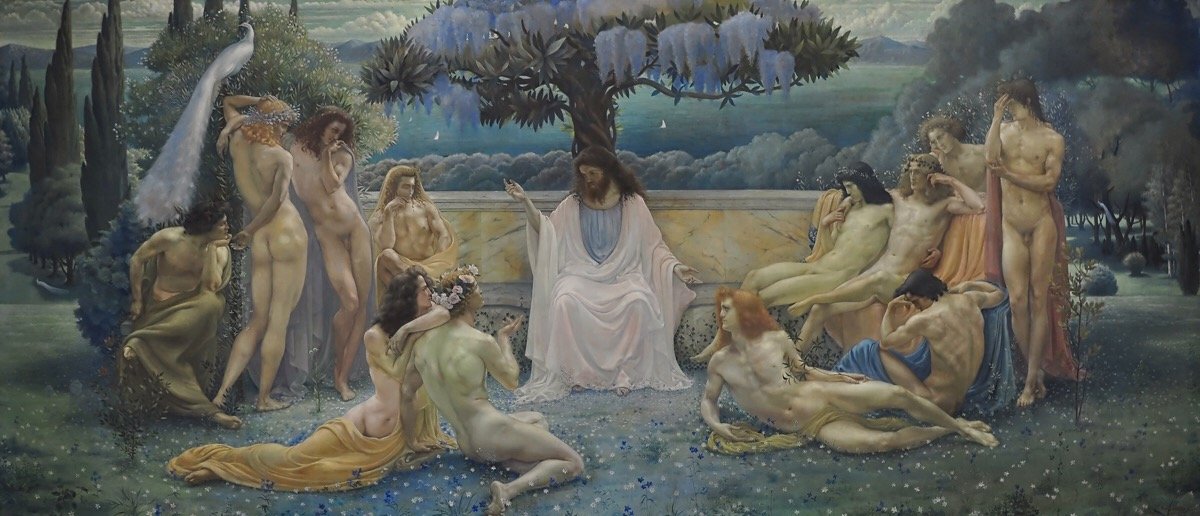
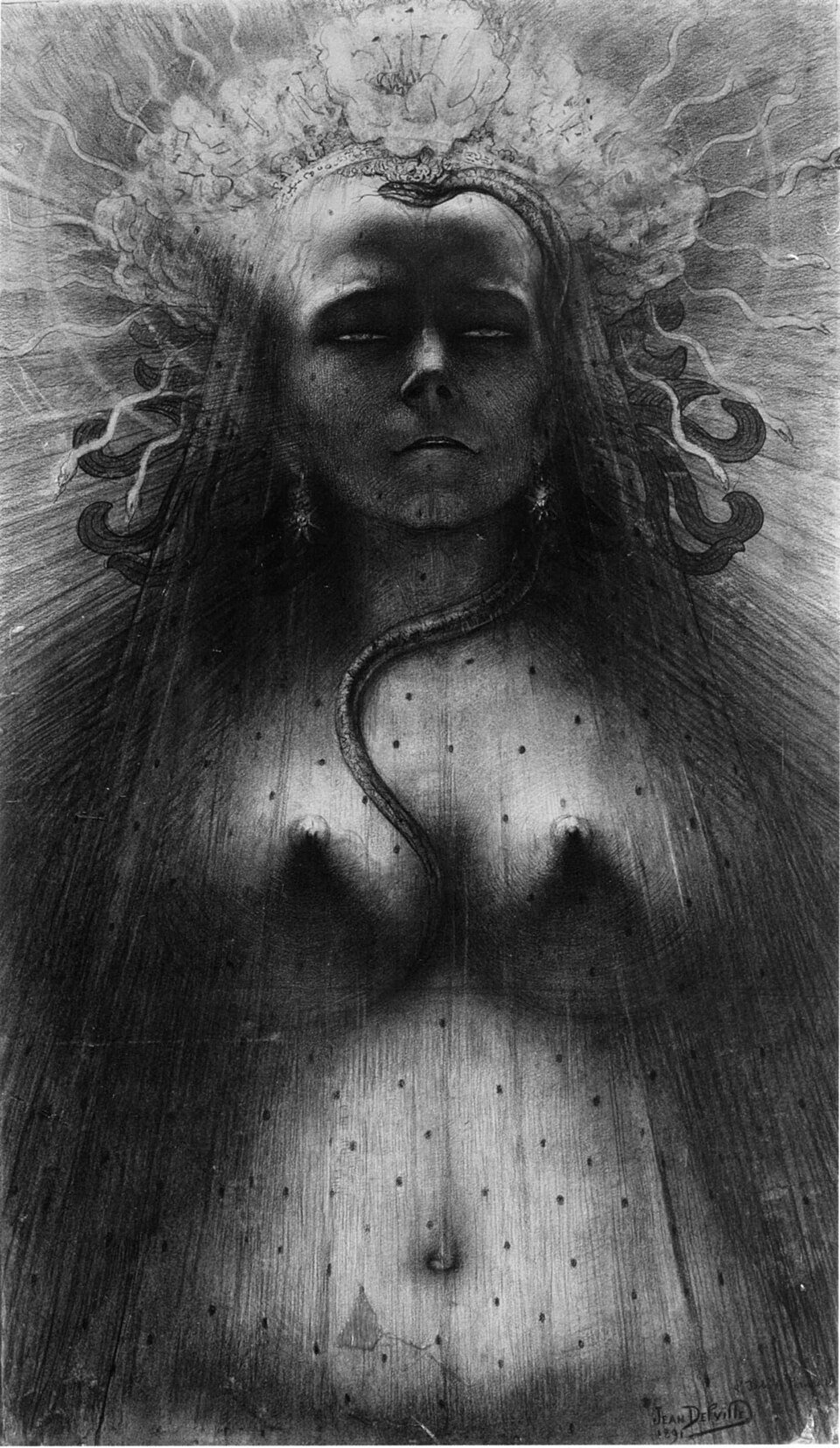
Delville’s early exposure to esoteric ideas was closely linked to his artistic growth. He mingled with people who read Édouard Schuré’s “Les Grands Initiés” as a modern scripture, participated in Spiritualist séances alongside discussions of Platonic metaphysics, and engaged in debates about the occult links between color and sound. His works, such as “Le Cycle des Passions” (1890) and “L’Idole de la Perversité” (1891), hinted at a metaphysical ambition that reached beyond the confines of Symbolist art. By the late 1890s, Delville had clearly begun to state that art should fulfill a spiritual mission, a belief that would soon take shape through his formal involvement with Theosophy. His masterpiece “The School of Plato” (1898) is an early manifesto of his theory of art.
It’s hard to pin down exactly when Delville became active in Theosophy. Still, evidence suggests he was already involved in discussions and initiatives related to the movement before becoming a member in 1899. These years matched his deepening commitment to philosophical manifestos promoting spiritual unity and his growing connections with individuals who supported Theosophical ideas. The publication of “La Mission de l’Art” in 1900 stands out as a significant early milestone. This book, which articulated his artistic philosophy, is rich in Theosophical concepts, including art as a sacred function, a belief in a universal spiritual science, and the idea that beauty reflects divine order. The preface by Schuré, who was a leading Theosophist, highlights the intellectual climate in which Delville operated. Schuré’s endorsement marked Delville’s entry into a network of esoteric thinkers who believed that art could contribute to spiritual renewal.
At the same time, Delville took on the editorship of “La Lumière,” a brief yet influential magazine published between 1899 and 1900. Under his leadership, the periodical became a platform for Theosophists, Rosicrucians, Spiritualists, and independent occultists. Its content blended Eastern and Western esoteric traditions, reflecting the Theosophical Society’s commitment to universal wisdom. Delville called for collaboration among these groups, advocating for a unified spiritual science to guide humanity toward higher consciousness. His editorials argued that art, science, and philosophy should come together in a single spiritual effort, mirroring Theosophy’s belief in the unity of knowledge.
The years from 1900 to 1905 marked a time of strong support for Theosophical ideas in Delville’s art and intellectual work. His writings during this time highlighted the occult significance of color, sound, and form, drawing directly from Theosophical theories about subtle energies and higher planes. Delville believed that artists, by tuning into these occult relationships, could create works that elevate the viewer’s consciousness. This conviction informed both his theoretical writings and his artistic output, which increasingly featured symbolic designs intended to inspire spiritual growth.
![Henri van Haelen (1876–1944), “Portrait of Jean Delville [1867–1953].”](https://bitterwinter.org/wp-content/uploads/2026/04/1.png)
By the early 1900s, Delville’s commitment to Theosophy began to show in his large-scale artistic projects. His work on monumental mosaics for the Brussels Palais de Justice and the Hémicycle du Cinquantenaire, starting in 1908, reflects a clear intention to embed esoteric symbolism in public art. The panels “Justice,” part of the Palais de Justice project, embody a vision of divine justice that transcends mere law, a theme deeply rooted in Theosophical and occult ideas. Delville intended not just to adorn spaces but to create a monumental visual language capable of conveying spiritual truths to the public.
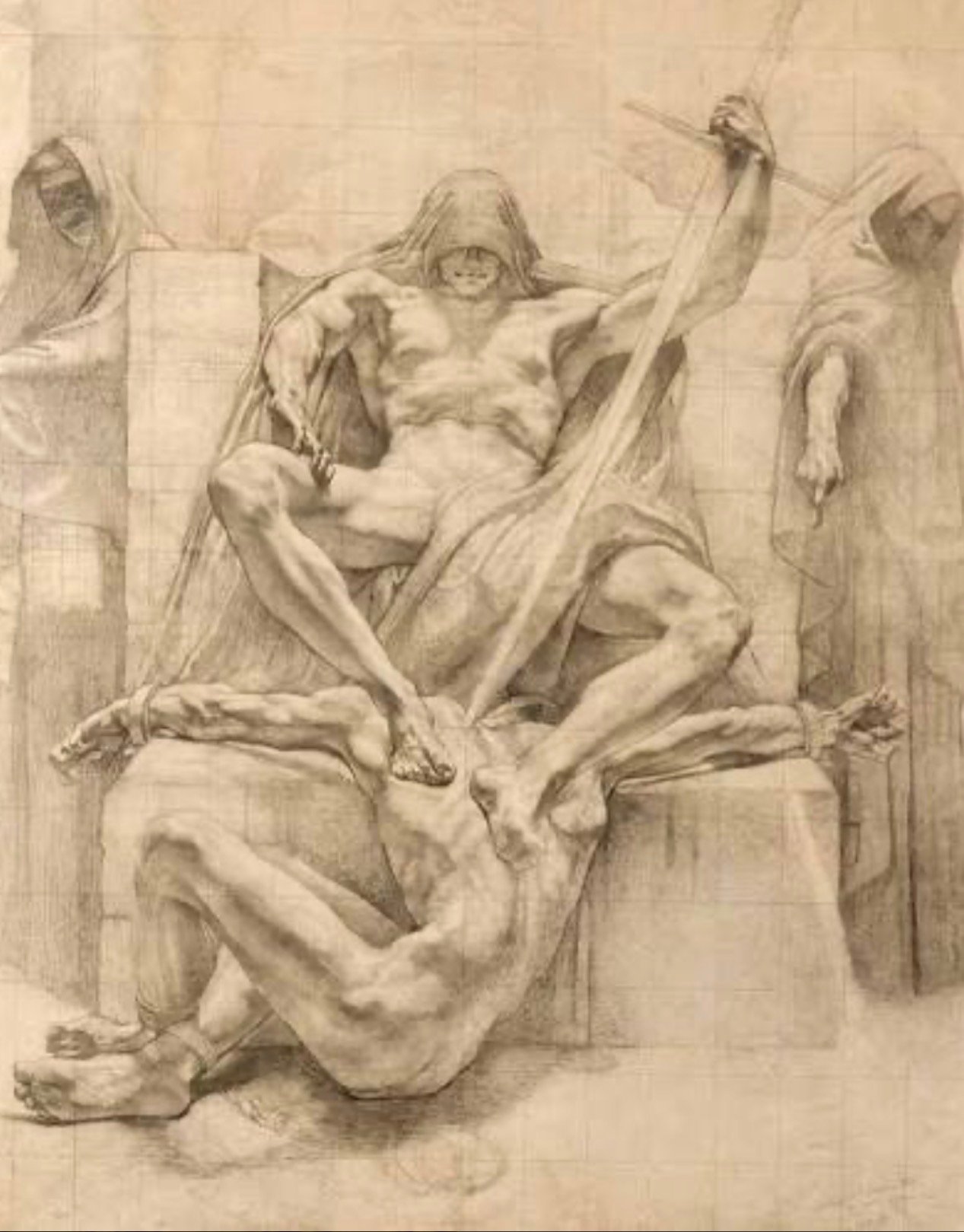
The proposed mosaics for the Hémicycle du Cinquantenaire, which began in 1912, aimed for similar outcomes. These works were meant to promote ideals of harmony, spiritual growth, and cosmic order, reflecting Delville’s belief that monumental art could act as a medium for esoteric teachings. He wanted to create a visual synthesis of universal principles, a project that aligned perfectly with his view that art should reveal the hidden order of the universe.
By 1908, Delville had established himself as a leading Symbolist painter and a significant figure in European esoteric circles. He had also been initiated as a Freemason in 1903 in the prestigious Brussels lodge “Les Amis Philanthropes.” His early engagement with Theosophy, his editorial role at “La Lumière,” his theoretical writings, and his large artistic projects show a deep commitment to blending art with spiritual doctrine. The first phase of his connection to Theosophy, spanning roughly from 1898 to 1908, reveals an artist and thinker dedicated to the idea that art could bridge the gap between material existence and higher spiritual realms. The following decade would bring both intensification and challenges as Delville’s esoteric beliefs intersected with the turmoil of war and controversies within the Theosophical Society itself.
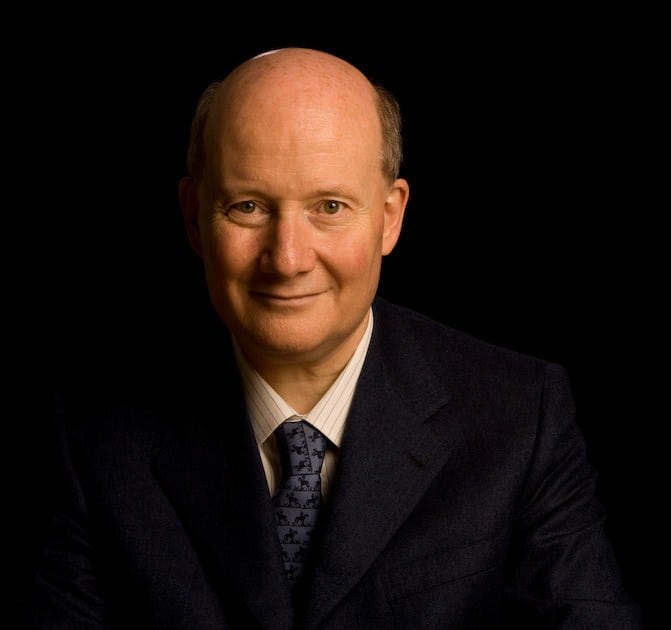
Massimo Introvigne (born June 14, 1955 in Rome) is an Italian sociologist of religions. He is the founder and managing director of the Center for Studies on New Religions (CESNUR), an international network of scholars who study new religious movements. Introvigne is the author of some 70 books and more than 100 articles in the field of sociology of religion. He was the main author of the Enciclopedia delle religioni in Italia (Encyclopedia of Religions in Italy). He is a member of the editorial board for the Interdisciplinary Journal of Research on Religion and of the executive board of University of Pennsylvania Press’ Nova Religio. From January 5 to December 31, 2011, he has served as the “Representative on combating racism, xenophobia and discrimination, with a special focus on discrimination against Christians and members of other religions” of the Organization for Security and Co-operation in Europe (OSCE). From 2012 to 2015 he served as chairperson of the Observatory of Religious Liberty, instituted by the Italian Ministry of Foreign Affairs in order to monitor problems of religious liberty on a worldwide scale.