Police and legal bodies coordinated the crackdown. India denounced Pakistan’s treatment of Ahmadis at the UN as a form of Islamophobia.
by A. Sahara Alexander
Eid-ul-Fitr should have been a time of joy for Pakistan’s Ahmadiyya community. It might have offered a rare break in a year marked by legal harassment, vandalized mosques, and increasing restrictions on their religious practices. Instead, this year’s Eid highlighted how far the state and those who influence it will go to keep Ahmadis hidden, even in private spaces.
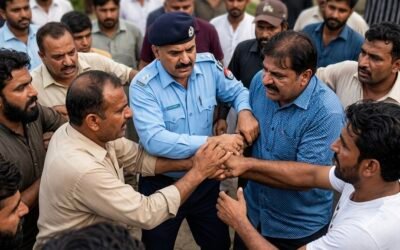
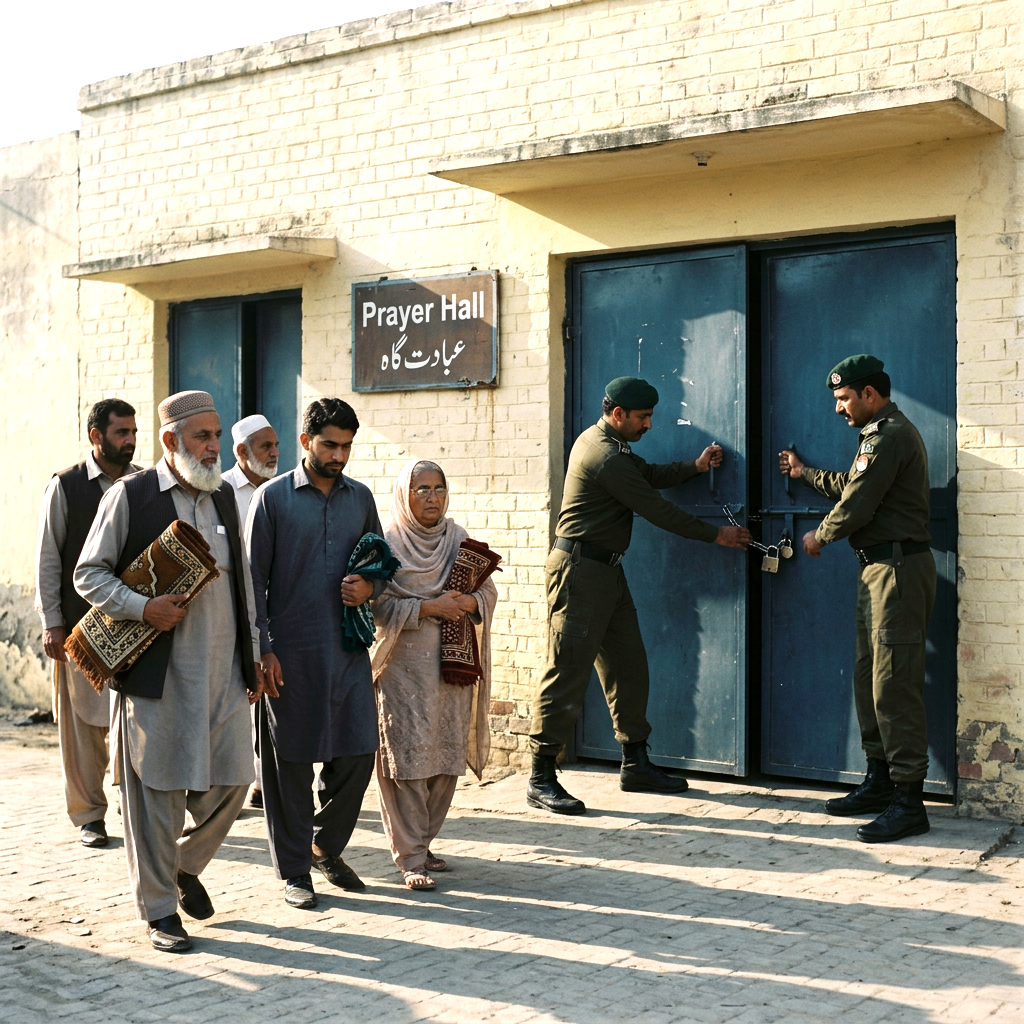
In Punjab, police arrived at Ahmadi prayer sites ready to act. Worshippers were forced out, doors were locked, signaling that even being inside four walls is no longer a guarantee of safety. In Gujranwala, congregational prayers were stopped before they could start. In Sialkot, officers spread out across several locations to ensure that no Ahmadi Eid gathering took place. Faisalabad witnessed a place of worship forcibly emptied, while in Sargodha, prayer centers were cleared and sealed like crime scenes instead of places for devotion.
The police did not operate in isolation. In the weeks before Eid, bar associations—groups that should protect civil liberties in a healthy democracy—sent letters urging authorities to treat Ahmadi religious practices as criminal. One bar association in Sindh called for action against Ahmadis observing their rites, while another in Lahore pressed for strict enforcement of laws meant to limit the community’s religious expression.
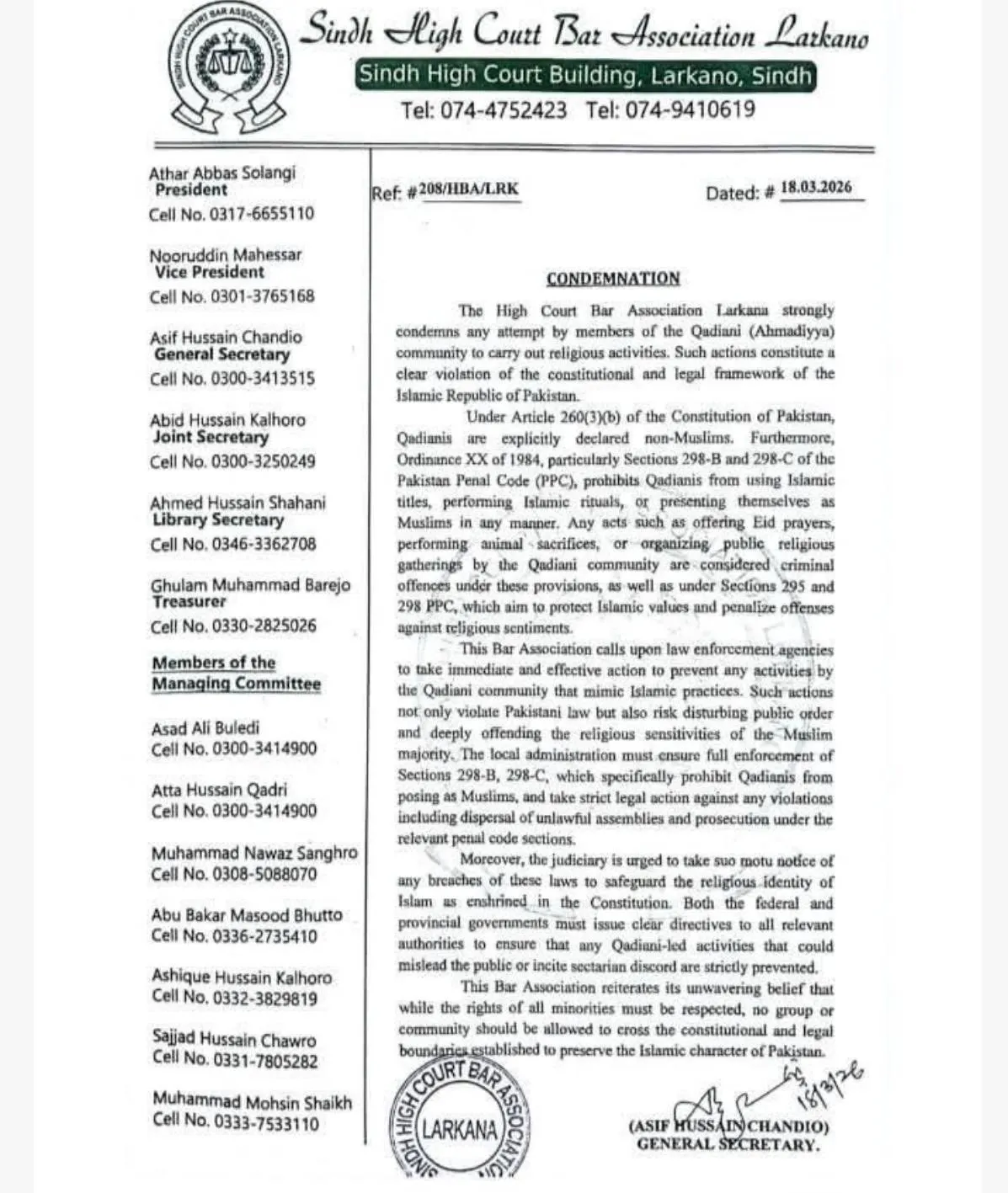
Ahmadi representatives highlighted an important fact: these actions break Pakistan’s own Constitution, which guarantees every citizen the freedom to profess and practice their faith. They also contradict a 2022 Supreme Court ruling affirming Ahmadis’ right to worship privately. Additionally, these actions violate international human rights standards, including Article 18 of the Universal Declaration of Human Rights. However, constitutional guarantees in Pakistan have often been seen as mere decorations—cited in speeches but ignored in reality.
This year’s crackdown on Eid took place against an unexpected backdrop. During the United Nations General Assembly’s commemoration of the International Day to Combat Islamophobia, India—never hesitant to call out Pakistan’s contradictions—stated that “the brutal repression of the Ahmadiyya” is a form of Islamophobia.
The events in Punjab supported India’s claim. Preventing a peaceful community from observing Eid prayers is the expected result of a system where legal bodies promote discrimination, police enforce it, and politicians look the other way. The Ahmadis have long been Pakistan’s most systematically targeted religious minority, but this year’s Eid showed that fringe groups do not drive the campaign against them. It is institutional, organized, and increasingly unrepentant.
The tragedy is not just that Ahmadis were denied their right to worship. The state also lost the chance to uphold the principles it claims to value. Pakistan’s leaders often talk about pluralism, tolerance, and the fight against extremism. Yet on Eid-ul-Fitr, in the streets of Punjab, the only thing under attack was the right of a minority to pray.

Uses a pseudonym for security reasons.