An erudite journey through China’s spiritual imagination, where oracle bones, Daoist talismans, and Chan enlightenment form a single, continuous conversation.
by Massimo Introvigne
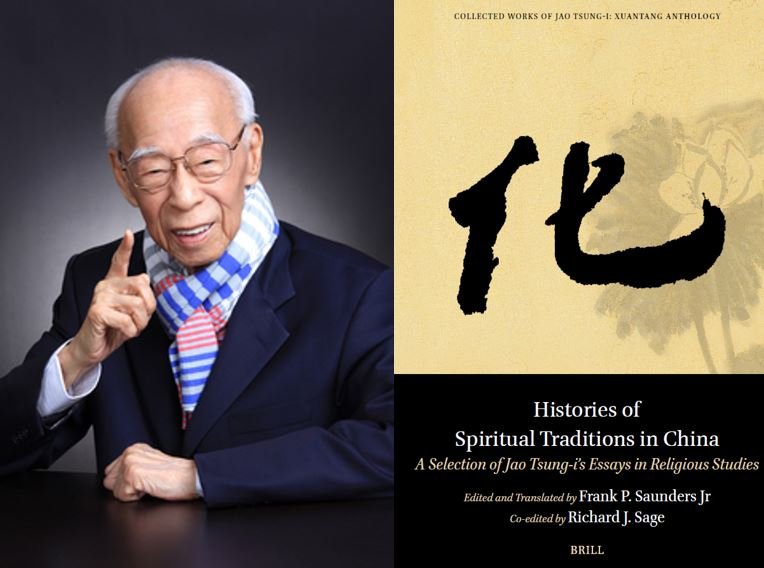
“Histories of Spiritual Traditions in China” (Leiden: Brill, 2025) is a journey through five thousand years of Chinese religious life, guided by someone who has immersed themselves in its texts, ruins, and rituals. This volume collects the essays on religion by Jao Tsung‑I (1917–2018), the renowned Hong Kong polymath whose studio name, Xuantang, represents a level of knowledge that seems almost superhuman in sinology. Edited and translated by Frank P. Saunders Jr., with Richard J. Sage as co-editor, this sixth volume of the Collected Works of Jao Tsung‑i: Xuantang Anthology makes a significant body of scholarship accessible to Western readers. Jao’s work has been admired from a distance but rarely studied in depth.
The translator’s introduction recognizes the challenge: Jao’s work assumes a deep understanding of Chinese history, literature, and archaeology that few have. But the reward is great. His essays explore the beliefs, practices, and artifacts of Chinese spiritual traditions from prehistory to the emergence of Daoism and Buddhism, always looking for unexpected connections or overlooked details. The translation carefully balances readability and accuracy, maintaining the classical flow of Jao’s writing while providing clarifying notes when necessary.
The exploration begins in ancient times. In the chapter on the Yin Dynasty religion, he depicts a world in which the Shang kings addressed their oracle-bone inscriptions to Shangdi, the “Lord on High,” while humbly referring to themselves as “I, the one person.” Jao argues that this is not monotheism but a form of henotheism, with Shangdi at the top of a hierarchy of spirits. In the chapter on turtles becoming the Shui Mu, he details the long symbolic life of turtles—from Jiahu divination shells to the Dark Warrior in ancient astronomy—illustrating how a creature associated with water and longevity became connected to the mythical “Old Mother of Waters,” a connection that intriguingly parallels Indian cosmology.
In the section on “luminous deities” in the Dawenkou culture, Jao presents archaeological findings that show Neolithic communities already honored the sun and moon as a paired cosmic unity. Pottery zun vessels engraved with solar disks and crescent moons, discovered near the ancient Wenshang Mingtang, represent for Jao the earliest signs of a ritual tradition that would later develop into the equinox ceremonies of imperial China. The chapter on religion and literature reveals how early Chinese literary forms—such as prayers, proclamations, and eulogies—were closely tied to ritual practices. For Jao, the Grand Invocator of the Zhou dynasty was not just a religious figure but a proto-literary craftsman, shaping the genres that would define Chinese literature.
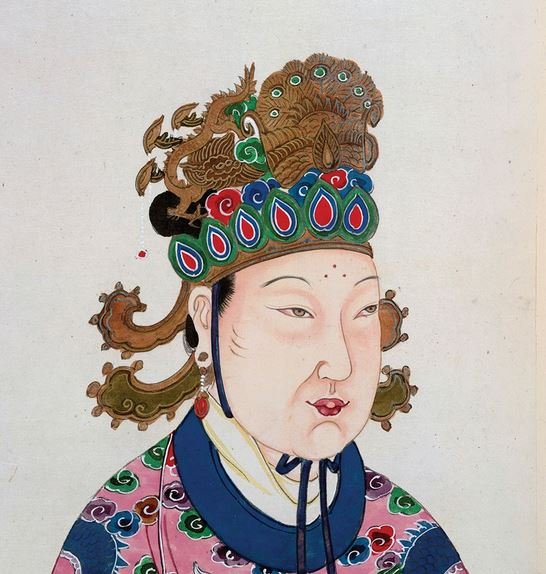
In the chapter on Empress Wu Zetian’s religious beliefs, he shares stone inscriptions that portray a ruler with a spiritual life far more intricate than the stereotype of a power-hungry usurper. Wu Zetian, or Wu Zhao, engaged with Buddhism, Daoism, and Ruism at different points in her life, commissioning the “Sanjiao zhuying” compilation to honor all three traditions and conducting ancient Feng and Shan rituals to assert her cosmic legitimacy. Jao views her religious diversity as a genuine effort to blend China’s doctrinal landscape rather than mere opportunism.
The second part of the book shifts to Daoism, maintaining the same blend of textual study and imagination. In the chapter on Daoism and Chu customs, Jao provides new archaeological evidence showing that the ecstatic, shamanistic features of early Daoism—such as bronze ritual objects, musical practices, and spirit-medium practices—were deeply rooted in Chu culture. He suggests that the four-faced Yellow Ancestor of Chu religion influenced later Daoist portrayals of Laozi as a multi-faced cosmic leader. In the section on Buddhism and Daoism’s concurrent development, he describes the Eastern Han period as a time when the two traditions were seen as parallel paths, even sharing iconographic space at sites like Kongwang Mountain. Laozi’s mother, transformed into the “Mysterious Jade Maiden,” becomes a figure whose miraculous birth story mirrors that of Queen Maya, revealing the intertwining motifs of Chinese and Indian cultures.
In the chapter on Zhonghuangzi, he presents the obscure “Master of Central Yellow” as an accurate pre-Han figure whose teachings became part of the Huang-Lao tradition and later Daoist texts. The chapter on the Dunhuang fragment of the “Dengzhen yinjue” unfolds like a philological mystery. Jao identifies the manuscript as part of Tao Hongjing’s Shangqing collection, noting that its instructions for consuming mist, sunlight, and moonlight preserve rituals lost in later editions. In the part on self-care and medicinal practices, he introduces excavated texts from Mawangdui and Mt. Zhangjia as early systematic guides to Yangsheng, highlighting seasonal alignment, breath control, and the protection of vital essence—teachings linked to the legendary long-lived Peng Zu.
The final section covers Buddhism. In the chapter on Buddhist stories of Kunlun, he presents the mountain as a dynamic symbol that absorbs Indian cosmology rather than as a fixed geographical location. Early Chinese Buddhists associated Kunlun with Mount Anavatapta, the source of India’s four great rivers, and later with Mount Kailash, illustrating a long process of mythic reinterpretation. In the chapter on translating scriptures, he showcases 6th–7th century translator Shi Yancong’s “Bianzheng Lun” as an essential text that advocates a balance between accuracy and artistic expression. Jao shows how translators like Kumārajīva struggled to retain Sanskrit rhythms in Chinese, often sacrificing poetic form for clarity of meaning.
In the chapter on the pagoda brick of the Third Chan Patriarch, he provides a close reading that challenges the assumption that the brick signifies Sengcan’s death in 606. Instead, the inscription refers to his “secret transformation”—his travels and teachings—while confirming his actual death date through early Chan sources. The last two chapters, on Xinzhou as the birthplace of the Sixth Patriarch, Huineng, who reportedly died in 713, and on questions surrounding Huineng and the Platform Sutra, build a cohesive argument.
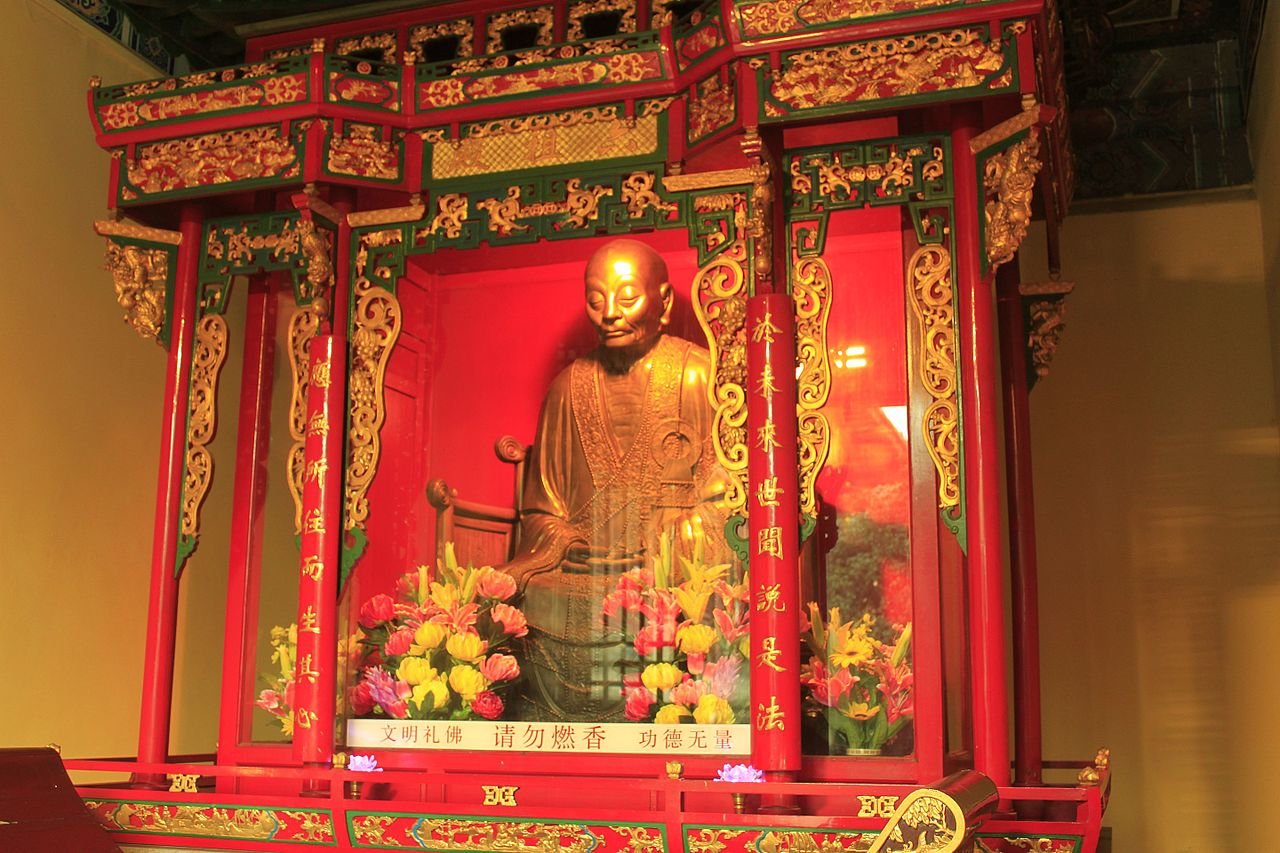
Jao dismantles the notion of Huineng as an illiterate woodcutter, demonstrating that he belonged to a lower but still notable Lu clan and donated his home for the founding of Guo’en Temple. Huineng’s views on “fundamental nothingness” and the mirror-like mind, Jao argues, draw on rich scriptural and philosophical roots, revealing a figure much more knowledgeable and intellectually engaged than later accounts suggest.
Western readers unfamiliar with the author may admire how Jao navigates his subjects—with precision, curiosity, and a refusal to oversimplify. Chinese religion is not a single tradition but a mosaic of practices, myths, and philosophical explorations. For readers of “Bitter Winter,” who often see Chinese religious life reduced to propaganda slogans or bureaucratic categories, this book offers a necessary counterpoint. It restores depth, where state-sanctioned manuals today enforce uniformity and complexity, while official narratives demand simplicity.

Massimo Introvigne (born June 14, 1955 in Rome) is an Italian sociologist of religions. He is the founder and managing director of the Center for Studies on New Religions (CESNUR), an international network of scholars who study new religious movements. Introvigne is the author of some 70 books and more than 100 articles in the field of sociology of religion. He was the main author of the Enciclopedia delle religioni in Italia (Encyclopedia of Religions in Italy). He is a member of the editorial board for the Interdisciplinary Journal of Research on Religion and of the executive board of University of Pennsylvania Press’ Nova Religio. From January 5 to December 31, 2011, he has served as the “Representative on combating racism, xenophobia and discrimination, with a special focus on discrimination against Christians and members of other religions” of the Organization for Security and Co-operation in Europe (OSCE). From 2012 to 2015 he served as chairperson of the Observatory of Religious Liberty, instituted by the Italian Ministry of Foreign Affairs in order to monitor problems of religious liberty on a worldwide scale.