Ian Reader and Clark Chilson’s “On Being Nonreligious in Contemporary Japan” is required reading for understanding what’s going on in Japan.
by Massimo Introvigne

In “On Being Nonreligious in Contemporary Japan: Decline, Antipathy, and Aversion to Institutions” (London: Bloomsbury, 2025), Ian Reader and Clark Chilson have written a book that is as timely as it is unsettling—a scholarly meditation on a society where religion is not merely ignored but actively resisted. It’s a work that should be required reading for anyone concerned with the strange events going on in Japan and with secularization and religious liberty in democratic nations, even if, as I’ll argue, some of its conclusions deserve a sharper edge.
The book’s central thesis is bold: Japan’s antipathy toward religion is not limited to new religious movements or institutional faith. It’s a sweeping cultural disposition that targets Buddhism, Shintoism, and even the informal rituals often described as Japan’s “natural religion.” Reader and Chilson push back against the comforting notion that Japanese people, while unaffiliated, still quietly honor ancestral rites. They present compelling statistics showing that both belief and practice are in free-fall. Thousands of temples and shrines have been shuttered. The collapse of traditional family and village structures—alongside Japan’s famously low birth and marriage rates—has hollowed out the social scaffolding that once sustained religious life.
However, the authors argue, this decline is not merely demographic. It has been actively cultivated. Reader and Chilson introduce several moral entrepreneurs—agents deliberately shaping Japan’s secular landscape. They identify three main forces behind the anti-religious sentiment.
First, the media. Newspapers, TV dramas, manga, and films have acted as “amplifiers of antipathy.” While not uniformly hostile—mainline religions get a pass more often than new movements—the media’s role in shaping public suspicion has been profound.
Second, the anti-cult lobby. Lawyers, academics, apostate ex-members, and some government agencies have waged campaigns against groups like Soka Gakkai, the Jehovah’s Witnesses, and the Unification Church. The 1995 Aum Shinrikyo subway attack was a turning point, cementing the idea that “karuto” (cults) practicing “maindo kontororu” (mind control: note the new words derived from English) were a threat to society. But Reader and Chilson note that the works of American deprogrammer Steven Hassan had already been translated into Japanese before Aum’s crimes, suggesting that the soil was fertile for panic. They emphasize the role of anti-cult associations of lawyers, targeting the Unification Church primarily, the Japan Society for Cult Prevention and Recovery, founded in 1995 (it adopted its present name in 2004), and of its main leader, psychologist Kimiaki Nishida. They also note how, after the Aum Shinrikyo incident, most (but, they underline, not all) Japanese academic scholars of new religious movements (some of whom had been sympathetic to Aum) aligned with anti-cultists. At the same time, universities discouraged younger scholars from studying new religions.
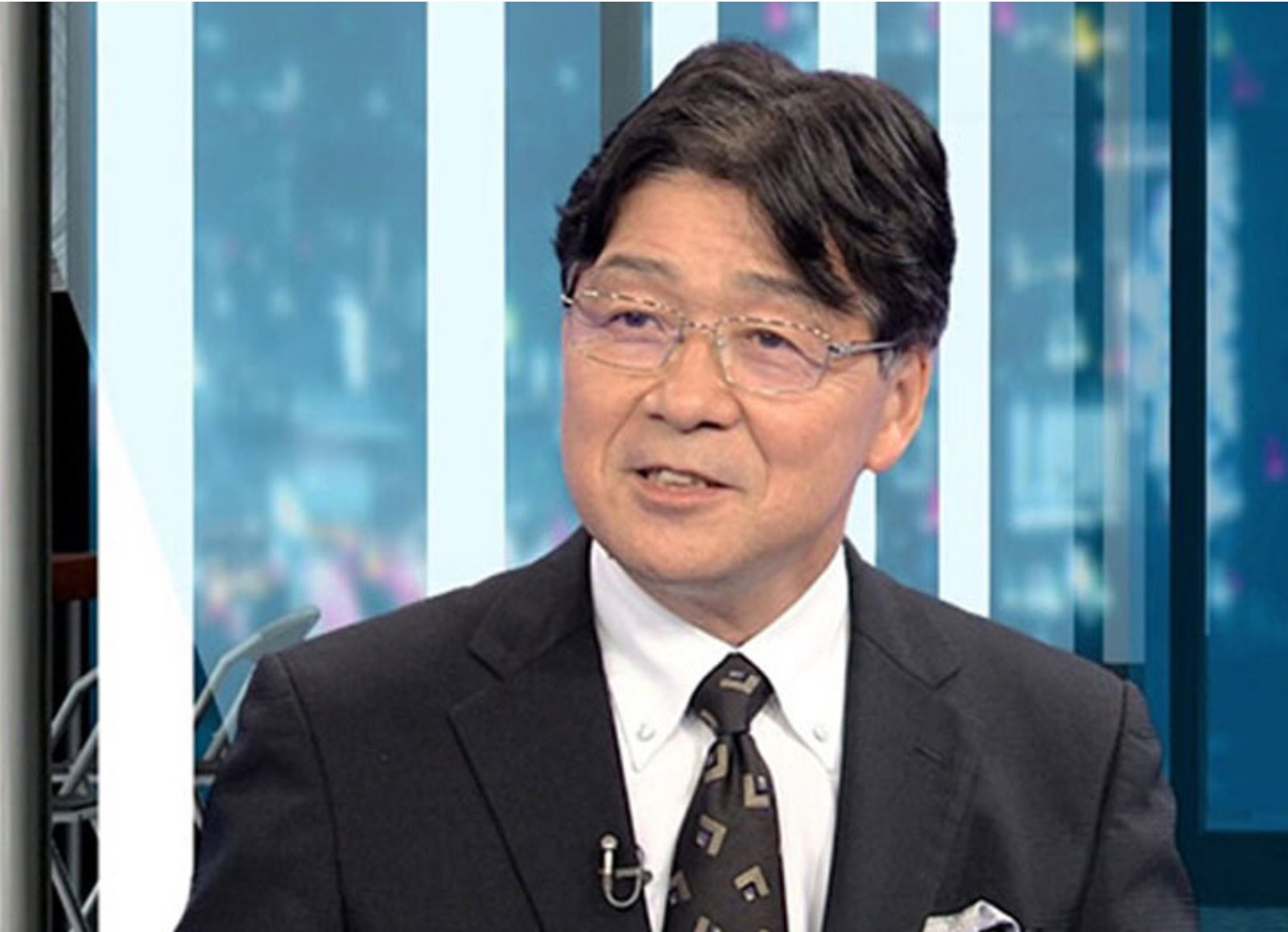
Missing in this part of the book is a reference to how leftist politics played a significant role in the anti-cult opposition to the Unification Church and other conservative religious organizations. Perhaps the authors agree with the Japanese scholars who argue that this aspect has been over-emphasized by the Unification Church and its supporters. However, documents exist confirming that left-leaning lawyers such as Hiroshi Yamaguchi started their anti-Unification Church campaigns primarily to hit the International Federation for Victory over Communism, founded by Reverend Moon, its successful electoral support to anti-Communist candidates, and its advocacy for an anti-espionage law that the left vehemently opposed.
Third, religion itself. The authors argue that religious groups’ unethical behavior has fueled their decline. Religions have often been their own worst enemies. This is undeniably true—though one could say that of political parties, corporations, or pharmaceutical giants. Reader and Chilson cite examples of small groups inciting suicides or running scams. They also highlight how Shintoism’s association with wartime nationalism and Buddhist temples’ reputation for monetizing funerals (and even aborted fetuses and pet memorials) have eroded public trust.
Reader and Chilson suggest that Japan offers “particularly egregious examples” of religious misconduct. I’m not convinced they are worse than elsewhere. Aum Shinrikyo was horrific, yes. But other countries have seen worse—terrorist attacks in the name of Islam, widespread clerical sexual abuse scandals. Japan’s religious crimes are serious, but not singular.
Where I part ways with the authors is in their treatment of the Unification Church and Jehovah’s Witnesses. They largely accept the anti-cult criticism of “spiritual sales”—the selling of overpriced religious artifacts by Unification Church members—and of corporal punishment and refusal of blood transfusions among Jehovah’s Witnesses. I believe some nuance is needed. The Unification Church claims to have ended “spiritual sales” in 2009, and the Tokyo District Court in its dissolution decision acknowledged that complaints had nearly vanished by the time of the Abe assassination. The District Court speculated that there may still be unreported incidents and cases in the future, since the theology supporting the practice has not changed—but speculation about hypothetical offenses is not evidence.
As for Jehovah’s Witnesses, critics such as Nishida often cite texts from the 1950s and rely on the testimonies of former Jehovah’s Witnesses about their youth, ignoring that attitudes toward corporal punishment have evolved. Sociologists note that such discipline was once typical across Japanese households, not unique to Witnesses. And on the issue of blood transfusions for minors, other democracies have found pragmatic solutions—temporary custody transfers, for instance—while medical alternatives to transfusions continue to grow.

One of the book’s most provocative moments comes when the authors report that many Japanese question why religion should enjoy special protection in a secular society. I was surprised they didn’t mention the most obvious answer, the International Covenant on Civil and Political Rights (ICCPR), which Japan has signed and ratified. The ICCPR protects religion and beliefs about religion (including atheism) beyond what is afforded to secular businesses or advocacy groups. This isn’t a matter of opinion; it’s binding international law.
Japan’s government has consistently sidestepped UN criticisms of its legal framework, which allows for the dissolution of religious corporations deemed harmful to “public welfare”—a dangerously vague standard. It has offered weak responses to UN concerns about laws targeting “religious abuse of children,” and has yet to answer the UN Special Rapporteur on Freedom of Religion or Belief’s request for a fact-finding visit. Few in Japan seem to grasp the implications of being party to the ICCPR, which is a binding treaty unlike the Universal Declaration of Human Rights.
Reader and Chilson, to their credit, gesture toward these religious liberty concerns in their final chapter. But the gravity of the situation demands more than a gesture. If Japan is to avoid becoming a cautionary tale of democratic secularism gone awry, it must reckon with the international legal obligations it has signed onto.
“On Being Nonreligious in Contemporary Japan” is a vital book—lucid, layered, and unafraid to ask hard questions. It maps a cultural terrain where religion is not merely absent but actively resisted. And while I may disagree with some of its comments, I admire its courage. In a world where religious liberty is increasingly fragile, Reader and Chilson make us wonder whether the real threat may not be belief, but the belief that belief no longer matters.

Massimo Introvigne (born June 14, 1955 in Rome) is an Italian sociologist of religions. He is the founder and managing director of the Center for Studies on New Religions (CESNUR), an international network of scholars who study new religious movements. Introvigne is the author of some 70 books and more than 100 articles in the field of sociology of religion. He was the main author of the Enciclopedia delle religioni in Italia (Encyclopedia of Religions in Italy). He is a member of the editorial board for the Interdisciplinary Journal of Research on Religion and of the executive board of University of Pennsylvania Press’ Nova Religio. From January 5 to December 31, 2011, he has served as the “Representative on combating racism, xenophobia and discrimination, with a special focus on discrimination against Christians and members of other religions” of the Organization for Security and Co-operation in Europe (OSCE). From 2012 to 2015 he served as chairperson of the Observatory of Religious Liberty, instituted by the Italian Ministry of Foreign Affairs in order to monitor problems of religious liberty on a worldwide scale.