It is not the first time the CCP has destroyed religious symbols in Sichuan’s Garzê Tibetan Autonomous Prefecture—but this incident is the worst ever.
by Lopsang Gurung

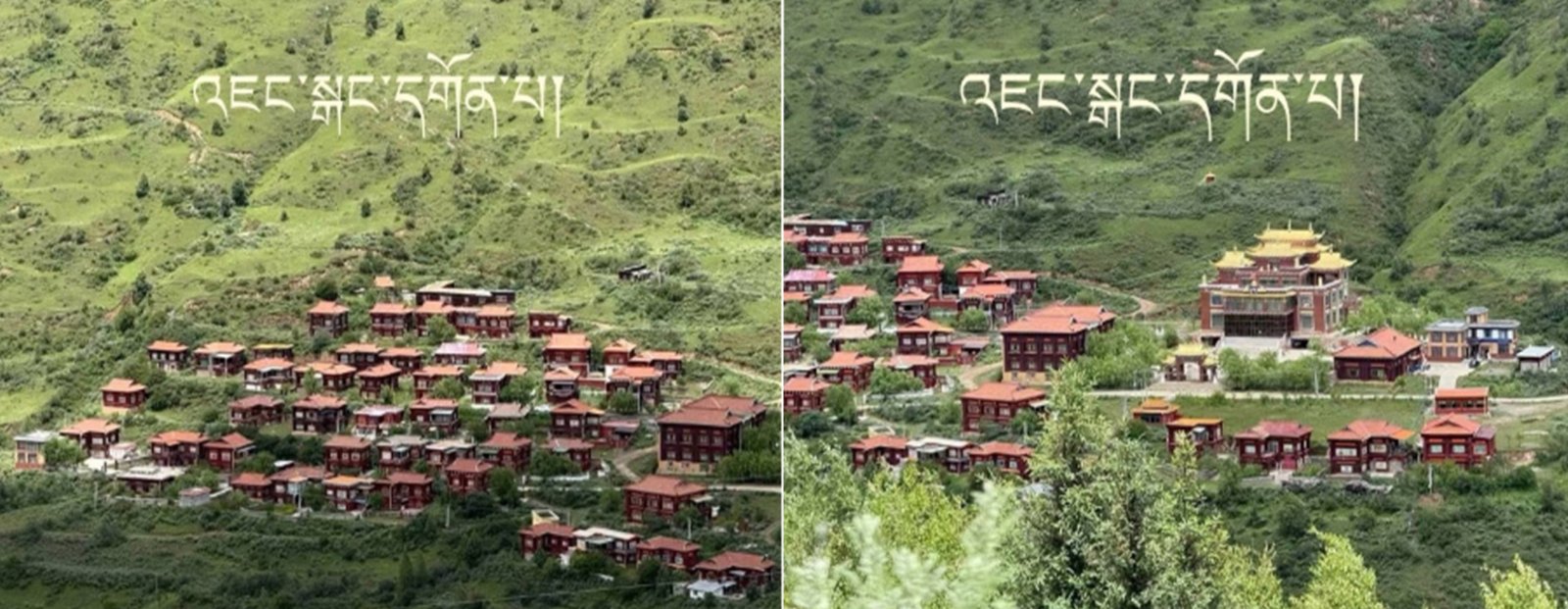
In a sweeping act of religious and cultural repression, Chinese authorities have demolished over three hundred Buddhist stupas and sacred statues in Drakgo (Ch. Luhuo) County, Garzê Tibetan Autonomous Prefecture, Sichuan province, according to reports from the Central Tibetan Administration (CTA) and other sources. The area is part of historical Tibet but not of the so-called Tibet Autonomous Region (TAR).
The destruction, which occurred between late May and June 2025 at Lungrab Zang-ri near Janggang Monastery, marks a dramatic escalation in Beijing’s campaign to “Sinicize” Tibetan Buddhism and suppress Tibetan identity.
Among the razed structures were hundreds of medium-sized stupas, three larger stupas, and two revered statues: one of Guru Padmasambhava—known as Guru Rinpoche, a foundational figure in Tibetan Buddhism—and another of Khenpo Jigme Phuntsok, the late founder of Serthar Buddhist Institute.
The demolition has left the local Tibetan community in shock and mourning, with many describing the act as a “second phase of the Cultural Revolution.” Chinese officials have justified the destruction by claiming the structures were illegally built on government land and violated unspecified regulations. However, rights groups and Tibetan sources argue that the move is part of a broader strategy of cultural genocide aimed at erasing Tibetan religious heritage.
Following the demolitions, authorities imposed a strict communications blackout across the region. The area surrounding the site has been sealed off, and residents have been warned that sharing information with outsiders constitutes “leaking state secrets,” punishable by immediate arrest. The debris from the sacred structures has been cleared, leaving no trace of the centuries-old symbols of faith.
The crackdown coincides with the implementation of Decree No. 22, issued by China’s National Religious Affairs Bureau in December 2024. The decree mandates that all monasteries operate under direct government control beginning January 2025, enforcing Article 43 of the Monastery Management Regulations. Under these rules, religious teachings must align with Communist Party ideology, and independent spiritual activities are prohibited.
Khenpo Tenga of Janggang Monastery, who oversaw the construction of the demolished stupas, is reportedly under house arrest and barred from meeting devotees or conducting religious duties.
In July, as the world celebrated His Holiness the Dalai Lama’s 90th birthday, Chinese authorities banned all public gatherings in Karze and neighboring regions until July 23, further stifling expressions of Tibetan spiritual identity.
This latest incident is not isolated in the area. In November 2021, Chinese officials shut down the Gaden Namgyal Ling Monastery school in Drakgo County and later demolished two large Buddha statues and 45 prayer wheels. However, the current destruction at Lungrab Zang-ri represents a significant escalation in both scale and severity, although it is part of a long-standing campaign to annihilate Tibet’s spiritual heritage.
Confronted with international protests, the silence from Beijing remains deafening. The razing of sacred sites in Karze is not just an attack on religious structures—it is a calculated strike against the heart of Tibetan identity.

Uses a pseudonym for security reasons.