By moving to New Mexico, the Canadian painter became the key figure of an organized group of artists devoted to Theosophy and esotericism.
by Massimo Introvigne
Article 3 of 5 (published on consecutive Saturdays). Read article 1 and article 2.

Harris’ evolution continued when he decided to move to Santa Fe, New Mexico, where he and his wife Bess arrived in November 1938. He chose to focus exclusively on producing abstract art. Both Bess and Harris became interested in the concept of “dynamic symmetry,” developed by Canadian-born American artist Jay Hambidge (1867–1924). Dynamic symmetry is based on a mathematical study of proportions in ancient Greek art and has been explored by several Theosophists, including Bragdon.
Hambidge himself was not a Theosophist and asserted that his approach was purely scientific. His wife, Mary Crovatt Hambidge (1885–1973), took part in various cultural initiatives started by Eva Palmer Sikelianos (1874–1952), the spouse of Greek poet Angelos Sikelianos (1884–1951). In New York, along with the well-known journalist Alma Reed (1889–1966), Palmer organized a center for the arts that served as the American branch of the Delphic Movement, founded by Eva and Angelos Sikelianos in Greece, which was colloquially referred to as “the Ashram.”
Several Theosophists frequented the Ashram, where Annie Besant personally lectured. At the Ashram, Mary Hambidge introduced Mexican muralist José Clemente Orozco (1883–1949) to the principles of dynamic symmetry. Orozco also learned about Theosophy during his time there.
In this unique New York institution, visitors had the opportunity to meet Bragdon and several followers of the Russian Theosophist painter Nicholas Roerich (1874–1947). In 1932, Roerich hosted an exhibition featuring paintings by contemporary Canadian artists at his Roerich Museum in New York. This exhibition was organized in collaboration with Harris and Frederick Housser and laid the groundwork for establishing the Canadian Group of Painters in 1933. The Group, with Harris serving as President and Housser as Secretary, was regarded by many as the successor to the Group of Seven.
Drawn by the favorable climate and the more affordable living expenses, many American artists eventually moved to New Mexico, where they met a diverse Theosophical community influenced by the French astrologer, Theosophist, and artist Dane Rudhyar (born Daniel Chennevière, 1895–1985), who often visited to conduct courses and seminars. Rudhyar had contributed articles to “The Canadian Theosophist” under the pseudonym Zahaz D. Rudhyar, and he was familiar to Harris. The impact of Roerich on this group remained significant. Among the followers of Roerich in New Mexico were painter Emil Bisttram (1895–1976) and his spouse Mayrion Huth Bisttram (1898–1984), painter Ralph Harris Houston (1908–1976), Chicago artist Raymond Jonson (1891–1982), who had formed the Cor Ardens (Burning Heart) Brotherhood in 1920 based on Roerich’s ideas, and Clyde Gartner (1900–1967), who established the Arsuna school and art gallery in Santa Fe in 1937.
Upon arriving in New Mexico, Harris was naturally drawn to this community, which had also been visited multiple times by Georgia O’Keeffe (1887–1986), who became acquainted with Theosophy through her friendship with Bragdon. O’Keeffe made New Mexico her permanent home only in 1949, after Harris had returned to Canada.

Lawren and Bess Harris formed a close friendship with Raymond Jonson and Emil Bisttram. This bond also included Yvonne McKague Housser, who chose to live temporarily with the Harrises in New Mexico after her husband Frederick (Bess Harris’ former spouse) passed away in 1936. In 1939, Harris, Bisttram, and Jonson established the Transcendental Painting Group. Most “transcendental” artists were Theosophists, and all were admirers of Kandinsky. However, the group maintained that its goals were exclusively artistic and did not involve promoting any religious or spiritual beliefs. Ultimately, the Group founded the parallel American Foundation for Transcendental Painting, Inc., where Rudhyar was Vice President. It co-organized several significant exhibitions and successfully engaged Kandinsky in its activities.
This activity in New Mexico did not endure after World War II, which posed a practical challenge for Harris in 1940. He found it increasingly difficult to receive dividends from his shares in the Canadian family business while in the U.S. Consequently, he and Bess decided to relocate to Vancouver, where they lived until they died in 1969 and 1970, respectively. Once Harris returned to Canada, his approach to abstract art gradually transformed. Initially, his early abstract works in Hanover simplified landscapes into abstract shapes. While he attempted to incorporate mathematical proportions based on dynamic symmetry in New Mexico, in Vancouver he moved away from mathematics and concentrated solely on his inner perceptions of beauty.

In the final years of Harris’ life, he received recognition as Canada’s national painter. However, his later abstract works were often under-appreciated by critics, except for the renowned literary theorist Northrop Frye (1912–1991), who praised Harris’ “best abstractions [as] a unique and major contribution to Canadian painting.” Harris’ reputation was primarily built on his earlier landscapes of Northern Canada. He also engaged in ongoing debates about government policies on the arts and museums, especially after assuming the role of President of the Federation of Canadian Artists in 1944.
Although he was less involved with the Theosophical Society during this time, his artworks and writings indicate that he considered himself a Theosophist until his death. The passing of his cherished second wife, Bess, on 28 September 1969, occurred just three months before Harris himself passed away on 29 January 1970.
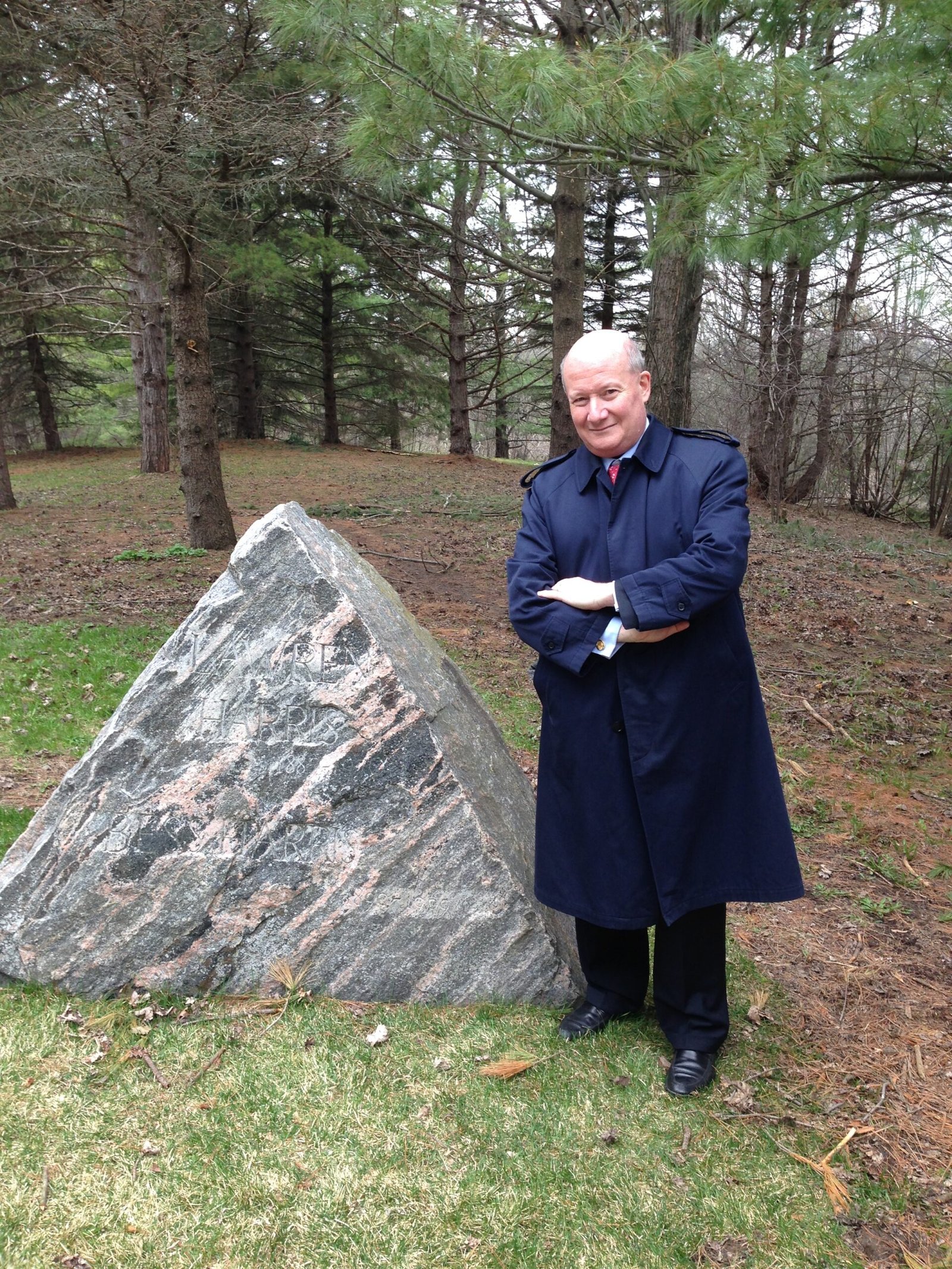
The remains of both Harris and Bess are interred in the small cemetery in the garden of the McMichael Collection of Canadian Art in Kleinburg, Ontario.

Massimo Introvigne (born June 14, 1955 in Rome) is an Italian sociologist of religions. He is the founder and managing director of the Center for Studies on New Religions (CESNUR), an international network of scholars who study new religious movements. Introvigne is the author of some 70 books and more than 100 articles in the field of sociology of religion. He was the main author of the Enciclopedia delle religioni in Italia (Encyclopedia of Religions in Italy). He is a member of the editorial board for the Interdisciplinary Journal of Research on Religion and of the executive board of University of Pennsylvania Press’ Nova Religio. From January 5 to December 31, 2011, he has served as the “Representative on combating racism, xenophobia and discrimination, with a special focus on discrimination against Christians and members of other religions” of the Organization for Security and Co-operation in Europe (OSCE). From 2012 to 2015 he served as chairperson of the Observatory of Religious Liberty, instituted by the Italian Ministry of Foreign Affairs in order to monitor problems of religious liberty on a worldwide scale.