Taiwan’s Supreme Court decided that Tai Ji Men’s activities were not fraudulent. It was an important contribution to the international case law on the possibility of “spiritual fraud.”
by Rosita Šorytė*
*A paper presented at the event “The 18th Anniversary of the Acquittal: A Forum on the Tai Ji Men Case—Exploring Truth, Judicial Integrity, and the Implications for Human Rights,” Taipei, July 13, 2025.

We celebrate today the anniversary of the final decision made by Taiwan’s Supreme Court on July 13, 2007, in the Tai Ji Men case, which acquitted the Tai Ji Men defendants of all charges related to fraud and tax evasion.
Several speakers today will address the issue of taxes; I would like to focus instead on the topic of fraud. Nearly twenty years after the Tai Ji Men verdict, accusations of fraud continue to be a weapon used against spiritual movements that governments may dislike in various countries. In Mainland China, recent verdicts have seen Christian pastors from so-called house churches—those who refuse to join the government-controlled Three Self Church—sent to jail on charges of fraud. In Japan, a first-degree decision (currently under appeal) has ordered the dissolution of the Unification Church, citing alleged fraudulent sales of religious artifacts at prices far exceeding their intrinsic value.
Most scholars and human rights experts have denounced these actions as blatant violations of freedom of religion or belief. However, the question of “spiritual fraud” is more complex than it appears. When spiritual claims intersect with financial transactions, legal systems are often called upon to determine whether a line has been crossed into fraud. There exists an inherent difficulty in distinguishing fraudulent conduct from the metaphysical promises central to many faiths.
At the heart of this issue lies a fundamental legal and philosophical dilemma: how can courts differentiate between fraudulent misrepresentation and sincere religious belief? Fraud typically requires demonstrable intent to deceive, often for financial gain. In contrast, religious claims—such as those regarding enlightenment, salvation, or divine favor—are inherently unverifiable and non-falsifiable.
This tension is well illustrated in U.S. jurisprudence. In the landmark case “United States v. Ballard” (1944), the Supreme Court ruled that courts could not assess the truth or falsity of religious beliefs but could only determine whether the defendant sincerely held these beliefs. Edna Ballard and her son Donald, leaders of the “I AM” movement, were accused of mail fraud for soliciting donations via mail, in exchange of which followers would receive blessings from Ascended Masters of whom the Ballards claimed to be earthly messengers. The Supreme Court found that “The religious views espoused by respondents might seem incredible, if not preposterous, to most people. But if those doctrines are subject to trial before a jury charged with finding their truth or falsity, then the same can be done with the religious beliefs of any sect.”
The Supreme Court did not dismiss the possibility of religious fraud; however, the majority of the judges maintained that sincerity, rather than verifiability, was the key legal standard. In the case of I AM, the judges concluded that it was a large and well-established spiritual movement. While many Americans might find its teachings unusual, there was no reason to doubt that they were proposed and accepted sincerely. Notably, one of the Supreme Court judges, Robert H. Jackson, wrote a dissenting opinion challenging the sincerity standard. He argued that determining whether a spiritual belief is held sincerely is inherently impossible. Once a belief is identified as religious or spiritual, teaching it and soliciting donations to support it should be regarded as lawful and not fraudulent.

The “Ballard” precedent has made it challenging to prosecute spiritual fraud in the United States unless clear evidence of bad faith exists. Similar principles have been affirmed in Europe—where they do allow for the recognition of cases of fraud. For example, in Italy, an anchorwoman known for her television sales, Wanna Marchi, began offering “winning” lottery numbers at exorbitant prices, which were communicated by telephone to those who purchased them, along with salt and ivy springs blessed by a Brazilian man claiming to be a magician. Marchi was arrested and eventually sentenced to nine and a half years in prison for fraud by the Italian Supreme Court in 2009.
Marchi’s activities were classified as fraudulent because neither she nor her Brazilian accomplice had any spiritual background, nor were there any spiritual teachings involved. Clients merely listened to a brief promotional TV segment before purchasing products. Additionally, whether the numbers would guarantee success in the lottery was an empirically verifiable claim, and they did not.
Marchi was not sentenced based on the prices she charged. In fact, the Italian Supreme Court had ruled in 1997 that charging tens of thousands of dollars for Scientology courses did not constitute fraud. The court recognized Scientology as a religion and noted that there is no “fair” price for goods or services of a symbolic nature, not only in the realm of spirituality.
A recent example illustrates this point: in 2024, a Chinese billionaire—ironically connected to the Communist Party—purchased a banana affixed to a wall with duct tape by postmodern Italian artist Maurizio Cattelan at a Sotheby’s auction for $6.2 million. It was not a sculpture of a banana; it was an actual fruit. The buyer was aware that the banana would eventually rot, and he publicly ate it, claiming that he was thereby becoming part of the artistic performance. Nobody accused Sotheby’s of fraud. While many ridiculed the Chinese millionaire, he believed he was not just buying a banana but rather a ticket to international celebrity status.
The case of Tai Ji Men, decided by Taiwan’s Supreme Court in 2007, was relatively straightforward. Tai Ji Men represents a spiritual path where thousands of disciples receive teachings in Qigong, martial arts, and self-cultivation. The disciples claim to gain both spiritual and physical benefits from these teachings and express their gratitude to their Grand Master (Shifu) through gifts. It is not the role of the courts to determine whether these gifts correspond to a theoretical intrinsic value of what the disciples have received, and attempting to make such a determination would be fundamentally impossible. The Supreme Court correctly concluded that there was no fraud.
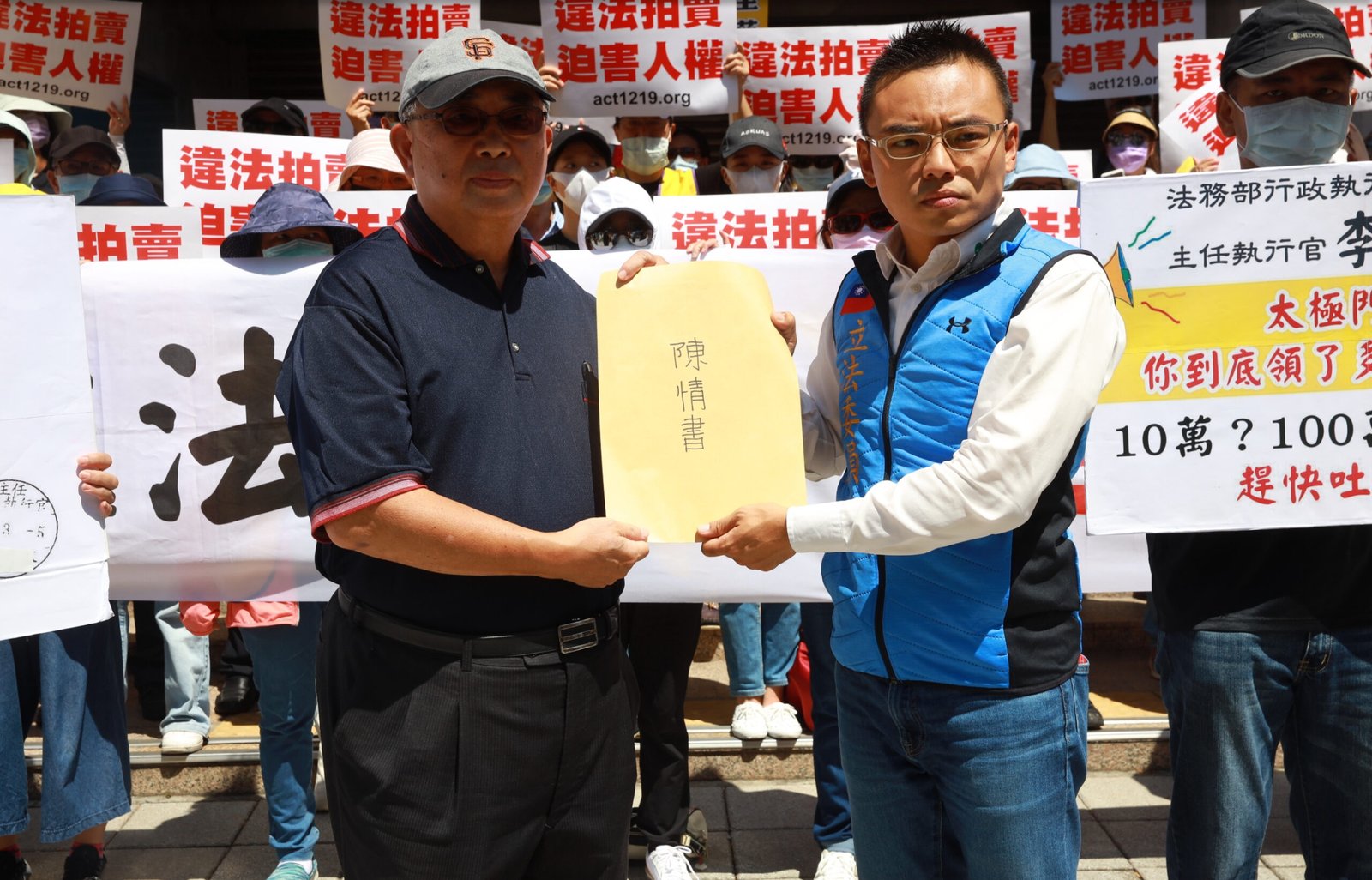
Legal accusations of fraud against religious movements involve complex issues surrounding law, belief, and personal autonomy. Although courts may intervene when there is strong evidence of misconduct, they typically hesitate to regulate spiritual doctrines. This cautious approach is based on a respect for freedom of religion and belief, as well as the practical challenges of assessing claims that cannot be verified empirically.
As new spiritual movements continue to emerge and evolve, legal systems will likely face ongoing challenges in balancing the protection of freedom of religion or belief with the need to prevent blatant cases of exploitation. In democratic countries, it is important to avoid the risk of discriminating against minorities through false accusations of fraud. However, real cases of fraud using spirituality as a pretext do exist. While that Tai Ji Men was innocent of fraud should have been obvious from the beginning, in other cases the distinction between faith and fraud is unclear—defined not by legal codes, but by the complex landscape of human belief.

Rosita Šorytė was born on September 2, 1965 in Lithuania. In 1988, she graduated from the University of Vilnius in French Language and Literature. In 1994, she got her diploma in international relations from the Institut International d’Administration Publique in Paris.
In 1992, Rosita Šorytė joined the Ministry of Foreign Affairs of Lithuania. She has been posted to the Permanent Mission of Lithuania to UNESCO (Paris, 1994-1996), to the Permanent Mission of Lithuania to the Council of Europe (Strasbourg, 1996-1998), and was Minister Counselor at the Permanent Mission of Lithuania to the United Nations in 2014-2017, where she had already worked in 2003-2006. In 2011, she worked as the representative of the Lithuanian Chairmanship of the OSCE (Organization for Security and Cooperation in Europe) at the Office for Democratic Institutions and Human Rights (Warsaw). In 2013, she chaired the European Union Working Group on Humanitarian Aid on behalf of the Lithuanian pro tempore presidency of the European Union. As a diplomat, she specialized in disarmament, humanitarian aid and peacekeeping issues, with a special interest in the Middle East and religious persecution and discrimination in the area. She also served in elections observation missions in Bosnia and Herzegovina, Georgia, Belarus, Burundi, and Senegal.
Her personal interests, outside of international relations and humanitarian aid, include spirituality, world religions, and art. She takes a special interest in refugees escaping their countries due to religious persecution and is co-founder and President of ORLIR, the International Observatory of Religious Liberty of Refugees. She is the author, inter alia, of “Religious Persecution, Refugees, and Right of Asylum,” The Journal of CESNUR, 2(1), 2018, 78–99.
Languages (fluent): Lithuanian, English, French, Russian.