Tai Ji Men exemplifies how Qigong and conscience in action reveal a path from cultural resilience to global renewal.
by Jason Cherng*
*A paper presented at the Third World Conference for Religious Dialogue and Cooperation, Kruševo, North Macedonia, June 23, 2025.

In an era of rapid globalization and deepening social fragmentation, humanity finds itself at a civilizational crossroads. While technological advancement and economic connectivity have brought many benefits, they have also accelerated value conflicts, cultural homogenization, religious tensions, and institutional breakdowns. These crises—be they political, social, or spiritual—are not simply problems of governance or resources, but reflections of a deeper moral erosion.
At the heart of this moral dilemma lies the question: what still unites us? One enduring answer lies in the power of conscience.
Conscience as a Universal Foundation
Across history and cultures, conscience has remained a constant, often silent, compass. In his “Confessions,” Jean-Jacques Rousseau recounts a childhood lie that haunted him into adulthood. The guilt he felt decades later shows how conscience operates beyond laws or customs. It is not imposed from outside but arises from within.
Religious and philosophical traditions across cultures affirm this inner moral faculty. Confucianism calls it Ren (benevolence); Buddhism teaches Karuna (compassion); Christianity, including Catholicism, champions Agape (selfless love) and, in Catholic tradition, Caritas (charity); Islam emphasizes integrity and responsibility; Hinduism upholds Dharma, the path of moral duty. Even ancient symbols reflect this timeless insight: the Greek goddess Dike and the Egyptian deity Maat embodied justice and truth not merely as laws, but as sacred moral ideals.
Modern legal systems have begun to recognize the role of this inner compass. In countries like Japan and South Korea, constitutional provisions require judges to rule not only according to law but also according to conscience. This affirms that true justice must be grounded in personal moral integrity, not just institutional logic.
Ti-Yong Philosophy: Aligning Essence and Action
We need more than inspiration to put these insights into practice—we need integration. In this regard, the perspective of Ti and Yong within the Tai Ji and Yin-Yang philosophy offers a profound framework. Ti (體), like Tai Ji, refers to the undivided original essence—the core moral foundation, which in this context is conscience (良心, Liangxin). Yong (用), like the dynamic interplay of Yin and Yang, represents how that inner essence manifests in moral awareness, ethical judgment, and purposeful action. When Ti and Yong are in harmony, conscience is not only experienced inwardly but also expressed outwardly—through personal behavior, public engagement, and institutional design. It becomes a vital force shaping both culture and society.
This framework mirrors Mencius’ teachings of Liangzhi (良知, innate moral intuition) and Liangneng (良能, moral capability). He argued that while every person is born with ethical awareness, it must be cultivated—what he called “expanding the sprouts.” Western moral intuitionists such as G.E. Moore held a similar view: morality does not arise from calculation, but from intuition. Moore argued that “good” is a simple, indefinable concept—something that can only be grasped through intuition, not derived through logical reasoning.

In this light, conscience culture means aligning the inner and the outer. It is not enough to know what is right; we must also live it—in how we act, how we govern, and how we build institutions. Without awareness, even well-intentioned individuals act against their conscience. But with cultivated awareness, conscience becomes transformative. At its core, conscience culture is about turning inner values into action—and ultimately nurturing a more just and ethical social ethos.
Cultivating Awareness and Moral Readiness
To bridge the gap between knowing and doing, we need both awareness and moral intuition. Through self-cultivation, we develop awareness—a connection with our innate nature and the ability to observe our emotions and motives, even if it doesn’t always tell us what’s right or wrong. Moral intuition, rooted in awareness, represents our connection to conscience and becomes our inner navigator in a complex world. Even in difficult times, it helps us choose the right path.
But sensitivity to conscience differs from person to person. It is shaped by our upbringing, education, and cultural environment. That’s why we need diverse and flexible approaches to nurture conscience:
• Meditation and mindfulness practices help stabilize inner awareness and enhance self-perception.
• Arts and cultural engagement evoke emotional resonance and cultivate moral sensitivity.
• Religious and ethical education guides value reflection and strengthens moral decision-making.
Among these paths of self-cultivation, Tai Ji Men Qigong stands out as a distinctive example. Integrating breathing, movement, and intention, it helps practitioners achieve a harmonious balance of body and mind—not only enhancing vital energy but also enabling calmness and focus even under pressure.
Similar forms of disciplined practice can be found across cultures. For example, walking meditation, chanting, and yoga use intentional physical movements to cultivate mental clarity and inner awareness. These practices not only deepen awareness but also foster the readiness and courage to act when conscience calls.
Global Challenges and Cultural Resilience
Despite its universal resonance, conscience culture is difficult to practice. Most people are not taught how to act according to conscience, and many systems actively discourage it. Cultural interpretations of morality vary, and institutional pressures often suppress individual moral judgment.
Yet globalization, for all its tensions, also creates new possibilities. It fosters intercultural dialogue and shared values. As we face global crises—ranging from injustice to social disintegration—the need for conscience-based solutions becomes urgent.
In this context, cultural resilience becomes a key concept. It refers to a society’s ability to hold onto its core values and shared ethical beliefs—even under systemic stress, cultural disruption, or political instability.
Conscience culture embodies this resilience. Rather than rigid doctrine, it offers a flexible yet principled framework that adapts to different cultures while upholding a shared moral foundation. Through education, dialogue, and institutional advocacy, it becomes a stabilizing force in a rapidly changing world.
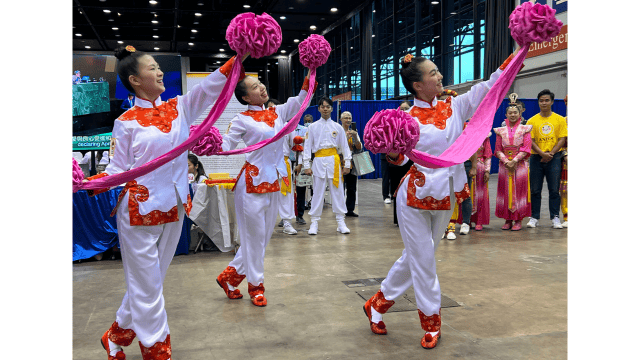
Despite facing years of legal injustice and systemic oppression, Tai Ji Men has remained steadfast in promoting the global “Era of Conscience” movement, which is dedicated to advancing peace, dialogue, and cultural education. This is a vivid example of how cultural resilience can transform adversity into a moral opportunity.
In 2023, the Parliament of the World’s Religions chose “A Call to Conscience” as its theme—echoing the spirit of the UN-designated International Day of Conscience and signaling a global shift toward shared moral foundations.
Through Tai Ji Men’s interfaith peace ceremonies, we have seen how conscience can bridge religious and cultural divides, fostering harmony and trust across differences.
Lessons from Conscience in History and Today
History shows us that even a single conscience can change the course of justice—or conversely, that silence can enable catastrophe.
During the Auschwitz trials after World War II, doctors who claimed they had perpetrated atrocities because they “should follow orders” were sentenced. Their case established an enduring principle: obedience is no excuse for injustice. Similarly, German theologian Martin Niemöller’s haunting poem, “First they came…,” reminds us that silence in the face of injustice allows greater harm to unfold.
These lessons from history reveal that conscience is not a private matter but a civilizational force.
Building upon this, we can see modern examples of moral courage reshaping history.
In 1966, despite grave doubts about the evidence, Judge Kumamoto Norimichi was pressured by senior colleagues on the panel to approve a death sentence for Hakamada Iwao. Kumamoto later resigned and devoted his life to advocating for a retrial. In 2024, after nearly six decades, justice was finally served, and Hakamada was acquitted. This case reminds us that even within rigid institutions, moral courage can prevail.
Taiwan also offers a compelling example.
In 1996, during its post-authoritarian transition, Tai Ji Men—a spiritual and cultural group focused on Qigong practice and cultural transmission—was unjustly accused of fraud and tax evasion. Although the Supreme Court ultimately acquitted them, the case lingered within the administrative system for decades. Instead of confrontation, Tai Ji Men launched a peaceful, conscience-driven movement to pursue justice.
Their case has been submitted to the United Nations Human Rights Council eleven times by international NGOs such as the Association of World Citizens and CAP-LC, gaining support from scholars and human rights advocates worldwide. This not only highlights the human rights significance of the case but also illustrates how multilateral collaboration can help advance justice and contribute to global civilizational renewal.
International voices, including organizations such as the Center for Studies on New Religions (CESNUR) and Human Rights Without Frontiers (HRWF), have reframed the case not merely as a tax dispute but as a violation of freedom of religion or belief and a failure of transitional justice.
These cases remind us that the power of conscience is not confined to personal resistance. It must also be channeled through cultural inheritance and civic action to awaken institutions and advance societal progress.
The Role of Culture and Civil Society
Culture is not merely an expression; it is a transmission of values.
Even simple acts of kindness—offering help, showing empathy, or standing up quietly for what is right—are living expressions of conscience culture in everyday life.
When culture is rooted in conscience, it transcends time and geography, becoming a bridge that advances peace and justice across nations. Conscience culture manifests through rituals, art, and community actions—making moral ideals tangible, building collective strength, and bridging linguistic and ethnic divides.
Dr. Hong Tao-Tze, the leader of Tai Ji Men, has promoted global initiatives such as the International Day of Conscience (April 5) and the International Day of Hope (July 12), along with the symbolic ringing of the Bell of World Peace and Love. These efforts unite people worldwide through conscience-centered cultural practices promoting peace.
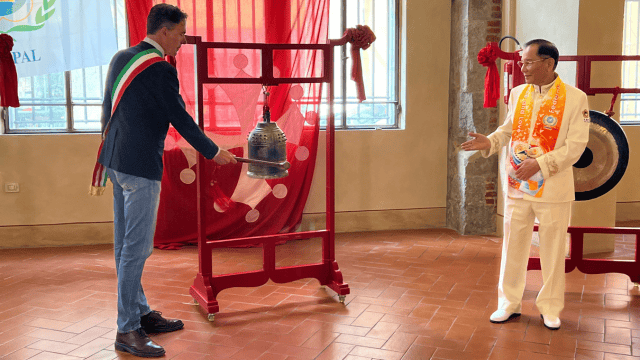
The support of UNESCO for cultural education and peace-building further echoes this vision. Conscience must guide not only personal belief, but also permeate public life, becoming the foundation for sustainable peace.
Civil society also plays a vital role. Platforms like “Bitter Winter” do more than document global human rights issues—they act as moral amplifiers. By highlighting conscience-based actions, they foster international solidarity and remind us that the moral struggle transcends borders.
From a broader perspective, globalization is not the destination—it is the bridge. And what gives this bridge strength is conscience. It connects our fast-changing world to a shared global civilization, grounded in peace, justice, and human dignity.
Conclusion: A Shared Ethical Imperative
Conscience culture is not utopian—it is essential. In a world fractured by ideology and driven by algorithms, it is conscience that restores the human dimension. It reconnects policy with principle, law with justice, and power with responsibility.
Let us not be silent in the face of injustice. Let us not compromise when systems discourage integrity. From ancient ethics to modern movements, conscience continues to be our deepest guide.
To move forward, we must do three things: Reclaim conscience. Reform systems. Renew civilization.
This is not just a slogan—it is our shared ethical imperative, one that begins from within and demands action at every level.
If conscience leads the way, transformation will follow.
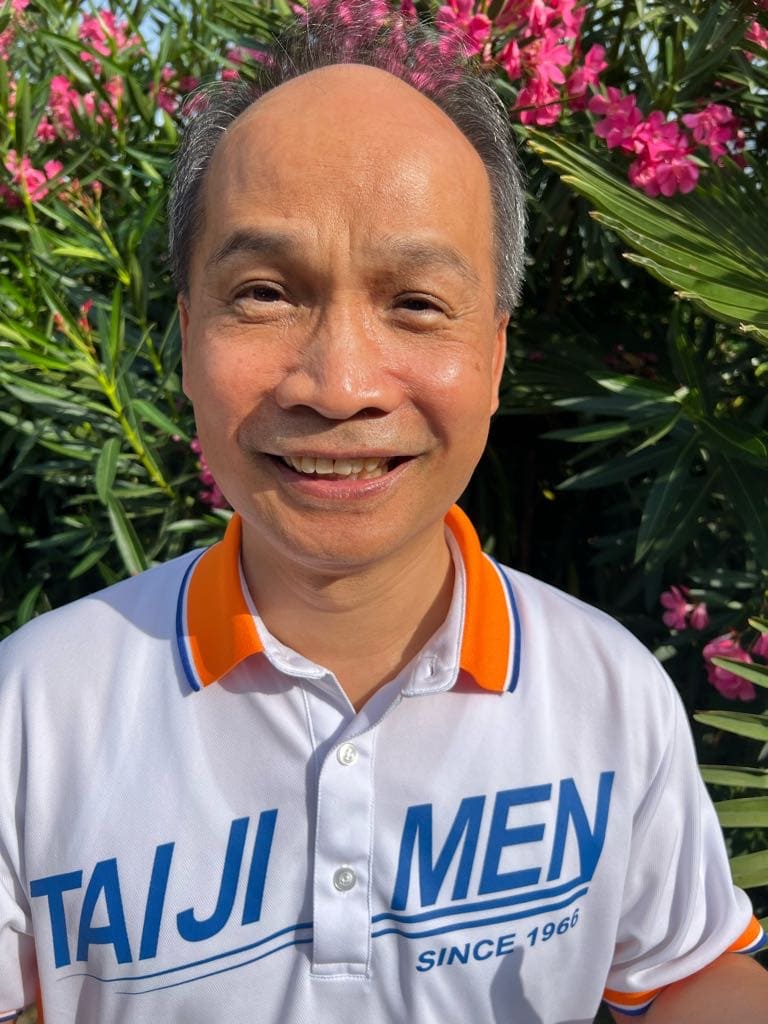
Jason Cherng, born in Taiwan, is a former visiting researcher at the Massachusetts Institute of Technology, Cambridge, Massachusetts. He has dedicated over thirty-two years to practicing Tai Ji Men Qigong and meditation, and actively engages as a member and volunteer for peace organizations such as the Association of World Citizens (AWC). For the past twenty-five years, he has invested much of his spare time in international cultural goodwill visits and advocating for peace and justice as a Tai Ji Men dizi (disciple).