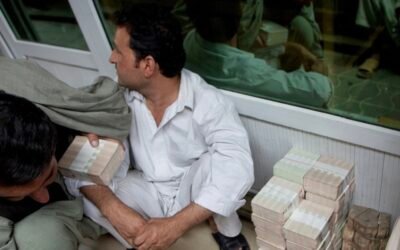
Sargodha is renowned for its natural beauty and rich historical heritage. However, not all is well there for religious minorities.
by Muhammad Masudul Hasan Nuri
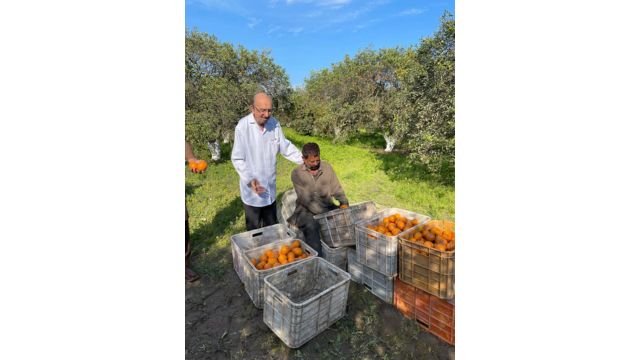
Nestled in the fertile plains of Punjab, Pakistan, lies the city of Sargodha, a region synonymous with a citrus delight—the kinnow fruit. The juicy, tangy wonder has not only captured people’s taste buds but has also become a symbol of Sargodha’s agricultural prowess and economic strength.
The city was once associated with literary giants like Urdu language poet, writer, and critic Ahmed Nadeem Qasmi (1916–2006), who treated the city as his home. This scribe also witnessed Sargodha district growing into the kinnow farm of Punjab and becoming the export hub of the Pakistani citrus family. It is the biggest kinnow locale in the world and is called the “California of Pakistan.”
The Director of Citrus Research Institute says, “So far, our agricultural scientists have developed some ten different citrus varieties. Over 50% of the cultivation area alone belongs to Sargodha and adjacent areas.”
“City of Citrus,” as it is called, Sargodha produces 96% of the total kinnow yield in Pakistan. It is the largest kinnow-producing district in the world. The cultivation process is a meticulous dance between nature and human expertise. With its signature sweetness, the golden fruit is the lifeblood of Sargodha’s economy.
Kinnow is not just for the taste buds; it is packed with essential vitamins and minerals. The citrus wonder is a rich source of Vitamin C, a potent antioxidant that helps fight infections. Kinnow contains Vitamin A, essential for healthy vision and skin. Dietary fiber aids digestion. Kinnow juice is hydrating and detoxifies the body, improving health. Kinnow peel, often discarded, is used as a natural zest in culinary applications.
Sargodha holds great significance due to its strategic location. It means “Godha” or Abode of the Fighter. So it is not only a coincidence that Sargodha earned the name for itself fighting valiantly against the Indian Air Force during the two wars of 1965 and 1971, hence winning the title of the “City of Eagles.”
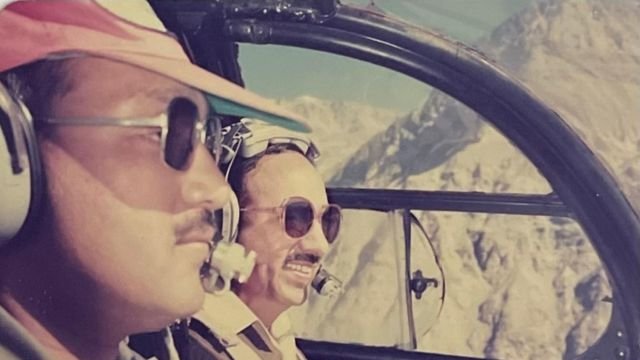
Sargodha hosts the headquarters of the Pakistan Air Force (PAF) Operational Central Command Air Base. In the Pakistan-India War of 1965, three cities of Punjab were given the title of Nishan-e-Istiqlal in recognition of their severe resilience in the face of the enemy. The citizens of Sargodha supported the Pakistan Army against the Indian Army’s advance into Pakistan. MM Alam flew his fighter plane from the Sargodha base and destroyed nearly twelve Indian fighter jets during the air war.
MM Alam is so far the top-scoring fighter pilot of the PAF. In the war of 1965, at Sargodha, he shot down nine Indian planes. On 6th September, 1966, MM Alam, in an F-86 Sabre Jet, shot down two enemy Hunter aircraft and damaged three others. For exceptional flying skill and valor displayed by MM Alam, he was awarded Sitara-i-Juraat (The Star of Courage). On 7th September 1965, MM Alam is said to have destroyed five more Hunter aircraft in less than a minute, which remains a record till today. Overall, he had nine kills and two damages to his credit. Because of the miraculous defense against superior enemy air power, the city of Sargodha was awarded the name “City of Eagles.”
In Takht Hazara village of the Sargodha District, the story of Heer and Ranjha has transcended time and boundaries, captivating the hearts of generations. The sacrifice, passion, and love story has made “Heer and Ranjha” a universal tale.
“Heer and Ranjha,” the epitome of passion, determination, and rebellion, unite in a long-lasting union that touches the very essence of human sentiments. Their love journey navigates through an ocean of hurdles and societal and family restrictions, yet it remains determined and unfaltering.
As we dive into the enchanting world of Heer and Ranjha, we are reminded of the eternal power of true love, even in the face of the worst adversity.
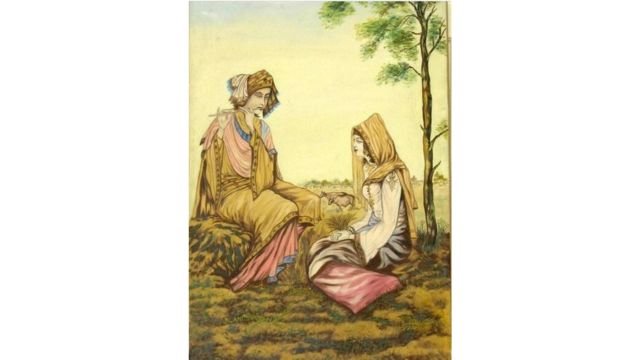
Beyond the poetic verses written by Waris Shah (1722–1798), a Sufi poet of the Chishti order 1766, Heer Ranjha is a mesmerizing tale that has captivated people’s hearts for generations. It is not just the story of two lovers; it is a tapestry of symbolism and deep meanings.
The tragic story casts a long shadow upon Heer and Ranjha’s romantic tale, and their tragic demise is a poignant reminder of the fragility of human life and the cruel twists of fate.
“Heer and Ranjha” may well be the world’s most extraordinary love story. It not only pierces a mortal’s heart, but also does not need a monument such as the Taj Mahal. More importantly, it is not about “Dying Love.” It is about “Living and Surviving in Love”—something far more agonizing than Shakespeare’s tragedies would make us realize.
It is said that the tragic death saddened everyone from Takht Hazara to Jhang Sial. It was then, they say, that the Chenab River distanced itself from Jhang and disowned it. Its waves tell the tale of Heer and Ranjha and cry.
“The history of Kirana Hills is eighty-seven million years old,” says geologist R.G. Devies. It has many facts hidden in it. These hills are spread over an area of 50 km. Whether it is the soldiers of Alexander the Great’s empire, an ancient Hindu University, or the coin of an Empire dating back to the Kushan period and Kanishka the Great (c. 127–150 CE) who ruled over this area. The coin has been compared with other coins of the period and is on display at the Lahore and Taxila Museums.
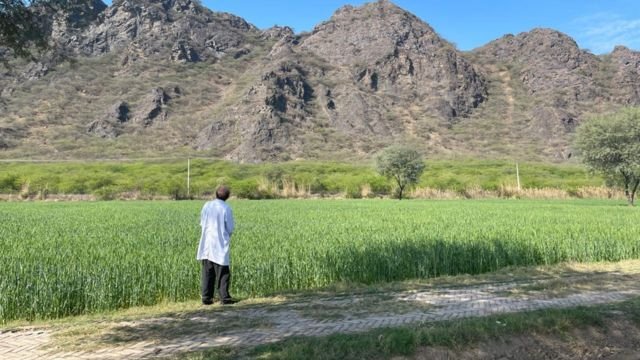
Fine, intricate carvings showing men on horses and in combat are speculated to date back to when Alexander the Great invaded the region. The latest carvings indicate that the inhabitants of these hills were Buddhists.
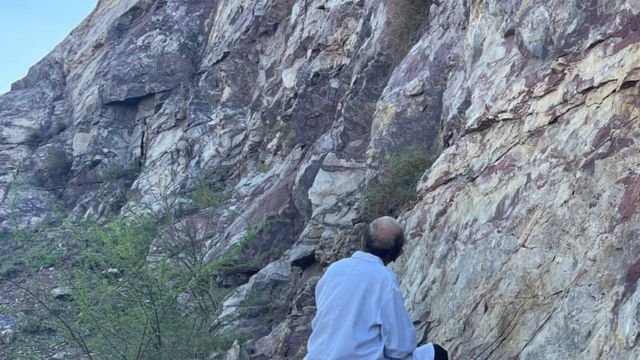
Rock carvings and relics discovered recently at Kirana hills in Northwest Chiniot (in Rabwah) were considered the walls of a stupa (according to the Archeology Department and Lok Baithak).
Some historians believe the site may hold the lost Ovan or Ovaian, a Buddhist university contemporaneous with the Julian University in Taxilla—one of only a few Buddhist universities from that time.
It is now widely speculated that these hills, besides many other hidden secrets, reveal Kirana Hills’ Buddhist heritage. At one time, this area was under the Kushan Empire, with its famous leader, Emperor Kanishka the Great. Since Buddhism and Christianity hold several similarities, it is speculated that Jesus Christ, during his travel to the East after crucifixion (as some believe), lived and traveled in what is now India, Afghanistan, Pakistan, and Kashmir. The purpose of his travel was to teach the message of Christianity to the lost tribes of the house of Bani Israel. As such, we still find a significant Christian community population in and around Sargodha. With the advent of Islam, Christianity and Buddhism were pushed to the rear.
Rock carvings, relics, gold coins, and stupas thus discovered are the only remaining footprints of Buddhist heritage.
The Great Banyan tree is located on the way to Takht Hazara near Midh Ranjha, another village in the Sargodha District. According to the archaeologists and botanists, it is more than 500 to 1000 years old and was planted some 400 years ago. Sufi Murtaza Shah planted it with his disciple Baba Raday Shah. The grave of Sufi Murtaza Shah is under the tree.
It is spread over three acres with over 1000 root crops near Midh Ranjha.
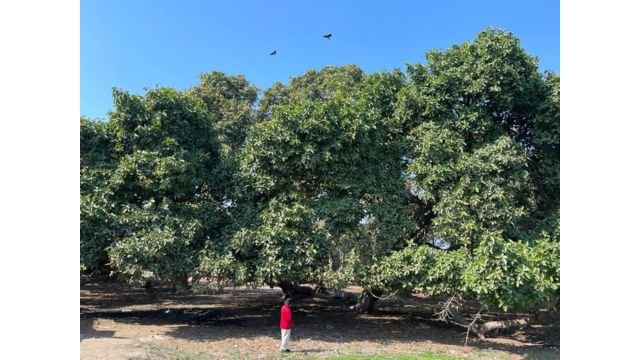
Banyan trees have both spiritual and divine status in Buddhist and Hindu traditions.
The Buddhists believe that it was under a Banyan tree that Buddha attained enlightenment.
The Great Banyan is famous as Pakistan’s largest tree and the second biggest in the world. It is associated with the legendary romantic love story between Heer and Ranjha. Heer originated in this village.
The Great Banyan tree’s shade was mesmerizing and tranquil on our visit. Many species of birds had their nests on tits branches, and their chirping sounds could be heard throughout the day as melodious music.
Takht Hazara village is located near the Chenab River. When a Mughal king came to this area, he liked to stay in this village. This is the town where Ranjha was born.
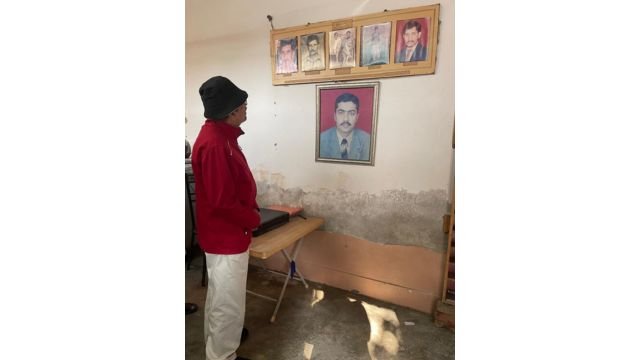
But far from the “love” of the past, in 2010, a group of fanatics held a protest against a small minority community living in Takht Hazara and hacked five people, including two children, mutilating their bodies with axes before burning down the mosque. The scar is still fresh as a couple of the survivors said: “We live by the will of Allah and our faith remains steadfast,” one said. Another elder passionately added: “Patience and prayers are our most prized possessions, and we believe in ‘Love for All, Hatred for None.’”
Another historical city of the Sargodha District is Bhera, located near the Jhelum River. Bhera’s havelis tell the story of a glorious past. Walking through the alleys, one encounters many abandoned Hindu and Sikh temples.
The “Eiffel Tower of Bhera” is an old Sikh gurdwara (or temple) with a tower that provides a panoramic view of the town. The architecture of Sher Shah Suri Jamia Mosque in Bhera (1541) is similar to that of Badshahi and Wazir Khan Mosque.
Bhera’s past would not let go of its educational institutions, whose residents rose to become judges, politicians, actors, entrepreneurs, and above all, towering theologians.
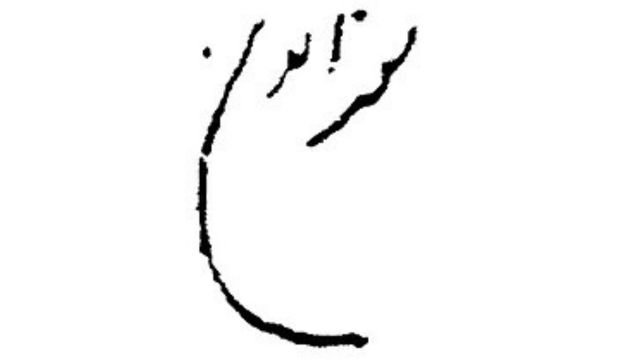
One such legendary figure was Hakim Maulvi Nuruddin (1834–1914), who was born in Bhera. He was a colossal personality—a talented physician, author, eminent scholar, extraordinary virtuous, and theologian par excellence. He was the royal physician to the Maharaja of Jammu and Kashmir for many years. He was the second leader of the worldwide Ahmadiyya Community, founded by Hazrat Mirza Ghulam Ahmad (1835–1908) of Qadian.
Sargodha is a destination that promises to captivate your senses and leave you lasting memories. It has rich agricultural prowess, undying patriotism, epic romanticism, historical significance, and much more.

Major General Professor Muhammad Masudul Hasan Nuri, the past executive director/Commandant of the Armed Forces Institute of Cardiology and National Institute of Heart Diseases in Rawalpindi, Pakistan, is the CEO/Cardiologist of Tahir Heart Institute in Rabwah, Pakistan, and Chairman of the International NGO Humanity First Pakistan.