A new state law assaults the secrecy of confession, which is non-negotiable for the Catholic Church. The Trump administration is expected to react.
by Massimo Introvigne

The Trump administration has vowed to investigate violations of religious liberty not only internationally but also within the U.S. and take action when needed.
The State of Washington offers an excellent opportunity to test the administration’s resolve. The governor has signed into law SB 5375, mandating that, starting July 27, Catholic priests (and all other ministers of religion) must report any suspected child abuse that they learn of during confession to the appropriate authorities.
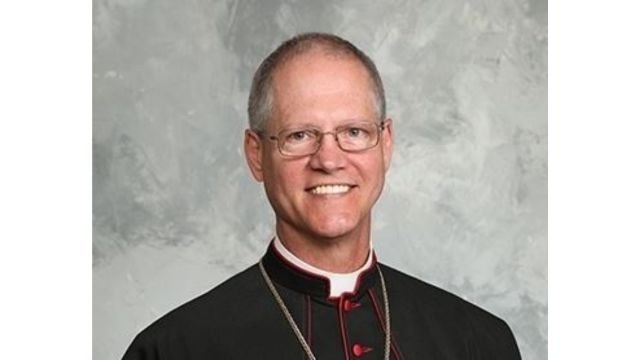
The Catholic Church clarified that priests will not comply with the law; if needed, they would rather go to jail. Archbishop Paul Etienne of Seattle said, “While we remain committed to protecting minors and all vulnerable people from abuse, priests cannot comply with this law if the knowledge of abuse is obtained during the Sacrament of Reconciliation.” The Archdiocese of Seattle commented: “All Catholics must know and be assured that their confessions remain sacred, secure, confidential and protected by the law of the Church.” The Washington State Catholic Conference of Bishops said, “The state telling the church to change its centuries of practice in the Sacrament of Reconciliation is exactly the type of government intrusion in religion that the First Amendment protects against.”
This is consistent with what happened in other countries and the position of the Holy See. When several Australian states passed similar laws, the Vatican wrote that priests should not comply, and those who would obey the law would face excommunication. The Vatican even rejected the compromise of instructing priests to withhold absolution until penitents who had confessed sins of child abuse had reported themselves to the authorities. The Apostolic Penitentiary, competent on the matter of confession, answered on behalf of Pope Francis that “absolution cannot be made conditional on future actions in the external forum.”
Scholars have also demonstrated that laws against the seal of confession do not serve any useful purpose. Nobody would confess crimes to a priest without knowing the confession is secret. Jeremy Bentham, the English philosopher who was no friend of religion nor of the Catholic Church, famously argued in the early 19th century, “the moment the constabulary were known to have harvested their very first confessional secret, the well of such secrets would dry up.” Criminals would not confess their sins to priests and ministers if they knew that what they confessed would be reported to the police.
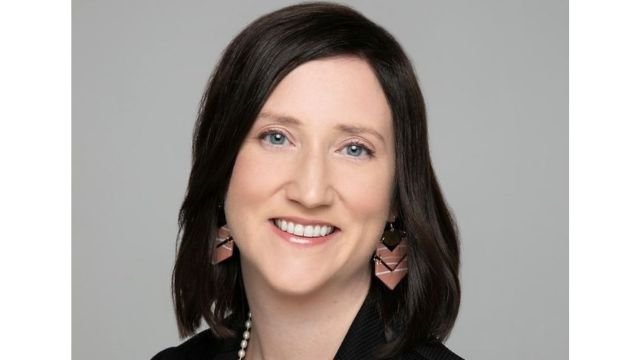
Although the matter is deadly serious, one of the State senators who sponsored the bill, a certain Noel Frame, added a comic note when she suggested to the media that the Catholic Church should change its Canon Law to comply with the laws of the State of Washington. The Catholic Church regards the secret of the confession as a divine mandate, and Senator Frame seems to be under the delusion that the State of Washington is the umbilicus of the world. For the Catholic Church, with all due respect, the State of Washington is as important as Uganda: in fact, less, as Uganda has more Catholics.
While it has no jurisdiction over Uganda, the Trump administration should intervene in the case of Washington and prove it meant business when it promised to put an end to domestic violations of freedom of religion or belief.

Massimo Introvigne (born June 14, 1955 in Rome) is an Italian sociologist of religions. He is the founder and managing director of the Center for Studies on New Religions (CESNUR), an international network of scholars who study new religious movements. Introvigne is the author of some 70 books and more than 100 articles in the field of sociology of religion. He was the main author of the Enciclopedia delle religioni in Italia (Encyclopedia of Religions in Italy). He is a member of the editorial board for the Interdisciplinary Journal of Research on Religion and of the executive board of University of Pennsylvania Press’ Nova Religio. From January 5 to December 31, 2011, he has served as the “Representative on combating racism, xenophobia and discrimination, with a special focus on discrimination against Christians and members of other religions” of the Organization for Security and Co-operation in Europe (OSCE). From 2012 to 2015 he served as chairperson of the Observatory of Religious Liberty, instituted by the Italian Ministry of Foreign Affairs in order to monitor problems of religious liberty on a worldwide scale.