China continues to “Sinicize” geographical names in an Indian state it claims as its own. Enough, says the Indian government.
by Massimo Introvigne
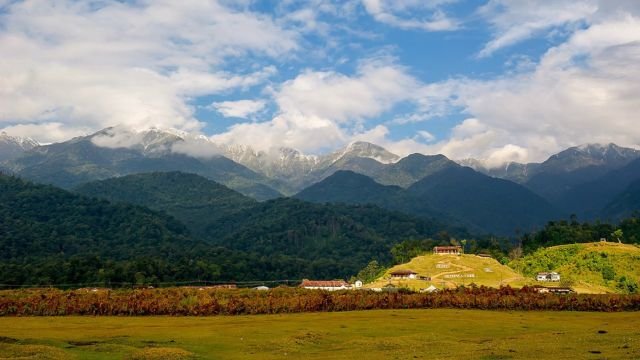
In April 2024, “Bitter Winter” reported China’s bizarre attempt to claim sovereignty over a part of India, Arunachal Pradesh, by changing the names of mountains, rivers, and cities on the map.
Arunachal Pradesh is an Indian state established by the Simla Convention between China, India, and Tibet during 1913–14. Nevertheless, China, which signed but never ratified the Simla Convention, asserts that Arunachal Pradesh belongs to its territory, modifies its maps to reflect this, and urges the international community to follow suit.
Certainly, to assert control over Arunachal Pradesh, China must invade the region. This was precisely what occurred in 1962 during the Sino-Indian War, when the area was known as The North-East Frontier Agency. The People’s Liberation Army of China seized significant portions of Arunachal Pradesh, though it eventually withdrew. Nonetheless, China persists in its claim over Arunachal Pradesh, with a specific focus on the historically and religiously important city of Tawang, located close to the border with the PRC.
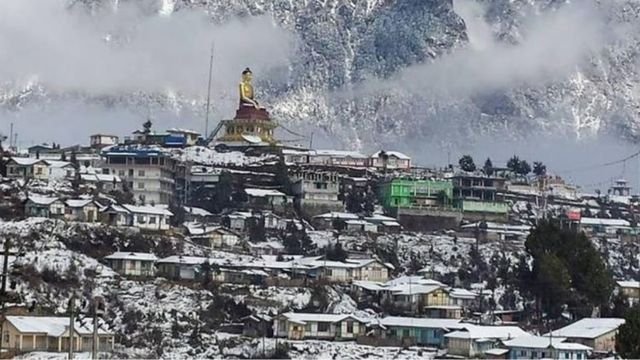
Following unsuccessful military attempts to conquer Arunachal Pradesh, hampered by robust Indian resistance, China has turned to its covert strategy: altering geographical names.
After thirty such changes in March 2024, this month, China continued with its renaming strategy by “Sinicizing” the names of fifteen mountains, five residential areas, four mountain passes, two rivers, and one lake. China calls the region “Zangnan” or “Southern Xizang,” just as it insists on calling Tibet “Xizang.”
The international community must ignore these attempts by the PRC to rewrite geography and history.
In a press release last week, India’s Ministry of External Affairs spokesperson Randhir Jaiswal stated, “We have noticed that China has persisted with its vain and preposterous attempts to name places in the Indian state of Arunachal Pradesh. Consistent with our principled position, we reject such attempts categorically. Creative naming will not alter the undeniable reality that Arunachal Pradesh was, is, and will always remain an integral and inalienable part of India.”

Massimo Introvigne (born June 14, 1955 in Rome) is an Italian sociologist of religions. He is the founder and managing director of the Center for Studies on New Religions (CESNUR), an international network of scholars who study new religious movements. Introvigne is the author of some 70 books and more than 100 articles in the field of sociology of religion. He was the main author of the Enciclopedia delle religioni in Italia (Encyclopedia of Religions in Italy). He is a member of the editorial board for the Interdisciplinary Journal of Research on Religion and of the executive board of University of Pennsylvania Press’ Nova Religio. From January 5 to December 31, 2011, he has served as the “Representative on combating racism, xenophobia and discrimination, with a special focus on discrimination against Christians and members of other religions” of the Organization for Security and Co-operation in Europe (OSCE). From 2012 to 2015 he served as chairperson of the Observatory of Religious Liberty, instituted by the Italian Ministry of Foreign Affairs in order to monitor problems of religious liberty on a worldwide scale.