The case of Fuyang Maizhong Reformed Church confirms that the category of “organizations promoting heterodox teachings” may be expanded at the authorities’ will.
by Hu Zimo
Readers of “Bitter Winter” are familiar with the controversies about the label “xie jiao.” Being active in (“using”) a “xie jiao” is punished by Article 300 of China’s Criminal Code with heavy jail penalties. “Xie jiao” is translated in China’s official English-language documents as “evil cults.” However, the translation is somewhat misleading as the expression has been used since the Middle Ages and literally means “organizations promoting heterodox teachings.”
There is a semi-official list of the xie jiao, but courts apply by way of analogy Article 300 to groups not included in any list. The expansion of the category “xie jiao” is one of the most alarming developments of Chinese case law about religion in recent years. It seems this expansion has no limits. What is a xie jiao? The answer is, any religious organization the authorities decide to suppress.
This year, police raided repeatedly the Maizhong Reformed Church in Fuyang city, Anhui province. It is a house church that refuses to join the government-controlled Three Self Church and part of a network of reformed churches that nobody would call “cults,” and are not in any list of the xie jiao either.
Since 2021, Maizhong Church believers have been consistently harassed and repeatedly placed under short-time administrative detention.
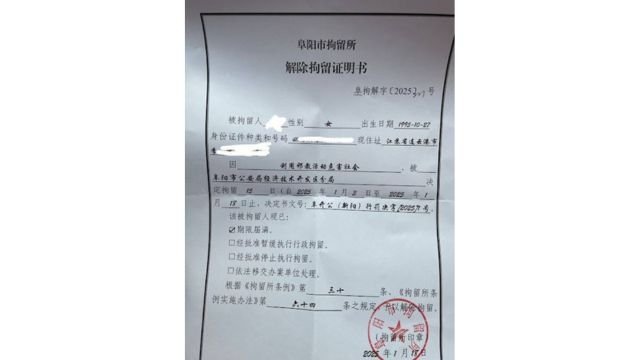
What happened this year is however something new. Two members were placed in administrative detention and explicitly charged under Article 300 for being active in a xie jiao.
While church lawyers are trying to appeal the decision, the incident confirms that the notion of xie jiao is now being expanded ad libitum. Campaigns against “xie jiao and illegal religion” (another expression now frequently used) should not be seen as initiatives against “cults” only but against any religious organization not controlled by the CCP.

Uses a pseudonym for security reasons.