The attitude of some Taiwanese bureaucrats and politicians is reminiscent of Pontius Pilate. But not all hope is lost.
by Massimo Introvigne*
*Introduction to the webinar “Spreading the Truth About the Tai Ji Men Case,” co-organized by CESNUR and Human Rights Without Frontiers on March 24, 2025, United Nations International Day for the Right to the Truth Concerning Gross Human Rights Violations and the Dignity of the Victims.
A United Nations day of observance asking for the truth about human rights violations offers an opportunity for a meditation on two expressions that entered the language because of a Roman bureaucrat of the first century CE. The first is “Pilate-like” that is much more expressive in its French version “pilatesque,” which also exists in Italian as “pilatesco.” The second is “washing one’s hands of,” in the sense of refusing to assume responsibility for something.
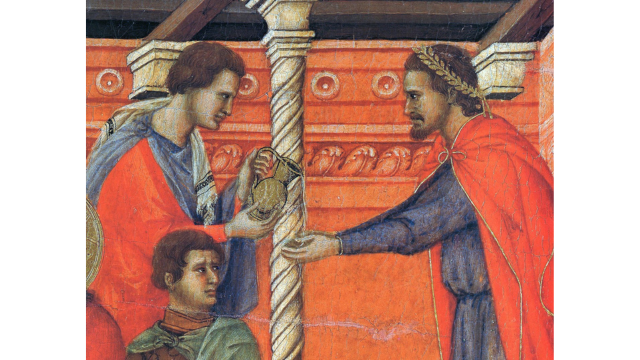
Both expressions refers to the attitude of Pontius Pilate, the governor of Judaea on behalf of the Roman Empire at the time of Jesus’ death. According to the Gospel of Matthew, when asked to decide whether Jesus should be liberated or executed, Pilate let the crowd that had gathered in front of his palace decide for him. When the crowd, instigated by the local Jewish leaders, screamed that Jesus should be crucified, Pilate was told by his wife that he was sending an innocent to death. He weakly tried to persuade the crowd. Then, as reported in the Gospel of Matthew, “seeing that he was getting nowhere, but that instead an uproar was starting, he took water and washed his hands in front of the crowd. ‘I am innocent of this man’s blood,’ he said. ‘It is your responsibility!’”
In the Gospel of John, Jesus tells Pilate: “The reason I was born and came into the world is to testify to the truth.” But Pilate answers, “What is truth?”
The two idiomatic expressions “Pilate-like attitude” and “washing one’s hands of” refer to this story. Those who have a “Pilate-like attitude” do not care about the truth and “wash their hands” of the suffering of those who are persecuted for affirming the truth.
There is an obvious parallel between this attitude of Pilate and how most Taiwanese tax bureaucrats and politicians handled the Tai Ji Men case. They were told by Tai Ji Men that the spiritual movement had committed no crime and no tax fraud. They were told the same by Taiwan’s Supreme Court. They were told this truth again by international scholars, human rights activists, documents filed with the United Nations. Yet, they maintained what is nicely called in French a “pilatesque” attitude.
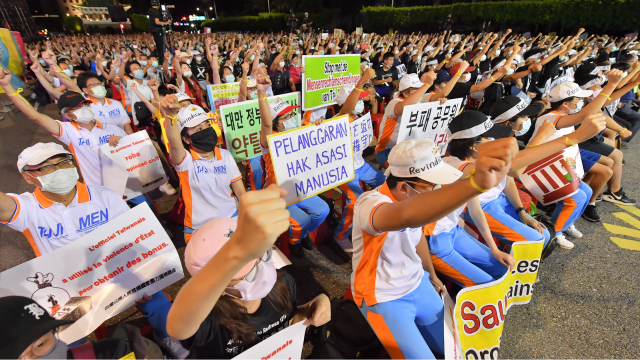
“What is truth?” as Pilate said to Jesus. “Truth” for these Taiwanese bureaucrats and politicians is what suits their careers, their comfort, their bonuses, the requests of a prosecutor who repeatedly violated the law, the media hungry for sensational stories, no matter how slanderous and false they were. They did not care for the suffering of Tai Ji Men’s Shifu (Grand Master) and dizi (disciples). They washed their hands of the truth and the suffering and went on with a fabricated case.
Yet, perhaps not all is lost. The early Christians and much more their Medieval counterparts, notwithstanding the Roman persecutions, respected the Roman Empire and its solid legal structure. Eventually, Medieval Christianity and what we still call the European or Western civilization emerged as a synthesis of Greek philosophy, Roman law, and Jewish and Christian spirituality, with the addition of the Anglo-Germanic sense of community.
These Christians could not believe that Pilate, the legitimate representative of Roman authority, was totally evil. Christians called “apocryphal” scriptures books that are not simply “false.” Some of them may include old traditions transmitted by word of mouth. Simply, “apocryphal” gospels and other documents are those that were not selected to be part of the official canon of scriptures recognized as official and divinely inspired by the early church.
Many of these “apocryphal” documents deal with Pilate. Although some portray him in a negative light, the most popular claim that when soldiers faithfully reported to him the story of Jesus’ resurrection, he changed his attitude to the truth and converted. One of the most beautiful “apocryphal” scriptures is called “Paradosis Pilati,” the “Handing Over of Pilate.” The earlier manuscript of it we have is from the 12th century, but scholars believe it was written much earlier, perhaps as early as the 4th century CE.
In the text, Roman Emperor Tiberius has received many accounts about Jesus and believes that he was innocent and executing him was a catastrophic mistake (there is no evidence that this ever happened). So, he summons Pilate, who by this time has converted to Christianity together with his wife, to appear before him in Rome to be judged. Having heard Pilate’s story, he blames the Jewish leaders and orders the destruction of Jerusalem (which did happen, but more than thirty years after Tiberius’ death). But he still regards Pilate as responsible and orders him beheaded.
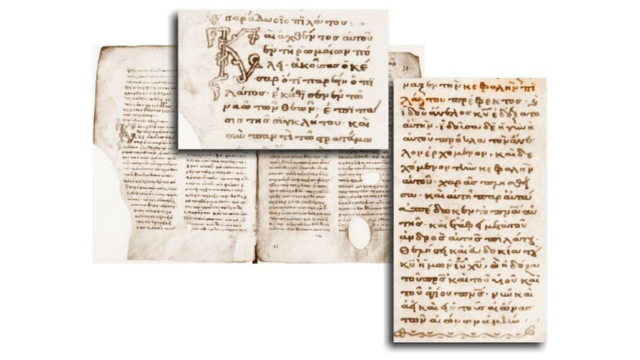
When he is being executed, a voice from heaven is heard predicting that all nations will honor Pilate because he was instrumental to the fulfilling of the prophecies about Jesus. More, the voice predicts that Pilate will be with Jesus when he will come again in the last days and will be a witness to the Final Judgement. After Pilate is beheaded, an angel takes his head to heaven. His wife dies out of joy upon seeing this miraculous event, and their bodies are buried together in Rome.
Nobody believes that the “Paradosis Pilati” is historically accurate, but this is not what it was all about. It is a powerful story of conversion. At the time of the execution of Jesus, Pilate encountered the truth but did not recognize it. However, this glimpse of the truth slowly worked in his (and his wife’s) hearts and converted Pilate in a witness for the truth at the end of his life.
The truth is so strong in itself that all can be converted to it, even the eponymous character of all washings of hands and “Pilate-like” attitudes. In this day of observance, let’s express the wish that the suffering of the dizi and the testimony of so many scholars and human rights activists from all over the world will touch the heart of “somebody” in Taiwan so that the light of the truth may shine on the Tai Ji Men case.

Massimo Introvigne (born June 14, 1955 in Rome) is an Italian sociologist of religions. He is the founder and managing director of the Center for Studies on New Religions (CESNUR), an international network of scholars who study new religious movements. Introvigne is the author of some 70 books and more than 100 articles in the field of sociology of religion. He was the main author of the Enciclopedia delle religioni in Italia (Encyclopedia of Religions in Italy). He is a member of the editorial board for the Interdisciplinary Journal of Research on Religion and of the executive board of University of Pennsylvania Press’ Nova Religio. From January 5 to December 31, 2011, he has served as the “Representative on combating racism, xenophobia and discrimination, with a special focus on discrimination against Christians and members of other religions” of the Organization for Security and Co-operation in Europe (OSCE). From 2012 to 2015 he served as chairperson of the Observatory of Religious Liberty, instituted by the Italian Ministry of Foreign Affairs in order to monitor problems of religious liberty on a worldwide scale.