An exquisite 11th-century sculpture in the Chennai Bronze Gallery epitomizes the universal aspiration to the restoration of an original androgynous status.
by Massimo Introvigne
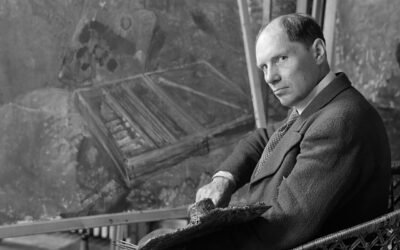
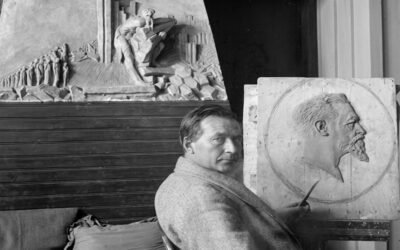
On January 11, 2025, I gave a lecture in connection with an exhibition of Italian painter Raoul dal Molin Ferenzona in Collesalvetti, Tuscany, surveying the theme of the androgyne in Greek, Roman, and modern European art and literature.
Obviously, the theme is not European only. The idea that a non-separation of male and female preceded separation and that restoring this androgynous state is the perfection of enlightenment and love is found in many cultures.
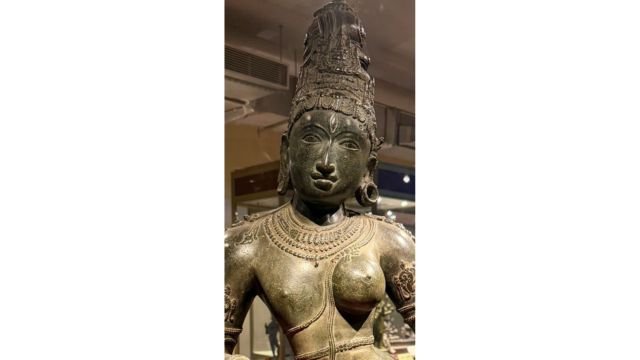
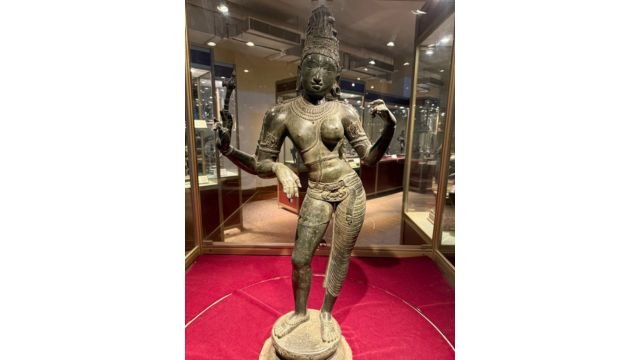
Last week, I visited the world-famous Bronze Gallery, part of Chennai (Madras) Government Museum. One of its masterpieces is an 11th-century CE Ardhanarishvara, i.e., an androgynous figure representing Shiva and Shakti in their perfect amorous fusion. The right half (on the left of the picture) is male and the left half (on the right of the picture) is female.
Ardhanarishvara presents the combination of masculine and feminine energies in the universe (Puruṣa and Prakṛti) and demonstrates the inseparable nature of Shakti, the feminine aspect, from Shiva, the masculine aspect. This union is regarded as the source of all creation.
In the Medieval scripture “Shiva Purana,” Brahma struggled with creation as his creatures were not multiplying. Seeking help, he approached Shiva, who appeared as Ardhanarishvara (half-male, half-female). Shiva then split into the male Shiva and his consort Parvati, with Parvati taking on the role of fertility.
There are numerous depictions of the androgynous Ardhanarishvara in Hindu iconography, the oldest dating back to the 1st century CE.
In some images, Shiva’s half features a trident, drum, or axe, and wears a tiger skin apron with the Nandi bull beside him. Parvati’s half wears a sari, holding a mirror, flowers, or a water jug, adorned with arm jewelry and associated with a lion. Ardhanarishvara sculptures sometimes, as in the case of the Chennai bronze, show three arms, with two belonging to Shiva. While many Shiva temples feature statues of Ardhanarishvara, there are only a few temples dedicated specifically to this form. The most significant one is in Tiruchengode, Tamil Nadu.
In Hindu belief, the Absolute is symbolized by the egg or dot, representing an undivided primordial entity. This unity is divided into polar opposites, leading to the concept of a two-gendered creator god, Shiva and Parvati. Shaktism, starting around the 4th century CE, emphasized female potency (Shakti) and devotion (Bhakti) as equal to male power. It asserted that without Parvati, the male element alone was ineffective. Parvati transformed a non-generative “corpse” (Shava) into a generative god (Shiva).
Less rich in attributes than other versions of the Ardhanarishvara and with no ancillary figures, the bronze of Chennai is unique for its elegance and exquisite artistic quality. It epitomizes the perfection of the androgyne as a universal human aspiration.

Massimo Introvigne (born June 14, 1955 in Rome) is an Italian sociologist of religions. He is the founder and managing director of the Center for Studies on New Religions (CESNUR), an international network of scholars who study new religious movements. Introvigne is the author of some 70 books and more than 100 articles in the field of sociology of religion. He was the main author of the Enciclopedia delle religioni in Italia (Encyclopedia of Religions in Italy). He is a member of the editorial board for the Interdisciplinary Journal of Research on Religion and of the executive board of University of Pennsylvania Press’ Nova Religio. From January 5 to December 31, 2011, he has served as the “Representative on combating racism, xenophobia and discrimination, with a special focus on discrimination against Christians and members of other religions” of the Organization for Security and Co-operation in Europe (OSCE). From 2012 to 2015 he served as chairperson of the Observatory of Religious Liberty, instituted by the Italian Ministry of Foreign Affairs in order to monitor problems of religious liberty on a worldwide scale.