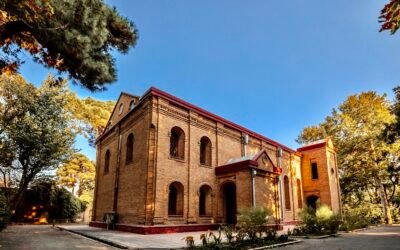
The judges found in favor of the Bulgarian Orthodox Old Calendar Church. But both the government and the opposition said they would not accept the decision.
by Massimo Introvigne

Does the Bulgarian Orthodox Church, aka the Patriarchate of Bulgaria, have a monopoly on the use of the label “Orthodox Church” in the country?
No, answered on December 27 the Supreme Court of Cassation, which under the Bulgarian Constitution is the supreme judicial instance in the country. The Court ordered the government to register the Old Calendarist church that separated from the Patriarchate of Bulgaria in 1993, with the name “Bulgarian Orthodox Old Calendar Church.”
Old calendarists not only want to keep the ancient liturgical calendar, but oppose ecumenical dialogue and maintain in general a more conservative attitude with respect to the Patriarchate.
The decision has been vehemently protested by the Patriarchate of Bulgaria, which insists on the Orthodox canonical principle of territoriality (only one Patriarchate for each country). Patriarch Daniel stated that the decision may open the way to several other small denominations also asking to be called “Orthodox” in Bulgaria.

The government and the political opposition have both criticized the decision and implied it might not be enforced.
It is still unclear and disputed whether this is a matter on which the Constitutional Court may have jurisdiction.
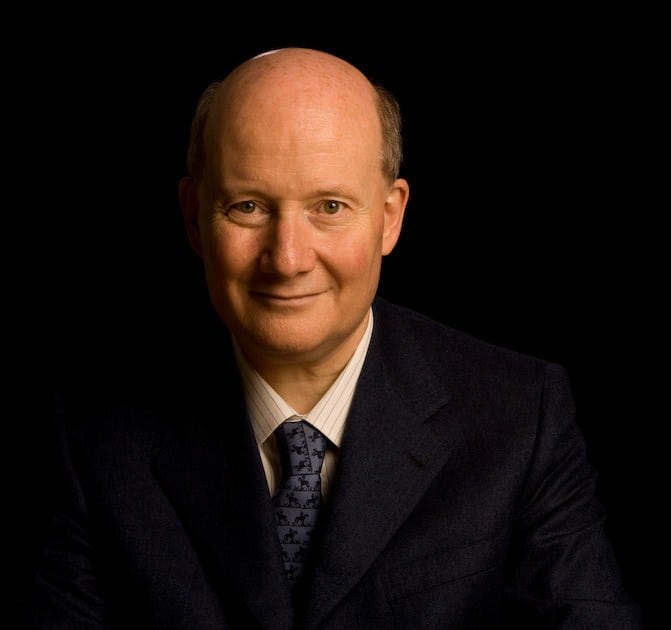
Massimo Introvigne (born June 14, 1955 in Rome) is an Italian sociologist of religions. He is the founder and managing director of the Center for Studies on New Religions (CESNUR), an international network of scholars who study new religious movements. Introvigne is the author of some 70 books and more than 100 articles in the field of sociology of religion. He was the main author of the Enciclopedia delle religioni in Italia (Encyclopedia of Religions in Italy). He is a member of the editorial board for the Interdisciplinary Journal of Research on Religion and of the executive board of University of Pennsylvania Press’ Nova Religio. From January 5 to December 31, 2011, he has served as the “Representative on combating racism, xenophobia and discrimination, with a special focus on discrimination against Christians and members of other religions” of the Organization for Security and Co-operation in Europe (OSCE). From 2012 to 2015 he served as chairperson of the Observatory of Religious Liberty, instituted by the Italian Ministry of Foreign Affairs in order to monitor problems of religious liberty on a worldwide scale.