The decision by the Lahore High Court can also affect other religious minorities.
by Massimo Introvigne
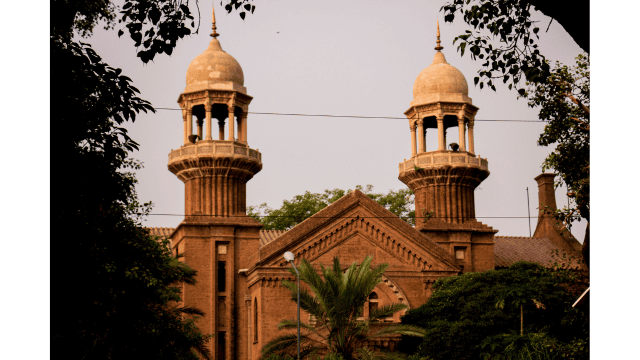
Last week, the Lahore High Court, upholding verdicts of two lower courts, issued a decision in matter of inheritance that perpetuates discrimination against the Ahmadiyya Community in Pakistan and also affects other minority religions.
The judges ruled that non-Muslims should face legal restrictions when it comes to inheriting property owned by a Muslim. Citing the collection of hadith “Sahih Muslim,” Justice Chaudhry Muhammad Iqbal referred to Prophet Muhammad’s saying, “A Muslim does not inherit from a disbeliever, and a disbeliever does not inherit from a Muslim.”
The case referred to an Ahmadi man’s claim to 83-kanal land inherited from his father, a Muslim, in Gojra, Toba Tek Singh district. After the landowner’s death, his property went to his children, one of whom was an Ahmadi. However, a grandson contested this, arguing that his uncle, identified as an Ahmadi, should not inherit from a Muslim relative.

Ahmadis are officially declared non-Muslim by Pakistani law, their protests notwithstanding.
The decision also affects Christian and other minorities, as it implies that a child who converted to a religion other than Islam could not inherit from Muslim parents.
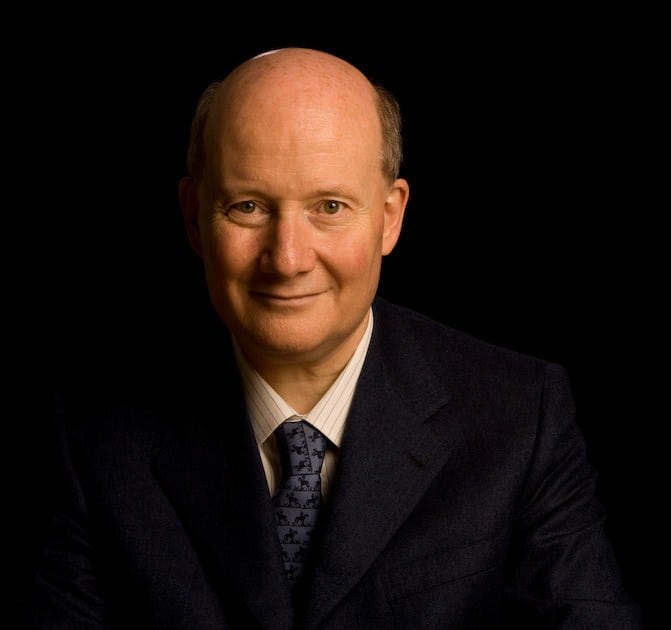
Massimo Introvigne (born June 14, 1955 in Rome) is an Italian sociologist of religions. He is the founder and managing director of the Center for Studies on New Religions (CESNUR), an international network of scholars who study new religious movements. Introvigne is the author of some 70 books and more than 100 articles in the field of sociology of religion. He was the main author of the Enciclopedia delle religioni in Italia (Encyclopedia of Religions in Italy). He is a member of the editorial board for the Interdisciplinary Journal of Research on Religion and of the executive board of University of Pennsylvania Press’ Nova Religio. From January 5 to December 31, 2011, he has served as the “Representative on combating racism, xenophobia and discrimination, with a special focus on discrimination against Christians and members of other religions” of the Organization for Security and Co-operation in Europe (OSCE). From 2012 to 2015 he served as chairperson of the Observatory of Religious Liberty, instituted by the Italian Ministry of Foreign Affairs in order to monitor problems of religious liberty on a worldwide scale.