A report from the Middle Eastern country sheds light on a desperate situation and some modest signs of hope.
by Antonio Graceffo

A mission team leader from Free Burma Rangers (FBR), a faith-based aid organization, reported from Syria, describing the desperate situation near Kobani. He detailed a recent attack by Turkish-supported militias on a grain depot, a critical resource for internally displaced people, many of the Kurds, Christians and other minorities, who have already endured the loss of their homes, livelihoods, and, in some cases, family members. In a heartfelt appeal, the leader concluded, “We pray to Jesus that this fighting stops and that the love of Jesus reigns supreme. Amen.”
David Eubank, founder of the Free Burma Rangers, highlighted the contrasting conditions for Christians in different parts of Syria. “Christians in the Damascus area, under the control of Hay’at Tahrir al-Sham (HTS), are doing relatively better,” he explained. HTS has been attempting to reposition itself as a legitimate political entity and administrative authority in Syria. To this end, they have vowed to protect minorities, including Christians, as part of an effort to distance themselves from their origins, although HTS evolved from Jabhat al-Nusra, the former Syrian affiliate of al-Qaeda, which was founded as a jihadist group with the goal of establishing an Islamic state in Syria.
“So far, the group has largely kept its pledge to protect Christians, although attacks are still occurring,” Eubank noted.

In contrast, the situation in Manbij is far worse. “The Syrian National Army (SNA), which has taken control in Manbij, is showing much less restraint than HTS,” he said. “In Manbij, nobody is truly safe—Christians, Kurds, or anyone else.”
Before the recent attack, Manbij, a city in the northeastern part of Aleppo Governorate near the Euphrates River, enjoyed relative peace and stability under the administration of the Kurdish Syrian Democratic Forces (SDF) as part of the Kurdish Autonomous Administration of North and East Syria (AANES). The Kurdish administration is known for its tolerance and protection of Christians and other minorities. While there were governance shortcomings, as in other Syrian cities, the residents lived without significant disruptions to their daily lives. However, for years, Turkey repeatedly threatened to invade Manbij using factions of the SNA, often labeled as “mercenaries.” On December 8, 2024, the SNA, a group that includes elements linked to extremists and former members of ISIS and al-Qaeda, launched a large-scale assault on Manbij. The brutal attack, led by Abu Amsha and backed by Turkey, marked a significant escalation in the conflict, characterized by heavy shelling and indiscriminate violence. At least thirty civilians, including women and children, were killed, leaving many families devastated and grieving the loss of their loved ones.
Another FBR team member, Ahmed (pseudonym), a Christian resident of Manbij, remains in hiding, making communication difficult. Believing he is the only Christian left in the city, he lives in constant fear of being discovered. The absence of churches in Manbij highlights the grim reality for Christians in this war-torn region, where survival is fraught with uncertainty amidst ongoing violence.
Many Christians have sought refuge in the AANES, particularly in Al-Hasakah and Qamishli, which are strongholds of the Kurdish-led Syrian Democratic Forces (SDF). These areas are home to significant Christian populations, including Assyrian and Syriac communities, and contain important churches, such as those belonging to the Syriac Orthodox and Assyrian Church of the East, which remain active despite the war.
Since its fall to the SNA, the situation in Manbij has significantly worsened. The ongoing clashes between Turkish-backed forces and remnants of the Kurdish Syrian Democratic Forces (SDF) have plunged the city into chaos. While some SDF soldiers have taken up defensive positions in tunnels or as snipers atop tall buildings, the conflict has completely disrupted services. Markets are closed, causing severe shortages of bread and food, and essential utilities such as electricity, water, and heating are unavailable, leaving civilians in increasingly grim conditions.
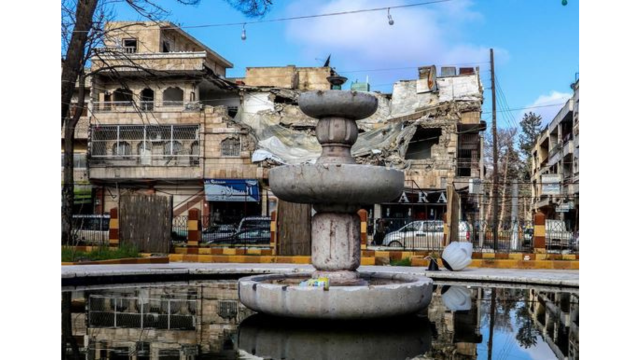
Many residents remain confined to their homes, fearing the dangers outside, while others cautiously welcome the attacking forces, viewing them as liberators from Assad. Ahmed reported that the city’s main hospital has been looted, and there is an acute need for food, water, electricity, and medical care. Public assets previously managed by the Autonomous Administration, such as schools, hospitals, and other vital infrastructure, have been systematically looted, worsening the suffering of the population. Manbij has descended into lawlessness, with armed robberies, arbitrary arrests, and widespread theft of private property—including homes, businesses, and vehicles—plunging the city’s residents into a state of desperation.
Ahmed expressed his struggles and faith amidst the crisis. “Please pray for me that God protects me and my family,” he shared. He has been struggling financially after losing his job and hopes to find a way to support his loved ones.
Ethnic discrimination and intimidation are rampant. Being Kurdish in Manbij is now seen as a crime. Kurdish residents have faced home raids, theft of money and valuables, and arbitrary arrests. Properties belonging to current and former SDF military and security personnel have also been seized, leaving many families homeless and without means of livelihood.
The economic collapse has left more than 10,000 people without jobs or salaries, depriving their families of basic sustenance. Fuel shortages and skyrocketing prices have added to the hardships, making heating, transportation, and basic energy needs unattainable for most families. Adding to the suffering, Manbij has been entirely cut off from water and electricity supplies, exacerbating the plight of its residents.
An FBR team member on the ground in Syria reported on the escalating attacks against Christian communities in the Hama countryside. The town of Mahardah, with a population of 17,000, has long been a significant center for Christians. However, its religious sites and cemeteries have become targets of destruction by armed Islamic groups.
The team member stated, “An armed group launched a shooting attack on the Greek Orthodox Diocese in Hama, destroying Christian religious symbols, violating the sanctity of the dead, and vandalizing the graves of Christian families.”

The assault on Christians extends beyond Mahardah. In the nearby city of Al-Suqaylabiyah, north of Hama, unknown assailants deliberately burned a Christmas tree in an act of intimidation. Militia attacks have become a daily occurrence in multiple areas, targeting minorities and their property. The destruction of Christian graves in Mahardah further underscores the ongoing plight of Syria’s Christian minority. An FBR member described the situation, stating, “The fear is real, serious, and great.”
HTS leader Ahmed al-Shara, also known as Abu Mohammad al-Julani, has publicly pledged to protect minorities and promote tolerance. However, reports of detentions, human rights abuses, and the group’s extremist origins cast serious doubt on these promises. Despite efforts to rebrand itself as a more moderate entity, HTS’s foundational ties to al-Qaeda and its ongoing reputation for extremism severely undermine its credibility, particularly among Syria’s minority communities.
Christians on the ground report deep mistrust of HTS’s assurances. In areas under its control, they face severe shortages of basic resources such as water and endure significant financial hardship, exacerbating their fears of persecution. These harsh conditions, combined with the group’s history and leadership, leave many minorities unconvinced of HTS’s commitment to safeguarding their safety and rights.
Antonio Graceffo is an American journalist with over twenty years of experience reporting on China and Southeast Asia. Recently, he has been based on the Thai-Burma border, covering the war in Myanmar. His work has appeared in “Al Jazeera,” “The South China Morning Post,” ‘The Diplomat,” “Jamestown Foundation China Brief,” “Mercator,” “Providence Magazine,” “Geopolitical Monitor,” “Taipei Times,” “Just the News,” and other international outlets. The author of several books, he also provides commentary on geopolitical and economic issues for NTD TV, Bloomberg Mongolia, and BBC Burma.