The city knows that peace should constantly be advocated for. So does freedom of religion or belief, in Japan and all over the world.
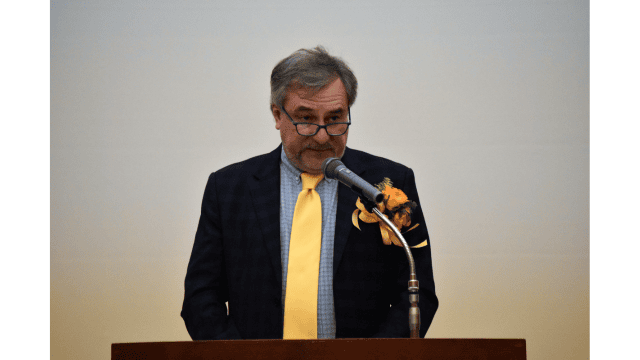
by Marco Respinti*
*Remarks delivered at the Peace Memorial Park in Hiroshima, Japan, December 7, 2024, a filmed digest of which is available on social media.

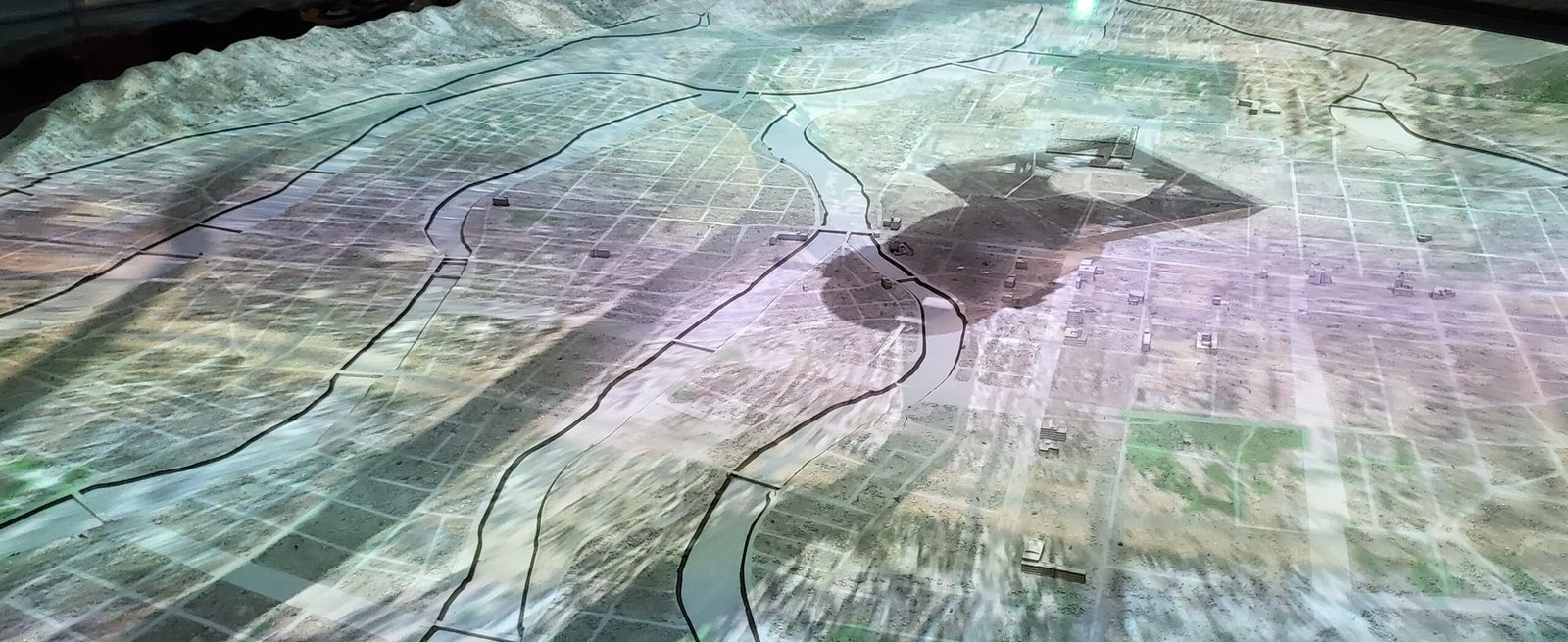
It is with true emotion that I am visiting the Peace Memorial Park in the city of Hiroshima, Japan, and the museum that conveys the horror that was perpetrated here. As the world knows well, but too often forgets, Hiroshima is the place where the first atomic bomb ever blasted with the intention of killing human beings on August 6, 1945. It took the lives of nearly 100,000 people just in one second, and the damage has continued even to this day. It is one of the worst human-made human catastrophes in all history. As this place deeply testifies, human beings can perform wonders, when they put their minds and arms at the service of good and beauty in life. They can also perpetrate horrendous crimes when they turn their backs to good and beauty.
The bomb was dropped by Americans and it is quite appropriate to quote here American author Russell Kirk (1918‒1994), one of the greatest minds and spirits of 20th-century United States. In a letter on October 14, 1945, he commented upon that tragic event to his friend and colleague Warren L. Fleischauer (1916‒1982), “It will not be long before we are reduced to savagery. We are the barbarians within our own empire.”
At the invitation of the International Coalition for Religious Freedom (ICRF), I am in Japan on a lecture tour that brings me to four major cities of this beautiful country.
Nuclear power is a great resource that should be used and shared universally always and only for peaceful goals. Yet, its use to build bombs—today incomparably more devastating and lethal than those that wrecked Japan—is still a constant threat hanging on the whole world. However, the good news is that in this year 2024 the Japan Confederation of A- and H-Bomb Sufferers Organizations (日本原水爆被害者団体協議会), which has been tirelessly advocating against the horror of nuclear weapons for more than eighty years, was awarded the Nobel Prize for Peace. Known as “Nihon Hidankyō” (日本被団協 ) and formed in 1956, it represents the survivors of that disaster.
I salute with respect these people who have never stopped speaking out for the abolition of nuclear weapons, as I mourn the victims of human absurdity that paid an unbearable price in Hiroshima, as well as in Nagasaki three days later, on August 9, 1945.
Peace, also by way of the abolition of nuclear weapons, must constantly be advocated for. So does freedom of religion or belief in this country and all over the world, equally and without compromise. In fact, religious freedom will be lost as soon as we stop speaking out for it.
I am a foreign citizen. I deeply admire this country, its culture, and its traditions—and of course its people. I have no intention of judging anyone or interfering with its law and politics. Yet, also here, in Japan, religious liberty is at risk. The request by the Japanese authorities for a dissolution order against the Family Federation for World Peace and Unification (formerly known as the Unification Church) reinforces governmental restrictions not only on that group, but on all religious organizations in the country.
It is then necessary to raise a loud voice for religious freedom, which is the foundation of every human right in the world. I encourage and urge you to join me, to join us in this task of preserving freedom of religion or belief for all. As Pope Benedict XVI famously said, “religious freedom is the path to peace.”

Marco Respinti is an Italian professional journalist, member of the International Federation of Journalists (IFJ), author, translator, and lecturer. He has contributed and contributes to several journals and magazines both in print and online, both in Italy and abroad. Author of books and chapter in books, he has translated and/or edited works by, among others, Edmund Burke, Charles Dickens, T.S. Eliot, Russell Kirk, J.R.R. Tolkien, Régine Pernoud and Gustave Thibon. A Senior fellow at the Russell Kirk Center for Cultural Renewal (a non-partisan, non-profit U.S. educational organization based in Mecosta, Michigan), he is also a founding member as well as a member of the Advisory Council of the Center for European Renewal (a non-profit, non-partisan pan-European educational organization based in The Hague, The Netherlands). A member of the Advisory Council of the European Federation for Freedom of Belief, in December 2022, the Universal Peace Federation bestowed on him, among others, the title of Ambassador of Peace. From February 2018 to December 2022, he has been the Editor-in-Chief of International Family News. He serves as Director-in-Charge of the academic publication The Journal of CESNUR and Bitter Winter: A Magazine on Religious Liberty and Human Rights.