It is not only an “Incan Disneyland,” but a place of art, games, and creativity.
by Susan J. Palmer
Article 3 of 3. Read article 1 and article 2.

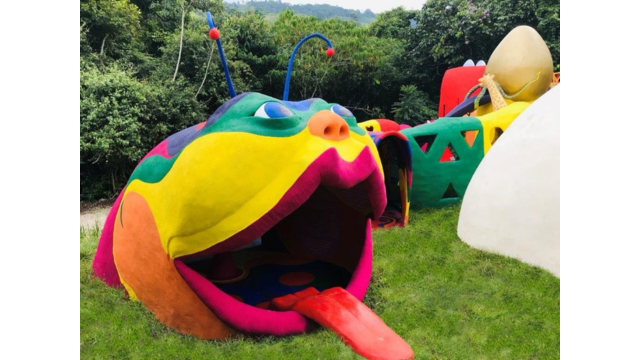
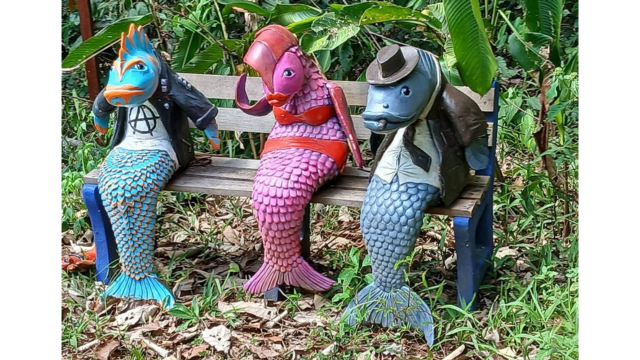
TierraMitica is situated in the high jungle of San Martín where it is relatively cool, with no mosquitos or poisonous snakes, although the residents light incense spirals to ward off tiny black flies that penetrate the screens at night. The grounds of TierraMitica overlook steep valleys of jungle forest and far off mountain ranges. Visitors enjoy exotic birdsong as they tread the winding stone pathways past flowering trees and the tropical gardens that mask the residents’ houses. There are several swimming pools and a bridge across a river with a spectacular waterfall. All the buildings have murals and display paintings or reliefs. Naïve art, painted statues of mythic characters, animals or fantasy creatures adorn the walkways and gardens. One might describe the place as an Incan Disneyland.
The daily schedule starts with a buffet breakfast prepared by rotating male and female cooks, at 7:30 a.m. in Casablanca, a large building with many glass doors and tall windows. Members sit around an oval table to eat, joke, and chat. After the meal, there is a planning meeting chaired by a tall TierraMitican, where members discuss various projects and volunteer for the day’s work activities and repair jobs. Mikis maintains a low profile, occasionally chiming in. On Saturdays, the men retire to the “Citadel Fury” or the “Dungeon.” This is the most striking edifice on the TierraMitica property; a fantasy fortress constructed for their six-hour Dungeons & Dragons game every Saturday (I used the Dungeon as a venue for my interviews with members because it was the coolest place—in both senses). I was told the D&D game was meant for everyone, but that all the women had dropped out because they preferred to hang out together in Casablanca, baking, sewing, and telling stories. Sunday is the day of rest, and couples stay in their own houses or meet and dine with friends.

The TierraMiticans evidently welcome children in their midst. I watched two sets of devoted parents caring for their nursing babies, and another couple expecting a baby in February. They are currently working on projects to make the community even more child-friendly, by building a kids’ playground and a school that will teach an internationally recognized curriculum. One woman, a retired bank manager who has a large vegetable garden and poultry, is experimenting with her ice cream machine and planning to create a petting zoo, looking forward to the day children will play on her property.
There is an emphasis on safety precautions. Mikis told me he prides himself on the fact that no one has ever been harmed in his community, during his Mythic Voyages, or in any other of the workshops.
TierraMiticans lead a healthy life. They are physically active with housework, maintenance tasks, building construction, and collective art projects that involve painting and sculpture. Their diet includes meat, home baked bread with cooked vegetables, and salad at every meal. No alcohol is allowed on the premises, but at least three members smoke, including Mikis. TierraMiticans support modern medicine, and decisions regarding vaccinations and other medical decisions are up to the individual.
At first glance TierraMitica, which is located in the Peruvian jungle, might seem remote and isolated, but the community receives many visitors on a regular basis. These visitors fall into four categories: i) Argonauts (graduates of the Mythic Voyage/ Choice OS and AdvancedChoice workshops); ii) Relatives (parents or siblings) of TierraMitica residents; iii) Former members of TierraMitica; iv) Guests who attend the community’s free Art Parties, where friends, family, gather once a year to socialize and participate in collective art projects.
TierraMiticans who do not own their own vehicle can borrow the community’s cars or the personal vehicles of other members for shopping or for medical appointments in Tarapoto. They can also travel by air to Lima for other purposes such as immigration/embassy business, and so on.
There are also many remote meetings with outsiders. Members constantly email and skype with family and friends. Many skype meetings are scheduled, such as Workshop Tasters (free consultations for prospective customers who are undecided about taking a ChoiceOS workshop), and the Free Consultations with Mikis Hasson for Argonauts. I noticed at suppertime the table was often buzzing with news and gossip about former members and Argonauts. It is interesting to note a pattern where some members have dropped out for several years and then reappear to live in the community once again. They are allowed to rejoin the community after attending a refresher workshop.

The trees are adorned with tiny black spider monkeys. Three-toed sloths are a common sight. One woman said she was trying to figure out why the laundry door would not shut, when she looked up to see a baby sloth draped across the top, fast asleep. The most arresting sound in TierraMitica is the call of the hoatzin, a large prehistoric bird with a dinosaur-shaped head decorated with a Mohawk crown of feathers, and claws between its wings. The TierraMiticans call them “punk turkeys,” and they begin their aggressive stereophonic chant at 6 every morning: “Potakawatata!”—bouncing clumsily from treetop to treetop.

Susan J. Palmer is an Affiliate Professor in the Religions and Cultures Department at Concordia University in Montreal. She has directed the Children on Sectarian Religions and State Control project at McGill University, supported by the Social Sciences and the Humanities Research Council of Canada (SSHRC). She is the author of fourteen books, notably The New Heretics of France (Oxford University Press, 2012).