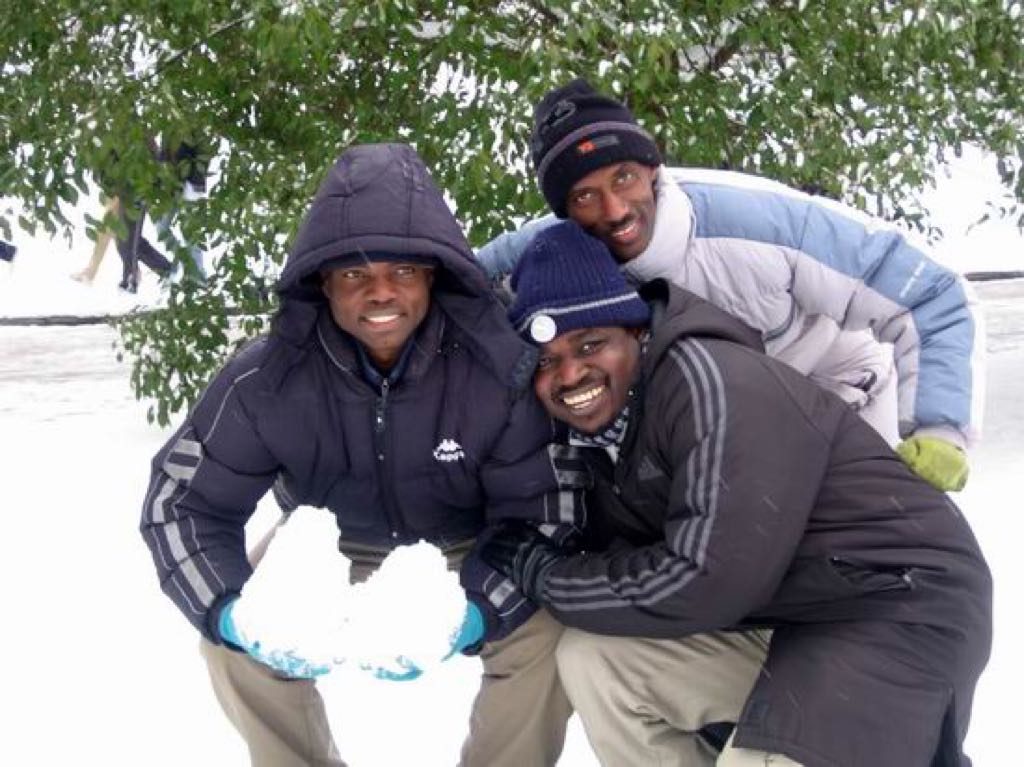
African university students in China (Credits: Betoseha – CC BY-SA 3.0)
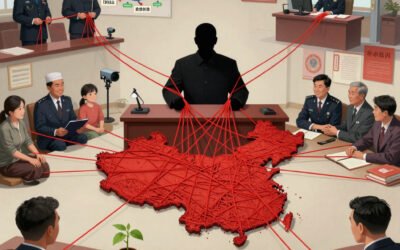
An article in Foreign Policy lifts the veil on how China uses its economic influence to prevent foreign media from reporting about religious persecution.
Massimo Introvigne
On September 14, an article by Azad Essa in the authoritative Foreign Policy magazine lifted the veil on how the United Front policy of controlling the foreign media works in the field of religious persecution.
Azad Essa is a journalist who had a weekly column on ethnic minorities and human rights published through the South African newspaper network Independent Media, the second largest in the country. At the beginning of September, Essa devoted his column to the fact that African leaders gathered in Beijing for the China-Africa forum were silent about religious persecution there, particularly about the internment in the dreaded “transformation through education” camps of one million Muslim Uyghurs, a matter readers of Bitter Winter are surely familiar with. This was surprising, considering that some African leaders share the same Sunni Muslim faith of the Uyghurs, but perhaps less surprising if one considers the widespread accusations that, in addition to official investments, money from China goes often directly to the pockets of African politicians.
Essa’s article had been published in a few newspapers of Independent Media, when he received a call telling him that it would not be made available online. One day after the call, his column was cancelled, with the explanation that a restyling of the group’s newspaper made his articles no longer suitable.
What had really happened is that Chinese government-owned companies, which own a controlling 20% of Independent Media, had asked the management to sack the disturbing journalist. China is investing billions to secure its political hegemony in Africa. It has also invested in media, by both inviting to China, wining, dining, and otherwise supporting struggling African journalists, and opening African channels and editions of Chinese media directly controlled by the Chinese Communist Party (CCP). But this was not enough, and criticism of China’s abysmal human rights record was still heard in Africa, a continent that is strategically crucial for the CCP.
So, the Party decided to take over directly mainline African media by buying their shares at premium prices. Many leading African media are losing money, and have been more than happy to sell to the Chinese. This was true for the Nation Media Group in Kenya, while the China International Television Corporation and China-Africa Development Fund invested heavily in South Africa’s Independent Media. The StarTimes Group, described as the “fastest growing and the most influential digital TV operator in Africa,” has subsidiaries in thirty different African countries. It is theoretically independently owned, but its Chinese connections have been revealed by investigative journalists. And so on.
However, the CCP’s investments in African media are not aimed at a financial return. Nor are they part of humanitarian aid. The CCP wants to control news about China. It knows that, through directly or indirectly controlled outlets and groups, it can enter the local media communities and influence other medias as well.
The strategy is paying off. It has becoming increasingly difficult to find in Africa media willing to report on the religious persecution in China. This is not coincidental. And the same systematic efforts are going on, perhaps in a less blatant and obvious way, in other parts of the world too.

Massimo Introvigne (born June 14, 1955 in Rome) is an Italian sociologist of religions. He is the founder and managing director of the Center for Studies on New Religions (CESNUR), an international network of scholars who study new religious movements. Introvigne is the author of some 70 books and more than 100 articles in the field of sociology of religion. He was the main author of the Enciclopedia delle religioni in Italia (Encyclopedia of Religions in Italy). He is a member of the editorial board for the Interdisciplinary Journal of Research on Religion and of the executive board of University of Pennsylvania Press’ Nova Religio. From January 5 to December 31, 2011, he has served as the “Representative on combating racism, xenophobia and discrimination, with a special focus on discrimination against Christians and members of other religions” of the Organization for Security and Co-operation in Europe (OSCE). From 2012 to 2015 he served as chairperson of the Observatory of Religious Liberty, instituted by the Italian Ministry of Foreign Affairs in order to monitor problems of religious liberty on a worldwide scale.