The Director of Hospital México had removed the image in the name of religious freedom of non-Catholics. A nurse sued him and won.
by Massimo Introvigne

On August 13, the Constitutional Court of Costa Rica reported that it had accepted unanimously a petition (amparo) filed on behalf of a nurse of Hospital México against the Director General of that medical center. The nurse appealed to the Constitutional Court because the Director General of Hospital México did not authorize the reinstallation of a crucifix, which she claimed was located at least since 2008 on the wall of the entrance to the operating rooms of that hospital.
She said that the image was removed on the occasion of the remodeling that was carried out in that area. After this, it remained for more than two years at the entrance of the operating rooms in the new building, next to the administrative offices, until the Director General gave a verbal order for its removal.
The nurse stated that she formally requested permission to place the image back on the wall where it was. The Director General responded through an official letter that the placement of the crucifix was not authorized because he “must watch over the right to free worship and religious diversity of the different occupational groups of Hospital México,” including non-Catholics.
In the vote 2024-22977, the Constitutional Court found a violation of article 75 of the Constitution. For the constitutional judges, the reason offered by the Director General of Hospital México to reject the request to relocate the crucifix at the entrance of the operating room “lacks an objective and reasonable basis.” The presence of the image, they wrote, “does not seek to impose a religious faith or belief, but rather it is the exercise of freedom of worship, as the external manifestation of freedom of conscience” of the Catholic believers who work in the hospital, including the nurse.

The judges ordered the Director General that within three days counted from the notification of the decision, he should authorize the reinstallation of the crucifix on the wall of the entrance to the operating room. The Director General was warned that in case of non-compliance he would be prosecuted for contempt of court, a crime that carries a penalty of imprisonment up to two years. The state should also reimburse the legal costs of the nurse.
In fact, the crucifix has now been reinstalled. The Costa Rican incident is reminiscent of the well-known European Court of Human Rights (ECHR) case “Lautsi v, Italy,” decided on March 18, 2011. In that case, the ECHR’s Grand Chamber decided that displaying crucifixes in classrooms in Italy did not violate the freedom of religion or belief of non-Catholics since a crucifix on a wall is a “passive symbol” and does not function as a tool for proselytization.
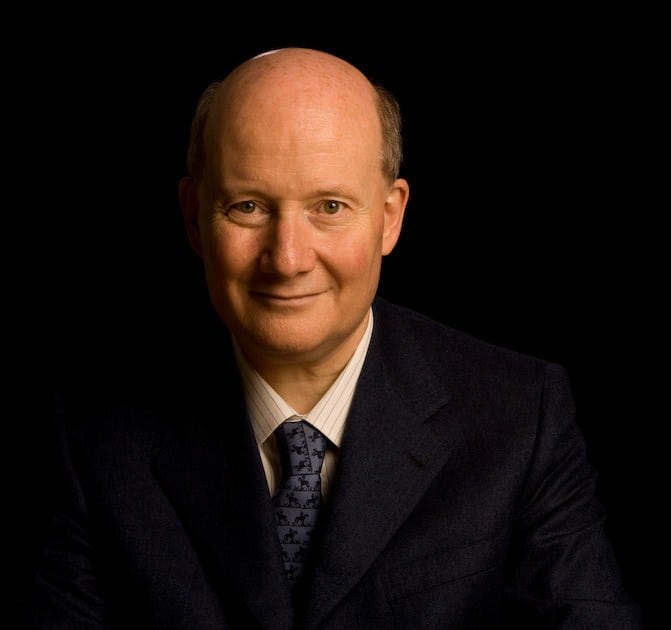
Massimo Introvigne (born June 14, 1955 in Rome) is an Italian sociologist of religions. He is the founder and managing director of the Center for Studies on New Religions (CESNUR), an international network of scholars who study new religious movements. Introvigne is the author of some 70 books and more than 100 articles in the field of sociology of religion. He was the main author of the Enciclopedia delle religioni in Italia (Encyclopedia of Religions in Italy). He is a member of the editorial board for the Interdisciplinary Journal of Research on Religion and of the executive board of University of Pennsylvania Press’ Nova Religio. From January 5 to December 31, 2011, he has served as the “Representative on combating racism, xenophobia and discrimination, with a special focus on discrimination against Christians and members of other religions” of the Organization for Security and Co-operation in Europe (OSCE). From 2012 to 2015 he served as chairperson of the Observatory of Religious Liberty, instituted by the Italian Ministry of Foreign Affairs in order to monitor problems of religious liberty on a worldwide scale.