Dozens of different movements throughout the world “proceed” from the teachings of the French esoteric master: a map.
by PierLuigi Zoccatelli (†)

[Note: The late Italian scholar PierLuigi Zoccatelli (1965–2024) made a consistent effort to reconstruct a genealogy of the different groups proceeding from French esoteric master Serge Raynaud de la Ferrière. His work was intended for an entry in CESNUR’s “Encyclopedia of Religions in Italy,” which explains his special attention to Italian branches, but is of considerable international interest. We offer an English translation of the Italian entry].
Serge Raynaud de la Ferrière (1916–1962) is at the origins of dozens of spiritual movements that are part of the subgenre “universal fraternities.” By “universal fraternities” I mean here organizations that—while describing themselves as non-religious and predominantly philosophical (a self-definition that should be respected) —transmit a set of ideas that may in part fit within a broad definition of religion or spirituality (although this definition may not be shared by these organizations). A group of organizations are inspired by the idea, traditional in Western esotericism, of a worldwide fraternity of initiates. Others relate more explicitly to the rediscovery of elements of the classical world, such as New Acropolis. All are—in one way or another—also influenced by the legacy of the Theosophical Society.
The Red GFU
In Italy, the Federazione Nazionale Red GFU Italia is a private law nonprofit association affiliated with the Red Internacional de Organizaciones Culturales no Gubernamentales Gran Fraternidad Universal (GFU), based in Mexico City, Mexico, whose advice and directives it accepts. The origins of this Italian branch of the GFU (Gran Fraternidad Universal, usually translated into English as Universal Great Brotherhood) can be found in the movement founded by Serge Raynaud de la Ferrière in the line derived from his disciple José Manuel Estrada (1900–1982). However, at least thirty different fraternities and initiatory orders, possibly more, “proceed” from Raynaud de la Ferrière, with notable developments especially in Latin America.
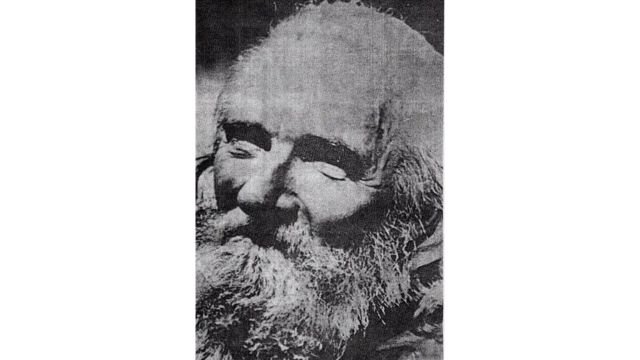
Serge Raynaud de la Ferrière, born in Paris in 1916, studied in Belgium, France and other countries and visited various European esoteric and Masonic circles. In Paris, he reportedly met a mysterious esoteric master who went under the name Sun Wu Kung. This personage, whose name is certainly a pseudonym—as it corresponds to the “pilgrim” in the 16th-century Chinese novel “Si Yeou-Ki”—was reportedly born in 1875, died in 1966, and was buried in Reykjavik, Iceland, where one of Raynaud de la Ferrière’s disciples, José Rafael Estrada Valero, is said to have found his remains and staff. Sun Wu Kung reportedly recognized Raynaud de la Ferrière as a great initiate and avatar and appointed him—on behalf of the Assembly of Sage Elders of Tibet, whose emissary he claimed to be—Supreme Regent of the Order of Aquarius. According to some critics, these events should be understood as metaphors for an initiatory path and would not correspond to historical events. For others, the founder—in whose work Theosophical echoes are evident—would have come into contact with the same “Ascended Masters” that Madame Helena Petrovna Blavatsky (1831–1891) and Alice Bailey (1880–1949) had spoken of. However, even Ferrière’s ex-wife Louise Baudin (1912–2013), while highly critical of her ex-husband, reported that meetings with the personage concealed under the pseudonym of Sun Wu Kung really happened.
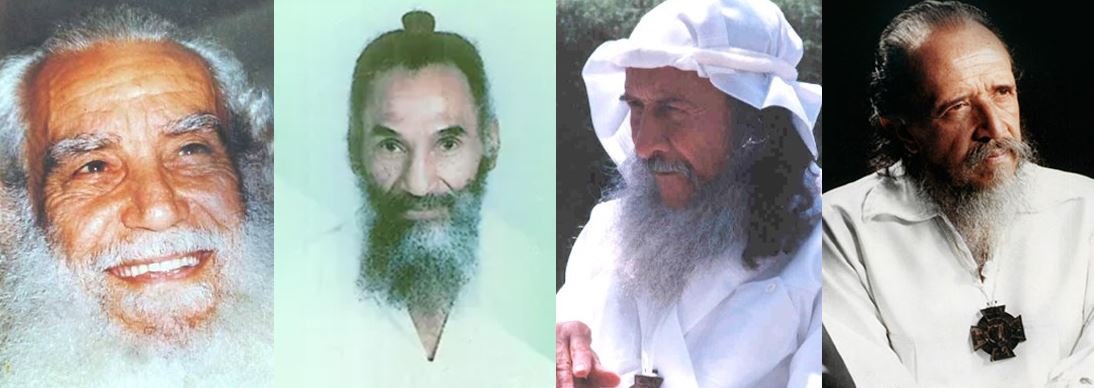
What is certain is that in 1947 Raynaud de la Ferrière left Europe. In 1948, he moved to Venezuela, where he established an ashram near Maracay, and created the GFU in Caracas on March 21, 1948. Among his early disciples, three will later be considered “emblematic”: José Manuel Estrada, a self-taught trade unionist who came from Masonic and Rosicrucian interests, Juan Victor Mejías (1915–2001), and Alfonso Gil Colmenares (1922–2016). They were later joined by a fourth “emblematic disciple,” David Juan Ferriz Olivares (1921–1992), who had become acquainted with the GFU in Mexico in December 1953. Although he never personally met Raynaud de la Ferrière, with whom he had a very dense correspondence, he became the editor of the Spanish-language editions of the master’s texts, originally written in French and translated into Spanish.
Already in the last years of Raynaud de la Ferrière’s life, and immediately after his death, which occurred in Nice in 1962, a number of divisions and separations occurred. Estrada, to whom Raynaud de la Ferrière had passed on the general direction of the movement in 1950, had separated from the GFU in 1958, although at the time of the master’s death he had embarked on a path to rejoin it.
The founder, assuming in the last years of his life the position of “initiatory president” and retiring from the operational role, had stipulated that after his death Colmenares, Mejías and Ferriz Olivares should, one after the other, govern the Fraternity for periods of seven to ten years, after which a collegial leadership would take over. Although the four “emblematic disciples” after Raynaud de la Ferrière’s death initially tried to collaborate, Estrada ended up separating permanently from the Fraternity, which remained under the leadership of the other three disciples.
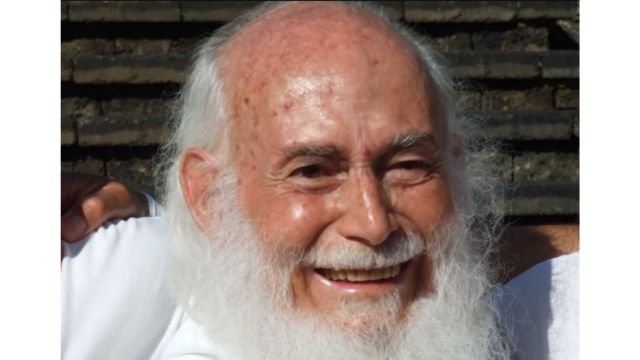
In 1971, Estrada founded his own association that from 1998 would be called Red Gran Fraternidad Universal (Red GFU), to which the words “Solar Line” were added for many years, to distinguish it from what Estrada considers the “lunar line” of the other disciples, a term the latter do not accept. His teaching is characterized by an emphasis on the mystical and prophetic aspect over the intellectual one.
Even before Estrada’s death in 1982, however, his branch was shaken by further schisms. José Rafael Estrada Valero, who later would become known as the husband of popular Mexican actress Elsa Aguirre, founded an autonomous “Southern Solar Line” in Chile in 1977, now known as the Institute of Human Development (IDH), to which a Global Foundation and an Albert Einstein University were added. Luis Murguía Alarid (1932–2006) created the Colegio Iniciático La Ferrière in Mexico and Domingo Dias Porta founded, also in Mexico, the Mancomunidad de la América India, also known today as Action for World Unity (A.U.M.), from which the Great Universal Fraternity–World Cultural Group of Telésforo Linares Sanchez (1930–2007) and the August Great Universal Fraternity of Pedro Enciso Ruvalcaba, some of whose disciples in turn started autonomous groups, would further separate.
Estrada was succeeded in the GFU Network by José Marcelli Noli (1925–2010), who was replaced on his death by a collegial leadership. Connected, but not without articulation, to the GFU Network are the Supreme Order of Aquarius (SOA), and the International Yoga and Yogism Association. After the death of José Marcelli Noli, the brothers Carlos and José Michán Amiga separated from the GFU Network and started a new Gran Fraternidad Universal–Línea Solar, in contact in Italy with groups in Milan and with the Yoga Orizzonti Center in Pescarolo (Cremona), where José Michán Amiga held classes and conferred initiations.
The various branches of the Great Universal Fraternity all present the same structure: a network of cultural activities, with an interest in science and yoga, which refers back to an initiatory order, often called the Order of Aquarius, where initiatory degrees are conferred, and a ritual is present called the “Cosmic Mass.” While the external activities often have purely cultural connotations, in the internal initiatory activities the leaders—starting with Raynaud de la Ferrière himself—are referred to by titles such as “guru” and “avatar,” in some cases assigning them a decisive role in the spiritual evolution of the world.
Entry into the Order of Aquarius is, moreover, declared free for people of any religion, as long as they are willing to accept its ideals and follow a few basic rules including abstention from smoking, alcohol, any drugs or exciting substances, and an ovo-lacto-vegetarian diet. In the first GFU those who aspired to join the Order had to carry out activities in favor of the movement, which were recognized with a “diploma of honor.” After a certain time, if they continued these activities, they were proposed for the “first honorary degree.” The aspirants would send in their service records and once the hierarchy accepted them, they would travel to Caracas to prepare and receive the “degree.”
Raynaud de la Ferrière insisted that the Order of Aquarius “is not a new religion, it is the return of the One Religion in its essence whatever its philosophical, cultural or initiatory forms might have been, of which its apostles made use in order to give humans a glimpse of it according to their ages, their degrees of cosmic advancement, their experiences, their degrees of understanding and evolution.”
Raynaud de la Ferrière believed that the Age of Aquarius began in 1948: an idea—dates aside—common to the New Age, from which, however, groups in the Raynaud de la Ferrière line distance themselves, believing it to be syncretistic and superficial. To fit fully into the Aquarian Age, the “missionaries of Aquarius” must, according to Raynaud de la Ferrière, pursue three basic goals: “(l) to unite all sects in order to bring them out of dogma and of a certain religious fanaticism; (2) to found spiritual colonies where a program of research and work will be applied to instruct men in Knowledge, so that all, by virtue of knowing one another, will proceed as brothers with one another; 3) to establish study centers in all districts of every city or town, to study the new way of living, thinking and feeling, as well as our reaction to and emancipation from the environment; in short, to study the laws governing the Universe in order to study God.”
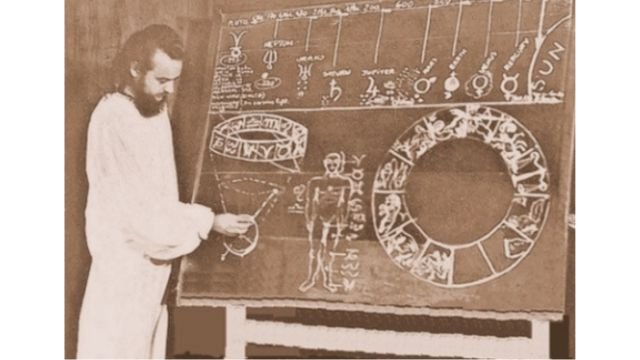
The organization of the Raynaud de la Ferrière lineage that has the largest presence in Italy is the GFU Network—of the Estrada-Marcelli Noli line—, which is present in many countries around the world with cultural centers, yoga institutes, sports clubs, and other institutions. Today, it is a network of autonomous national associations in addition to a number of affiliated associations of a thematic nature, including Co-Planet—which organizes large international gatherings of a cultural and ecological nature—, Karis, with a function similar to scouting associations, Tao-Te-Chia—an international network devoted to martial arts—, the Solar Cultural Foundation (formerly Solar Publishing House) and others.
The GFU Network arrived in Italy in 1977 and is now present in the Veneto region with the Paré di Tarzo ashram, inaugurated by Marcelli Noli in 1996, and the Estrada Cultural Center in Treviso, the Quinto Sol Cultural Center in Bergamo, the Il Tibetano Cultural Center in Cremona, the Surya Cultural Center in La Spezia, the Antares Center in Viareggio (Lucca) and Pietrasanta (Lucca), the Helios Center in Reggio Calabria. The GFU Network in Italy patronizes and participates in meetings on spirituality, meditation, and prayer in dialogue with Catholic circles and other religions.
The Ferriz Olivares Branch
After the separation of José Manuel Estrada, the original branch of the Great Universal Fraternity was led by the other three disciples designated by the founder: Alfonso Gil Colmenares, Juan Victor Mejías, and David Juan Ferriz Olivares. Already during Raynaud de la Ferrière’s lifetime, beginning on March 21, 1957, the master had initiated a “doctrinal readjustment” of the GFU to conform it to a greater understanding of the needs of the Aquarian Age. After Raynaud de la Ferrière’s death, according to an assignment he claimed to have received from the master, Ferriz Olivares continued this “readjustment.” The project encountered opposition from the other emblematic disciples, who also challenged Ferriz Olivares’ announcement when he proclaimed in 1988 that he had reached the sixth initiatory degree of the Fraternity.
In 1990, their paths separated, and Ferriz Olivares moved to Peru where he founded the Magna Fraternitas Universalis. For the groups in the Ferriz Olivares line, his move to Peru with some six hundred disciples, to which more would later be added until his death, beginning in Caracas on October 18, 1990 and culminating in a reunion in Lima the following November 12, was the “Exodus of the Aquarian Wisdom,” an epic journey that recalled the biblical Exodus and whose anniversary continues to be celebrated every year. Also remaining under Ferriz Olivares’ control is an institution originally conceived by Raynaud de la Ferrière in 1947 and reorganized in 1988, the International Federation of Scientific Societies (FISS).
Upon Ferriz Olivares’ death on October 22, 1992, María Nilda Cerf Arbulú claimed that the master had designated José Miguel Esborronda Andrade as his “first-born disciple.” Esborronda accepted the designation and together with Cerf took control of the Magna Fraternitas Universalis, the International Federation of Scientific Societies and the related Free School of Scientific Study for Children (ELIC), also present in Italy in Trieste, and the other organizations established by Ferriz Olivares. Cerf is the current General Director of the Magna Fraternitas Universalis. According to other leaders, the claims of Esborronda and Cerf did not correspond to the instructions left by Ferriz and to be followed after his death.
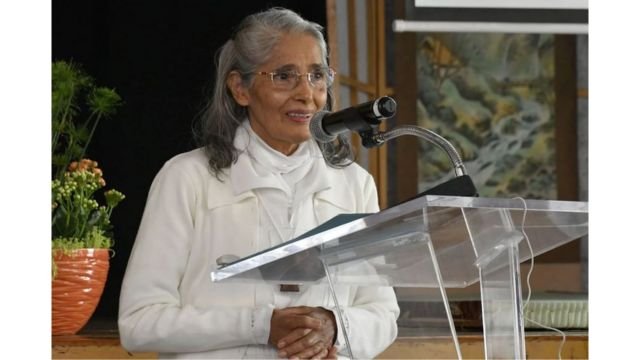
Another disciple, Florencio Vásquez, founded the Asociación Mundial del Saber (International Mathesis Society) in 1993, from which Felipe Guevara Morán and Esteban Amaro parted in turn, creating the Fundación Dr. Serge Raynaud de la Ferrière in Peru. Amaro later broke with Guevara and founded a different Fundación Serge Raynaud de la Ferrière in Mexico. The latter name can cause some confusion as it is used by several different organizations. Other schisms in the Ferriz Olivares line led to La Nueva Humanidad en Marcha (NHUMA), Sublime y Augusta Gran Fraternidad Universal, headed by Máximo Reátegui, and to Julio Martínez’s Bureau Cultural Mundial. In all these lines, an interest in and connection with Masonic regular and “fringe” lodges should also be noted.
Recent years have also seen attempts at an “ecumenical” collaboration among the many different branches that “proceed” from Raynaud de la Ferrière, which are not reduced to those, though numerous, listed here. One Yahoo group, the Maestre List, is followed by thousands of people, and while there is no shortage of polemical exchanges about who are the “true” successors of Raynaud de la Ferrière nor substantial doctrinal divergences that are difficult to overcome, there is also noticeable in many participants a desire for dialogue and collaboration.

PierLuigi Zoccatelli (1965-2024) taught Sociology of Religions at Pontifical Salesian University, Torino, and Sociology of Esotericism at the University of Turin. He was deputy director of CESNUR, the Center for Studies on New Religions, and the associate editor of The Journal of CESNUR. Among other affiliations, he was a member of the scientific committee of the Interdepartmental Center for Research in Religious Sciences “Erik Peterson” (CSR) of the University of Turin, and of Contemporary Religions And Faiths in Transition (CRAFT), a research center of the Department of Cultures, Politics and Societies of the University of Turin. He was also a member of the section “Sociology of Religion” of the Italian Sociology Association (AIS), and of the European Society for the Study of Western Esotericism (ESSWE). He is the author of several books and articles in the field of New Religious Movements and Western Esotericism, and co-director of the widely reviewed Encyclopedia of Religions in Italy. His writings has appeared in 12 countries and in 8 languages.