A woman accused of being a “cultist sexual predator” was kept in jail until she accepted to declare herself a “victim” of the “guru” and became an anti-cult lecturer.
by Massimo Introvigne

Sometimes, articles intended to expose the evil of “cults” have inadvertently the opposite effect. On June 26, an extraordinary interview was published by the French daily “Ouest France.” It was about an old affair, which led the “female guru” (in France, the originally honorable word “guru” is always used in a derogatory sense) of what was called “the Parc d’accueil cult” in Lisieux to be sentenced to five years in jail in 2013.
As in many other cases, the “guru,” Françoise Dercle, was first denounced by a private anti-cult organization. The group was raided on June 27, 2007. The strategy used was to place all the members, who were regarded as “victims” of the “guru,” under police detention (garde à vue), as it will be done in 2023 in the MISA case. A police officer explained that this had been recommended by anti-cult psychiatrists. Following their advice, “they took all the followers into custody. It’s a method that may seem surprising, but it’s well thought-out: ‘We absolutely had to explode the group, make sure that the followers couldn’t communicate with each other.’ Shocked and angry, they were nonetheless a little more lucid by the second day in police custody.”

Eventually, only two women remained in custody: Françoise Dercle and one who in the “Ouest France” interview goes under the pseudonym “Coralie.” Here the story becomes even more interesting. The group is accused of sexual abuse, including of minors. “Coralie” is herself “accused of rape” and told she “will get a sentence from 15 to 20 years in jail.” She is not allowed to see her children while she is in prison.
During her six months in jail, again under the guidance of anti-cult psychiatrists, “Coralie” is transformed by the prosecutors from “cultist sexual predator” to “victim.” As “Ouest France” reports, during “her imprisonment for six months, she became aware of the extent of her subjugation. ‘The pain of not seeing my children opened a breach that allowed me to go deep inside of myself. Prison was a cure.’” In other words, she was taught to reconstruct her experience as one of “brainwashing.” If she committed crimes, it was because she was under “brainwashing” by the “guru,” so she was not responsible.
She had to prove that her “conversion,” or perhaps “de-conversion,” was real and became a lecturer in the anti-cult circuit. In fact, she was effectively blackmailed and put in a position to choose between two public identities. Either she might continue to claim she was not a “victim,” and in this case she was threatened with a “fifteen to twenty years” jail term (note that Dercle herself only got five), or she might “confess” she was a “victim” and in this case she will be liberated from jail, declared non-responsible of any crime she might have been committed, and asked to participate in the propaganda effort against “cults.”

Obviously, if members of the Lisieux movement were guilty of sexual abuse they were rightly prosecuted and sentenced—although in France one always has the impression that “cultists” accused of “brainwashing” have more problems than others in getting a fair trial. More interesting than the case itself is the story of “Coralie,” a textbook example of how “victims” are fabricated by a system involving prosecutors, anti-cult movements, anti-cult psychiatrists, and the media. Perhaps “Coralie” never committed any crime, but her case shows that even criminals can escape punishment if they accept to reinvent themselves as “cult victims” and “anti-cult lecturers.”
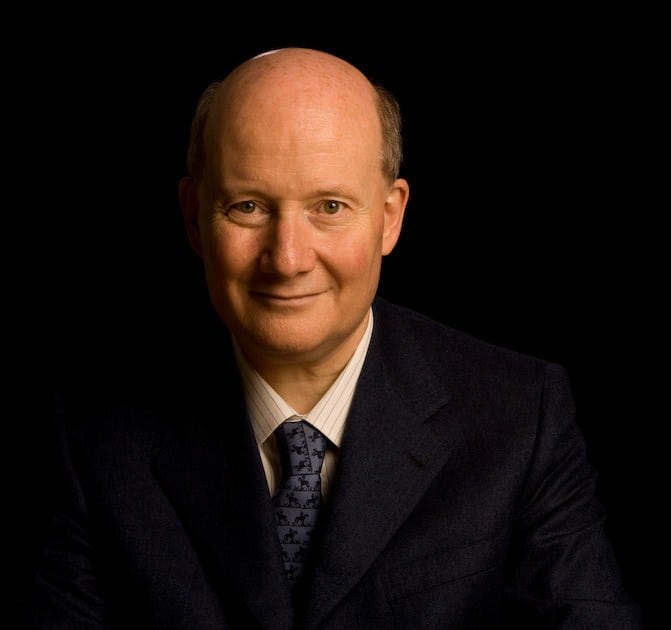
Massimo Introvigne (born June 14, 1955 in Rome) is an Italian sociologist of religions. He is the founder and managing director of the Center for Studies on New Religions (CESNUR), an international network of scholars who study new religious movements. Introvigne is the author of some 70 books and more than 100 articles in the field of sociology of religion. He was the main author of the Enciclopedia delle religioni in Italia (Encyclopedia of Religions in Italy). He is a member of the editorial board for the Interdisciplinary Journal of Research on Religion and of the executive board of University of California Press’ Nova Religio. From January 5 to December 31, 2011, he has served as the “Representative on combating racism, xenophobia and discrimination, with a special focus on discrimination against Christians and members of other religions” of the Organization for Security and Co-operation in Europe (OSCE). From 2012 to 2015 he served as chairperson of the Observatory of Religious Liberty, instituted by the Italian Ministry of Foreign Affairs in order to monitor problems of religious liberty on a worldwide scale.