The very reasons that motivated the United Nations to establish an International Day of Parliamentarism call for a solution of the Tai Ji Men case.
by Willy Fautré*
*A paper presented at the webinar “Parliaments, Democracy, and Tai Ji Men,” co-organized by CESNUR and Human Rights Without Frontiers on June 30, 2024, United Nations International Day of Parliamentarism
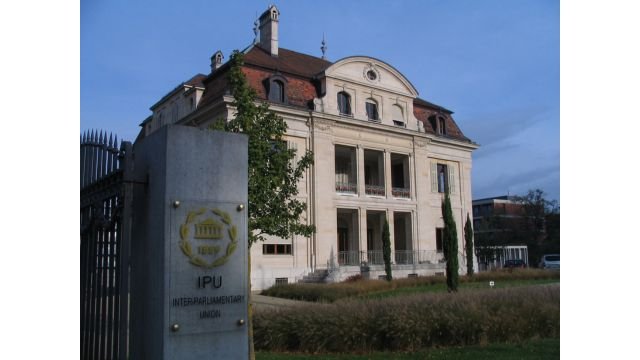
The International Day of Parliamentarism was established in 2018 through a United Nations General Assembly Resolution that recognized the role of parliaments in national plans and global strategies.
The date of 30 June was chosen because it was the day when the Inter-Parliamentary Union, a global organization of Parliaments, was founded in 1889.
It was created 135 years ago on the initiative of two parliamentarians and men of peace, William Randal Cremer (United Kingdom) and Frédéric Passy (France). The Inter-Parliamentary Union was the first permanent forum for political multilateral negotiations.
Parliaments serve as the primary institution where the voices of the citizens are represented. They play a crucial role in law-making and ensuring that laws reflect the needs and aspirations of the populace.
By holding the government accountable, parliaments help prevent abuses of power and promote transparency and good governance.
Parliaments are central to the functioning of democracies. They provide a platform for debate, discussion, and decision-making on national policies.
Parliaments help ensure that the executive branch of the government operates within the boundaries set by law and adheres to democratic principles.
The International Day of Parliamentarism is meant to highlight the pivotal role that parliaments play in representing the will of the people, ensuring government accountability, and upholding democratic principles. This day is also an opportunity to underscore the connection between parliamentarism and the protection of human rights.
What is the situation of human rights in the light of parliamentary democracy in Taiwan?
Earlier this year, there were elections in Taiwan which were worldwide hailed as fair and democratic, like the previous ones. A few months ago, the well-known human rights NGO Reporters Without Borders published its annual country report about freedom of expression and the media in the world. Taiwan which was ranked in the 35th position last year jumped to the 27th position this year.
The protection of religious liberty in Taiwan is internationally recognized as impressive and even considered better than in a number of democracies in Europe.
Tai Ji Men has always been at the forefront of teaching its youth about democracy, the rule of law and human rights in theory and in practice but it has also been constructively critical with regard to the abuses of power of the National Tax Administration they were a victim of, like many other Taiwanese citizens, organizations and societies.
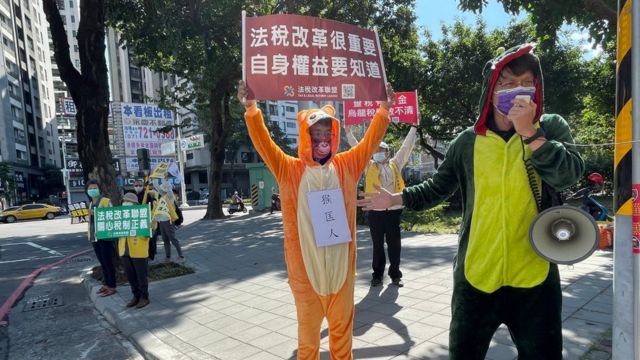
Young TJM dizi massively support democracy in Taiwan but they also use it to defend their rights and the rights of others. For years, they have used their freedom of expression and assembly to denounce the harassment of their movement by the National Taxation Bureau since 1996.
On this UN Day of Parliamentarism, it is the duty of the Taiwanese parliament, the government and in particular the Minister of Finance to listen to the voices of the Tai Ji Men dizi raised through legal channels, public demonstrations, protests and petitions. Only a political decision in Taiwan could solve the unresolved Tai Ji Men case, which worriedly tarnishes the image of the country abroad. But in the past, there was never any political will on the part of the Ministry of Finance and the government, even after the final decision of the Supreme Court in favor of Tai Ji Men, and since then the National Taxation Bureau was never disciplined.

Ms. Chuang Tsui-Yun, you have been Minister of Finance for a few months. The tax administration is under your authority and not the opposite. Please be the first Minister of Finance who will have the political will and courage to solve the 28-year-old Tai Ji Men case by taking a historical decision in favor of justice.

Willy Fautré, former chargé de mission at the Cabinet of the Belgian Ministry of Education and at the Belgian Parliament. He is the director of Human Rights Without Frontiers, an NGO based in Brussels that he founded in 1988. His organization defends human rights in general but also the rights of persons belonging to historical religions, non-traditional and new religious movements. It is apolitical and independent from any religion.
He has carried out fact-finding missions on human rights and religious freedom in more than 25 countries He is a lecturer in universities in the field of religious freedom and human rights. He has published many articles in university journals about relations between state and religions. He organizes conferences at the European Parliament, including on freedom of religion or belief in China. For years, he has developed religious freedom advocacy in European institutions, at the OSCE and at the UN.