Some scholars discovered the Tai Ji Men case for the first time. Others reinforced their commitment to support the dizi’s (disciples) fight for justice.
by Massimo Introvigne

The yearly conference of CESNUR, the Center for Studies on New Religions, at University Bordeaux Montaigne in Bordeaux, France, included on June 12 a plenary presentation on Tai Ji Men by the undersigned and a rich session on the Tai Ji Men case.
My presentation was also a homage to the recently deceased Italian scholar PierLuigi Zoccatelli, who went beyond the controversies whether “esotericism” is a typically Western or a universal category by proposing a broader “esoteric paradigm.” Zoccatelli himself studied Tai Ji Men as an example of such paradigm, considering in particular the symbols reproduced on its Bell of World Peace and Love, which he called “a sacred artifact, each component of which has a precise esoteric meaning.” I suggested that Tai Ji Men’s fight for legal and tax reform in Taiwan, while based on the injustice vested on them, can also be read as part of a broader effort to restore the harmony between the yin and yang principles, and is thus, as Zoccatelli wrote, “part of a movement restoring the world and humanity to its original purity.”
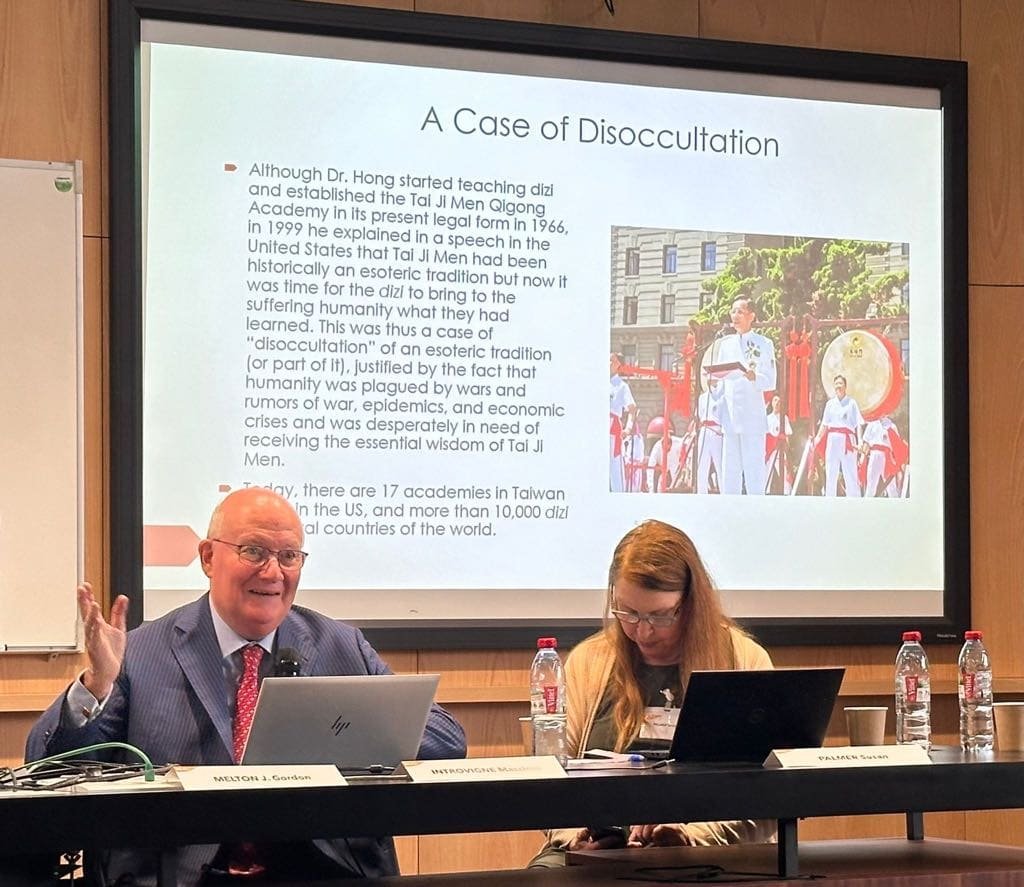
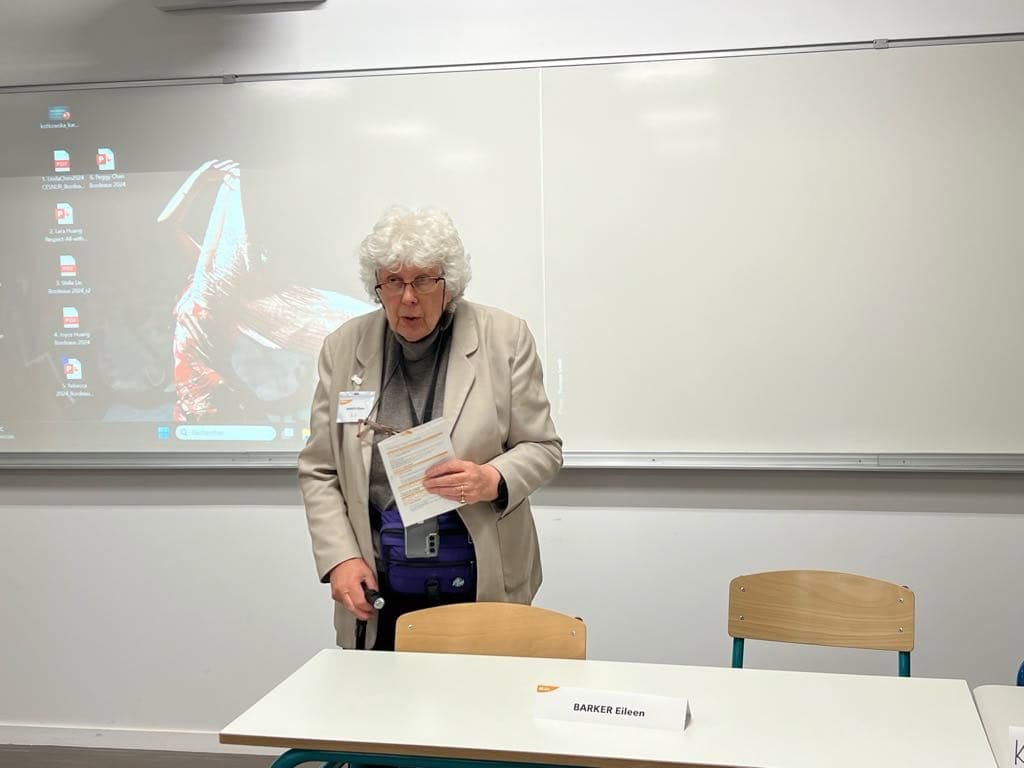
The session “Peace, Justice, and Tax Reform in Taiwan and Internationally: New Religious Movements, the Common Good, and the Case of Tai Ji Men” was chaired by Eileen Barker, Professor Emerita at the London School of Economics, who summarized my plenary session paper. She also reported that she wrote to the President of Taiwan calling for a solution of the Tai Ji Men tax case, but got an unsatisfactory reply not from the President but from the National Taxation Bureau of the Central Area repeating the usual agreement that there has been a “final decision” that they respect (obviously, patently wrong decisions can always be rectified).
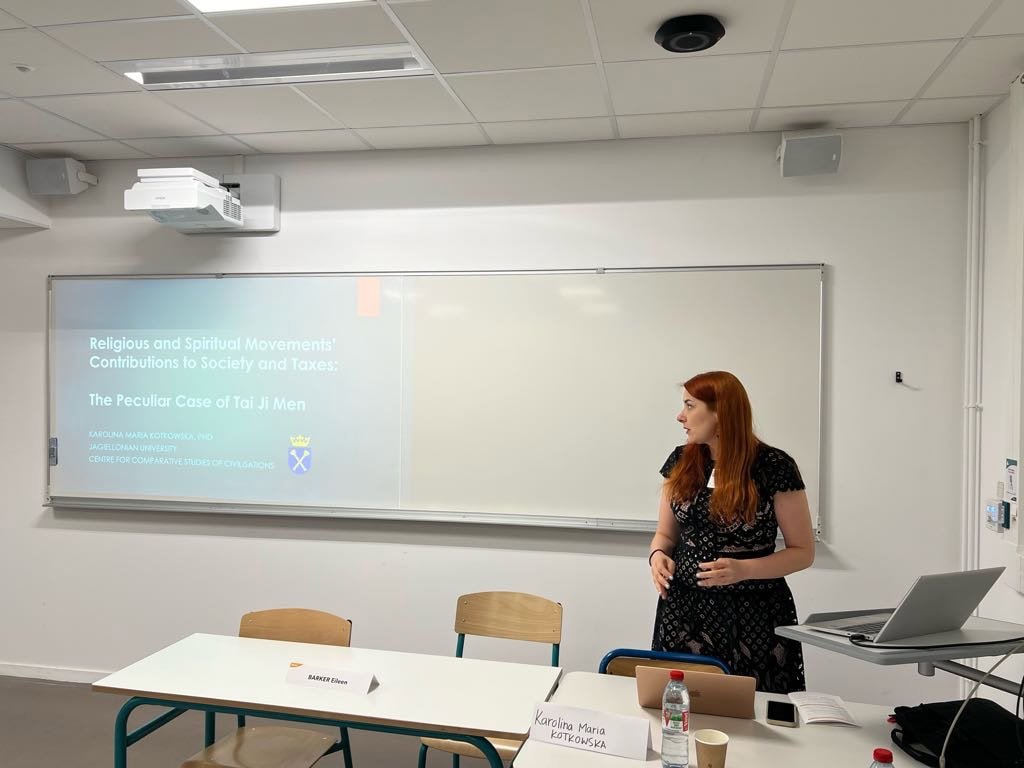
In her opening paper, Karolina Maria Kotkowska, assistant professor in the Centre for Comparative Studies of Civilizations, Jagiellonian University, Kraków, Poland, noted that tax exemptions for religious and spiritual groups are based on their acknowledged contributions to the common good. In her own country, Poland, offerings given by devotees to their churches or religious leaders are generally regarded as tax-exempt, although there is always the risk that new or unpopular spiritual organizations may be discriminated. However, in Poland and in any democratic country considering what Tai Ji Men dizi (disciples) give to their Shifu (Grand Master) as taxable tuition fees rather than gifts would be regarded as absurd, Kotkowska said. It is clear that taxes in Taiwan were weaponized for a political vendetta against Tai Ji Men, she concluded, calling for an urgent rectification of the case.
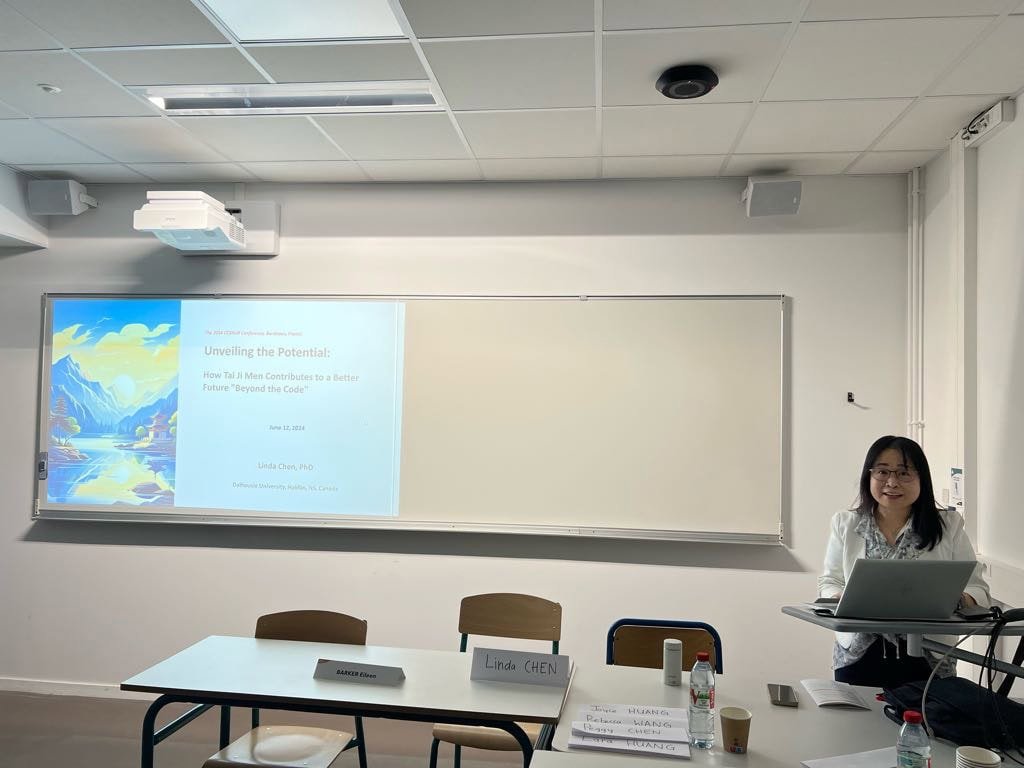
Linda Chen, a research associate in the biomedical field at Dalhousie University, Halifax, Nova Scotia, Canada, mentioned the progress of DNA research in her own field and the discovery that what was called “junk DNA” in fact plays a key role in regulating our body. She compared DNA’s adaptation to environmental pressure to human societies’ need to evolve in a balanced and harmonious way. As a Tai Ji Men dizi, Chen said, she learned from her Shifu, Dr. Hong Tao-Tze, that a universal code for harmonizing humanity does exist, and it is conscience.
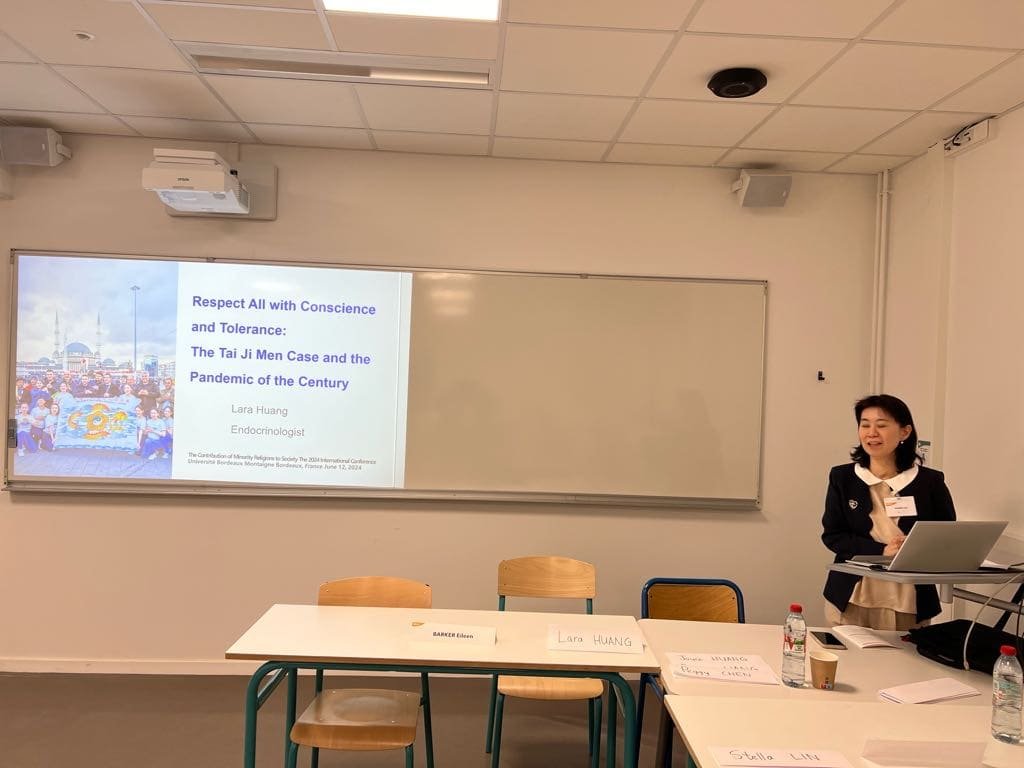
Lara Huang, assistant professor of clinical medicine at Fu Jen Catholic University, Taipei, Taiwan, discussed how easily in her field, medicine, epidemics become occasions for name-calling, including the 1918 “Spanish flu,” which in fact did not originate in Spain, and the 2009 “swine flu,” which led to an unjustified suspect against pigs and pork products in general. The same name-calling, which the medical community is trying to eliminate, is still at work against religious and spiritual minorities, as demonstrated by the slander campaign that was part of the Tai Ji Men case, Huang said. Dr. Hong, however, she concluded, taught his dizi to react with patience and a smile, defending justice but continuing to announce peace and love to the world, as she experienced during her trip to Türkiye with her Shifu in 2023.
Camelia Marin, deputy director of the pro-religious-liberty NGO Soteria International, stated that the case of Tai Ji Men is paradigmatic but not unique. In several countries of the world, the authorities act against spiritual movements they, for whatever reason, do not like by weaponizing criminal prosecution, taxes, and media slander. This is what happened to Tai Ji Men, Marin said, and the perversity of the system is that, even when criminal prosecution fails, media defamation and tax harassment may continue, a sad experience several spiritual movements also went through in other countries.

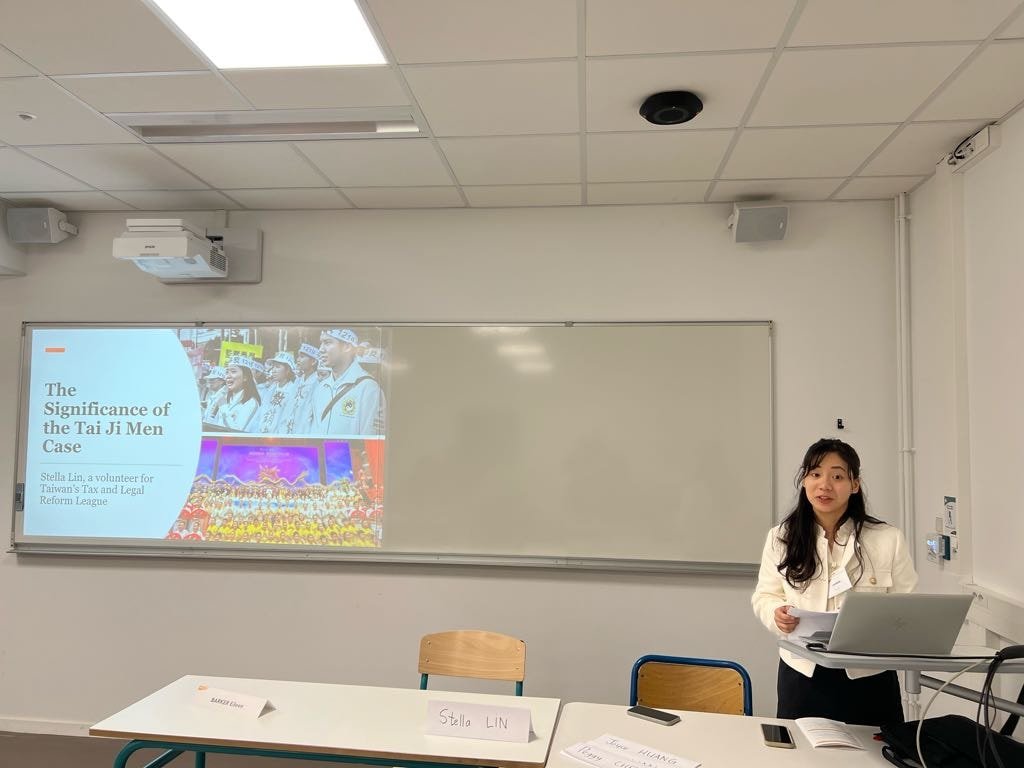
Stella Lin described the work in Taiwan of the Tax and Legal Reform League, of which she is a volunteer. She is also a Tai Ji Men dizi. Working together with others, Lin reported, Tai Ji Men dizi discovered horrific stories of taxpayers whose life was ruined by erroneous or fabricated tax bills. Lin also said that the work of the Tax and Legal Reform League has obtained some practical results. After years of waiting, the Taxpayer Rights Protection Act officially came into effect in 2017. Exit restrictions from Taiwan for those involved in tax disputes have become less frequent and strict. Prominent tax experts and academics in Taiwan have acknowledged the crucial role of Tai Ji Men dizi on the path leading to these results.
Donald Westbrook, professor in the Library & Information Science Department at San José State University, San José, California, reported about his research on anti-cultism, and media and popular prejudices against new religious and spiritual movements in France. These prejudices subside, Westbrook said, among those who know personally members of the new movements and learn first-hand about their positive contributions to society. Tai Ji Men in Taiwan also overcame the media slander through bridge-building and outreach, announcing domestically and internationally their message of peace, love, and conscience, Westbrook said. He quoted a maxim from the book “Embodying the Wisdom of Tai Ji: Achieving Inner Peace & Balance” that he sees at work in the dizi’s way of confronting injustice and harassment: “Only by combining toughness and softness can you be truly free and unrestrained.”

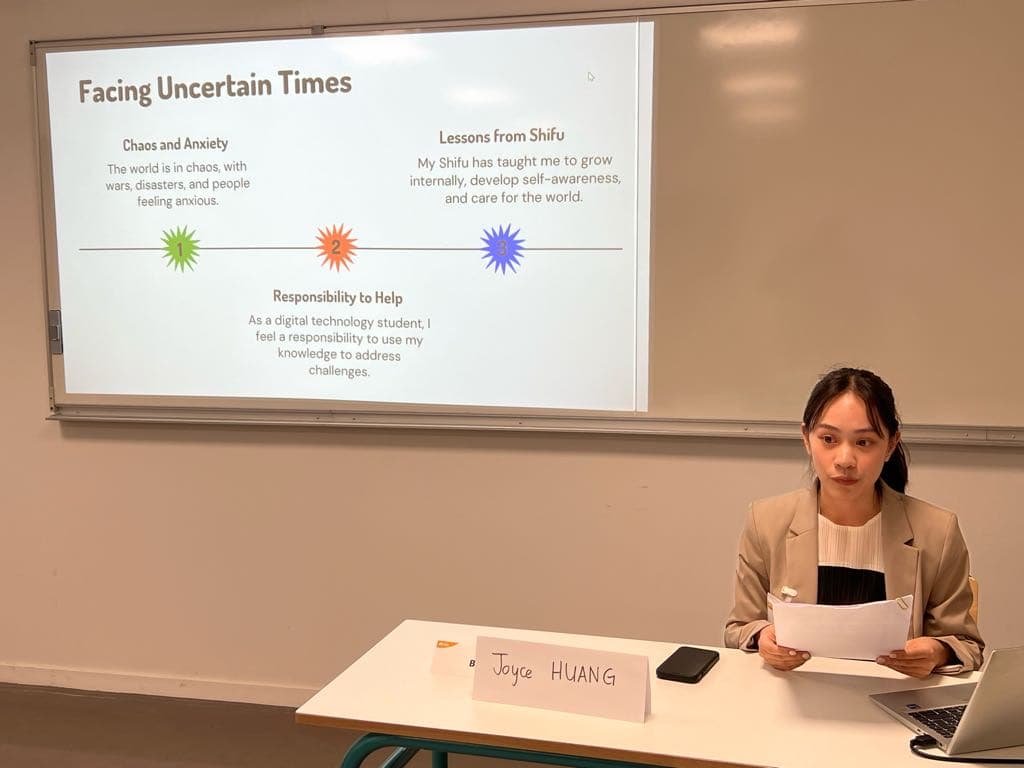
Joyce Huang, a sophomore majoring in Digital Technology Design at the National Taipei University of Education and a Tai Ji Men dizi, reflected on how Tai Ji Men helped her understanding that digital technology may be used to help our fellow human beings and alleviate their suffering. She also told the story of how in August 2023, she went to Chicago with Dr. Hong for the 130th Parliament of World Religions and even participated in the pre-Parliament “Parade of Faiths” dressed as a peacock. A celebration of spiritual diversity, the Parliament was also an opportunity to reflect on freedom of religion or belief, which has been denied to Tai Ji Men through decades of tax harassment. With the same spirit that led her to Chicago, Huang said, she participated in protests in Taipei against the injustice of the Tai Ji Men case, which after 28 years is now in need of an urgent solution.
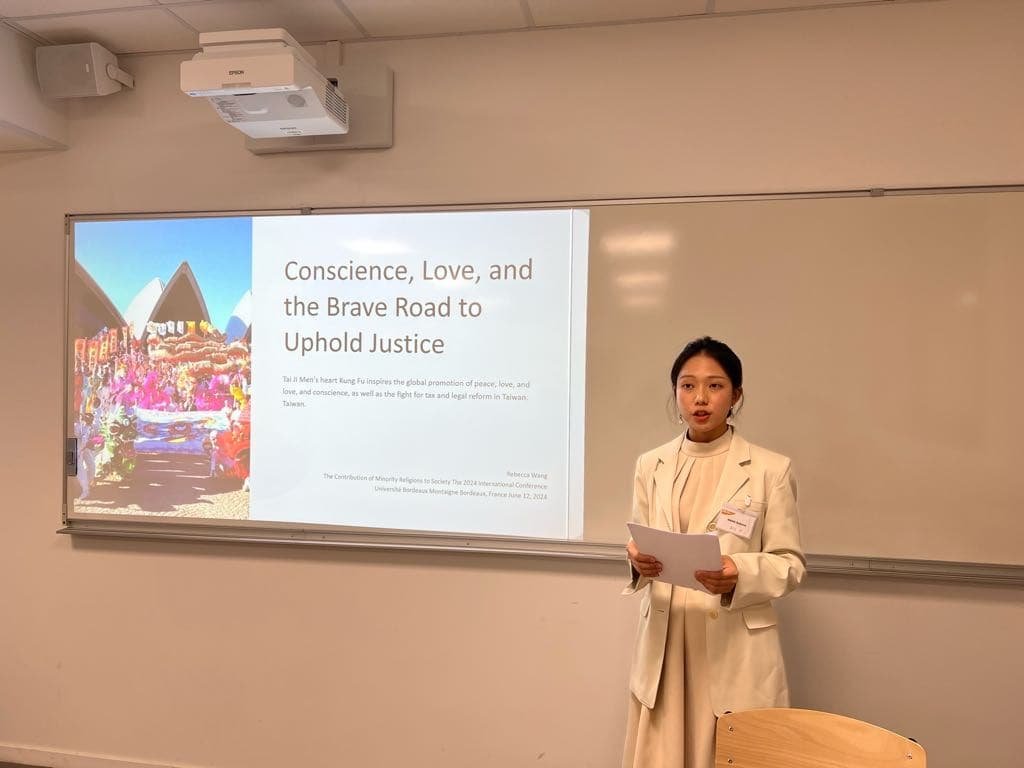
Rebecca Wang, who works as a project coordinator in a consulting institute in Taiwan, focused on the importance of a speech Dr. Hong gave in the United States in 1999. He announced that, due to the circumstances of our times, the once esoteric ancient wisdom of Tai Ji Men would now be spread to the whole world. It was this speech, Wang said, that eventually brought her with other dizi to India, Australia, and the United States, performing, dancing, and bringing a message of peace and love. She also became active in the Tax and Legal Reform League, which is a different expression, she said, of the effort to create a more harmonious and peaceful world.
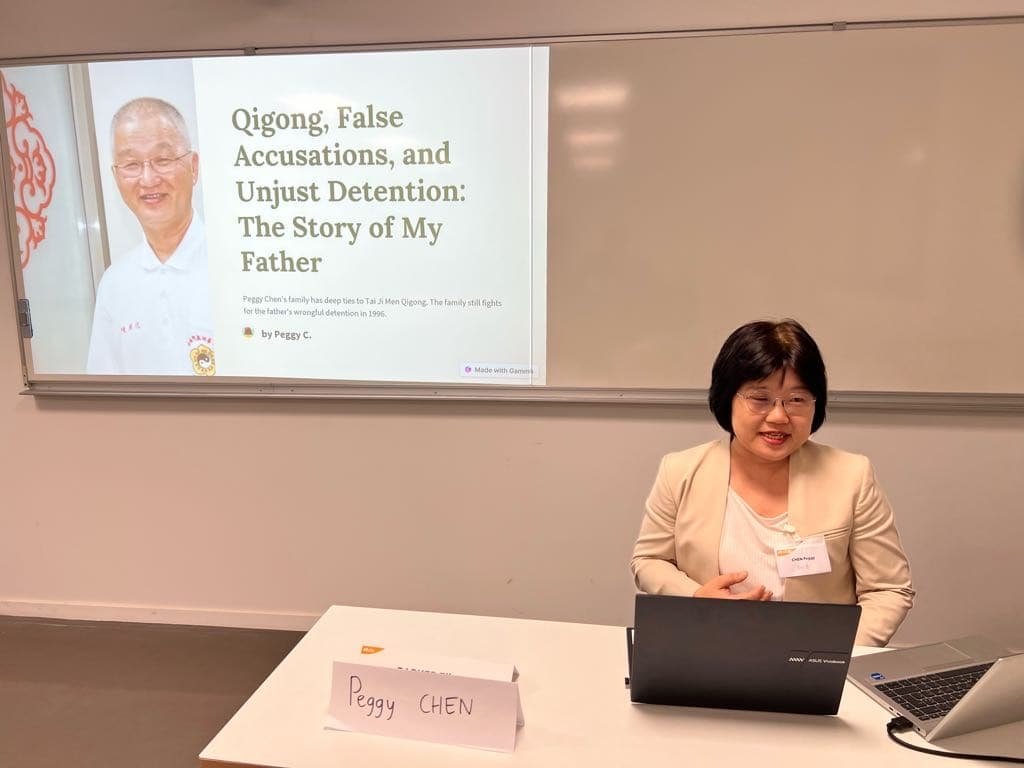
Peggy Chen, a freelance in online marketing, is a Tai Ji Men dizi who has lived in France for twenty-two years. She concluded the session with a unique story. At the beginning of the Tai Ji Men case in 1996, Dr. Hong, his wife, and two dizi were unjustly detained—later, after their Supreme Court acquittal in 2007, they received national compensation for the unjust detention. Peggy Chen is the daughter of one of the detained dizi, whose life and career were ruined by the Tai Ji Men case. This tragic experience motivated Peggy to continue her fight for justice, she said, and to speak up in conferences like CESNUR 2024 in Bordeaux about a story that should not be forgotten but the media would not tell.
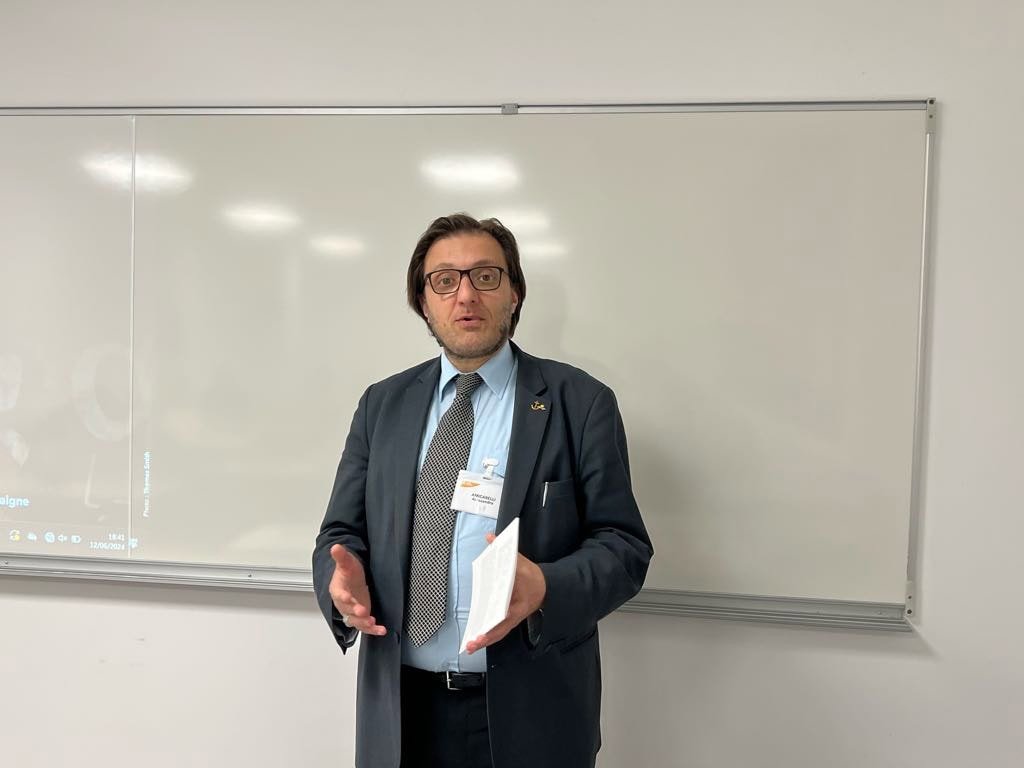
Alessandro Amicarelli, a London-based attorney and the President of the European Federation for Freedom of Belief, noted that scholars and human rights activists have now spent several years studying the Tai Ji Men case, which he said was “fabricated out of nothing.” They did not waste their time, Amicarelli said, as through the mirror of the Tai Ji Men case they understood deep problems of Taiwan and of the relationship between taxes and freedom of religion or belief. They should continue their work, he concluded, not only because the Tai Ji Men case is important but because, as Dr. Hong teaches, scholars as anybody else should follow their conscience.
More than one hundred specialized scholars attended the CESNUR 2024 conference in Bordeaux. For many, it was the first opportunity to discover the Tai Ji Men case. For others, sharing experiences and opinions reinforced the commitment of working with Tai Ji Men towards a solution of a case that has certainly lasted for too long.

Massimo Introvigne (born June 14, 1955 in Rome) is an Italian sociologist of religions. He is the founder and managing director of the Center for Studies on New Religions (CESNUR), an international network of scholars who study new religious movements. Introvigne is the author of some 70 books and more than 100 articles in the field of sociology of religion. He was the main author of the Enciclopedia delle religioni in Italia (Encyclopedia of Religions in Italy). He is a member of the editorial board for the Interdisciplinary Journal of Research on Religion and of the executive board of University of Pennsylvania Press’ Nova Religio. From January 5 to December 31, 2011, he has served as the “Representative on combating racism, xenophobia and discrimination, with a special focus on discrimination against Christians and members of other religions” of the Organization for Security and Co-operation in Europe (OSCE). From 2012 to 2015 he served as chairperson of the Observatory of Religious Liberty, instituted by the Italian Ministry of Foreign Affairs in order to monitor problems of religious liberty on a worldwide scale.