The Scott case resulted in American courts putting an end to forcible deprogramming, a criminal activity supported by leading anti-cultists.
by Anson D. Shupe (†) and Susan E. Darnell
Article 3 of 10. Read article 1 and article 2.

During the early 1990s K.T. and her three sons—Jason Scott, T., and M.—as well as three younger children, attended the Life Tabernacle Church, a Seattle, Washington branch of the United Pentecostal Church International (an evangelical Christian faith). Following an upset with a business partner who was also a Life Tabernacle member, K.T. reversed many of her religious views and began to withdraw from the congregation, encouraging her sons to do the same. Her three sons, T. (16), M. (13), and Jason (18), disagreed and insisted on remaining in the church. As a result, Tonkin ejected the two youngest sons from her home. M. went to live with his grandmother (who also lived in the Seattle area). T. moved in with another family from the church. Meanwhile, Jason remained and tried to manage some truce between his mother and the church community he loved. Eventually he failed. His mother ejected him as well from the household, and he too went to live with his grandmother.
This dispute sent in motion a far-reaching chain of events. K.T. contacted the local Cult Awareness Network “contact person,” Shirley Landa, through a local hotline (Landa had been a co-founder of CAN) and then through Landa came into contact with a deprogrammer. Although no one at CAN had ever heard of the Life Tabernacle Church, the person to whom K.T. was referred was a self-styled “Bible-based cult” expert, a manifestly hostile person toward conservative Christianity, and a former convicted jewel thief named Rick Ross. (Ross, a vigorous self-promoter and entrepreneur, had played a significant role in poisoning the Bureau of Alcohol, Tobacco, and Firearm’s opinion of David Koresh’s Branch Davidians in Waco, Texas. Indeed, he well may have inspired in part the BATF’s ill-conceived raid on the group’s rural compound.)
Deprogrammer Ross, with absolutely no formal training in counseling or psychology and who admitted he knew nothing about the Life Tabernacle Church or the United Pentecostal Church International, was heartily endorsed by Landa as successful at getting persons to leave religions. So Tonkin the mother was put in touch with Ross by phone and retained him to deprogram her three sons. Ross assembled a “security team” of two, the three traveled from Arizona to Seattle, and they locked the two younger boys in their grandmother’s basement. K.T. and Ross agreed that the young boys should be abducted first because the third son, Jason, was a legal adult, physically large and athletic and made what one of them called “a more complicated legal situation.” After several days both boys were harangued into renouncing their Pentecostal beliefs. Then the deprogrammers went for Jason.

Ross upped his deprogramming fee, he told K.T., because of the risk of legal prosecution. He also added “muscle” to the operation in the form of a karate black belt expert. When Jason returned to his grandmother’s home one evening, they were waiting in the house. They jumped him, wrestled him to the ground, and dragged him into a waiting van, its windows covered by towels taped over to hide what went on inside. Jason kicked violently to get free, but they restrained him effectively: one man held his torso, another his legs, another his head and shoulders. They handcuffed his wrists, tied his ankles with rope, and gagged him from ear to ear with duct tape. He was finally thrown onto his stomach, his hands crushed beneath him while one of the deprogrammers, weighing 300 pounds, sat on his back. Meanwhile, Jason’s back, legs, and upper body were bruised and sore from being dragged across floors, stairs, and a cement patio into the van.
The deprogrammers drove some hours to an ocean-side cottage. There Jason’s ankle restraints were loosened just enough to permit him to walk into the isolated house, with one of his captors holding a nylon strap as a “leash” and another with a tight grip on his handcuffs. By now both his hands were numb from the cuffs’ pressure. First he was led upstairs, taken into a bathroom, and dumped into a shower stall. He could hear them preparing another room where he was eventually taken.
He could see they had made a prison. Thick nylon straps had been riveted in place over windows in a mesh-like pattern to prevent escape. The room had two doors, but each was guarded. As added insurance against escape, they took Jason’s shoes and installed motion detectors in the room. Initially Jason demanded that he be permitted to leave and asked Ross if he was going to try to change his mind against his religion. Ross responded, “Yeah, that’s what I’m paid to do.” Scott threatened with criminal prosecution but was laughed at. Ross bluntly told him, “You’re not going anywhere and if you give me any problems I’m going to handcuff you to the bed frame, and it’s going to be more uncomfortable than the ride over here.”
Then began five days that were non-stop personal degradation and belittling of his beliefs, his girlfriend, and his pastor. Ironically, Ross, who is Jewish, would wax long into the night on the errors of conservative Protestantism and Christianity. When Jason was finally permitted to sleep a guard slept in front of each of the room’s two doors to prevent an escape. When Jason went to the bathroom at least two of the deprogrammers accompanied him. Worse, given the poor, greasy food he was fed, he developed nausea and diarrhea on top of multiple bruises and scratches, not to mention psychological trauma, from his violent abduction.
And so it went for almost a week. Ross would argue with Jason daily about religious matters, refuse to allow him to respond, and tap or hit him in the head to emphasize points. Jason meanwhile restrained or closely guarded to discourage resistance. He was told in the coldest words that he would not be set free until the deprogramming was concluded, which in practical terms meant he had to renounce the Pentecostal faith and agree to leave the Life Tabernacle Church.
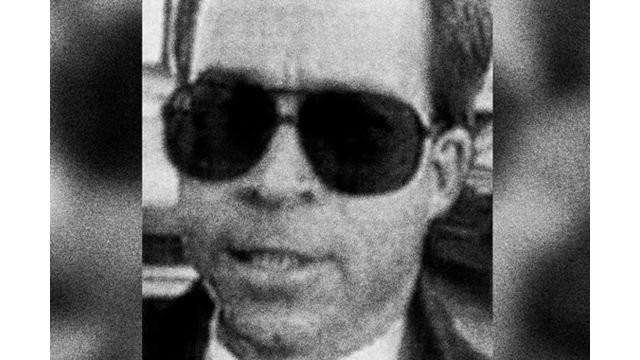
Jason held up resistance despite the anxiety, sense of helpless isolation, and physical illness and injuries. However, he overheard several deprogrammers talking about how they planned to send him to a so-called “rehabilitation” facility in a remote area of rural Ohio, called Wellspring, after he was deprogrammed. Wellspring often treated coercively deprogrammed religious followers and was operated by CAN board member psychologist Paul Martin. (Among the items eventually seized by police after Jason’s escape were plane tickets to Wellspring.) Jason decided to play along and hoped to fool the deprogrammers.
Jason began to feign acquiescence in the hope that his captors would become careless and give him an opportunity to escape. By January 22, Jason thus convinced his captors that he was ready to renounce his faith, appearing to break down in tears and remorse. He remained cooperative with Ross and the other deprogrammers, still hoping to escape. He spent the last day forced to watch videos on New Age religions and “channeling,” subjects which have nothing to do with Pentecostalism.
Jason’s ploy succeeded. Pleased at the deprogramming’s evident success, Ross suggested that they all go out to a celebration dinner at a restaurant in a nearby town. At his earliest opportunity once in the establishment, Jason excused himself to go to the men’s room. And as a prime example of deprogrammer arrogance and credulity, Ross let him go–alone. Jason literally ran out the front door of the restaurant and called the police from a telephone across the street. They came, Ross and company were arrested, Jason was free, and the incident ultimately had profound fallout for CAN [“Bitter Winter” note: with an attorney supplied by the Church of Scientology, Ross sued CAN and Ross, which determined CAN’s bankruptcy as detailed in the first article of this series. Later, Scott reconciled with his mother, fired his Scientology-connected lawyer, and hired an anti-cult attorney who quickly settled with Ross; by that time, however, CAN was gone].

Anson D. Shupe (1948–2015) was an eminent American sociologist of religions. A professor of Sociology at Indiana-Purdue University in Fort Wayne, Indiana, Shupe published seminal studies of new religious movements, the anti-cult movement, deprogramming, and clergy misconduct and sexual abuse. He also studied domestic violence. Apart from his academic activities, he was also a martial arts expert possessing second degree black belts in Judo and Karate.