The full Ninth Circuit Court of Appeals refused to rehear the case. Only the Washington Justices can now save the site from destruction.
by Massimo Introvigne

Will the sacred Apache religious site of Oak Flat, in Arizona, disappear forever? Only the U.S. Supreme Court can now save it. Washington and the Supreme Court is where Apache Stronghold, a coalition of Apaches, other Native American peoples, and non-Native allies, is now going, after on May 14 the full Ninth Circuit Court of Appeals denied their petition to rehear the case. On March 1, a divided “en banc” panel of 11 judges from the same Ninth Circuit Court of Appeals had ruled 6-5 against Apache Stronghold.
Oak Flat, in Arizona, is called by the Apaches Chi’chil Bildagoteel, and regarded as one of their sacred sites. It is destined to disappear as a consequence of a land swap opening the way to one of the larger copper mines in the world, which will “swallow” Oak Flat.
Then President Obama and the Congress authorized in 2014 the deal, which will benefit Resolution Copper, a joint venture between mammoth multi-national companies BHP and Rio Tinto. The Apaches, however, claim that destroying a sacred religious site would violate their religious liberty.
On February 12, 2021, a federal District Court in Arizona ruled against the Apaches and allowed work to commence on March 6. The following month, however, the United States Department of Agriculture (USDA) withdrew its Final Environmental Impact Statement, which it had released on January 15, 2021, and which was crucial for authorizing the copper mine project to go on, pending the Apaches’ appeal.
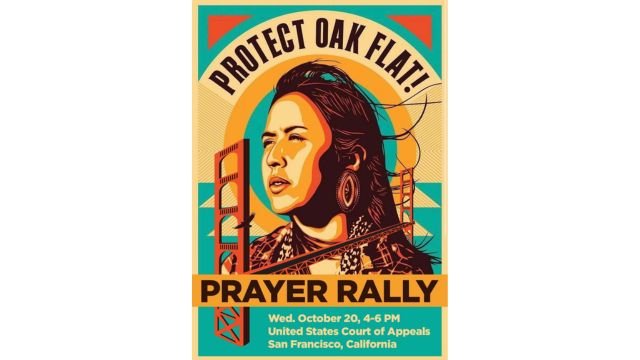
On June 24, 2022, the 9th Circuit decided, 2–1, that the project does not violate the Apaches’ freedom of religion, since the destruction of the sacred site is only a side effect of decisions taken on other grounds.
The divided courts and the abundance of dissenting opinions show how sensitive the matter is. Laudably, American courts have recently issued several decisions protecting religious liberty. As the full Ninth Circuit decision candidly acknowledged, however, “In addition to being a sacred site for the Western Apache, Oak Flat is also a place of considerable economic significance. Located near the ‘Copper Triangle,’ Oak Flat sits atop the third-largest known copper deposit in the world. Roughly 4,500 to 7,000 feet beneath Oak Flat is an ore deposit containing approximately two billion tons of ‘copper resource.’ The U.S. Forest Service estimates that, if mined, this deposit could yield around ‘40 billion pounds of copper.’”
Will the Supreme Court protect religious liberty even in a case where billions of dollars are at stake?

Massimo Introvigne (born June 14, 1955 in Rome) is an Italian sociologist of religions. He is the founder and managing director of the Center for Studies on New Religions (CESNUR), an international network of scholars who study new religious movements. Introvigne is the author of some 70 books and more than 100 articles in the field of sociology of religion. He was the main author of the Enciclopedia delle religioni in Italia (Encyclopedia of Religions in Italy). He is a member of the editorial board for the Interdisciplinary Journal of Research on Religion and of the executive board of University of Pennsylvania Press’ Nova Religio. From January 5 to December 31, 2011, he has served as the “Representative on combating racism, xenophobia and discrimination, with a special focus on discrimination against Christians and members of other religions” of the Organization for Security and Co-operation in Europe (OSCE). From 2012 to 2015 he served as chairperson of the Observatory of Religious Liberty, instituted by the Italian Ministry of Foreign Affairs in order to monitor problems of religious liberty on a worldwide scale.